
Robohub.org
Sneak peek inside two Robotics Innovation Facilities (RIFs) in Europe
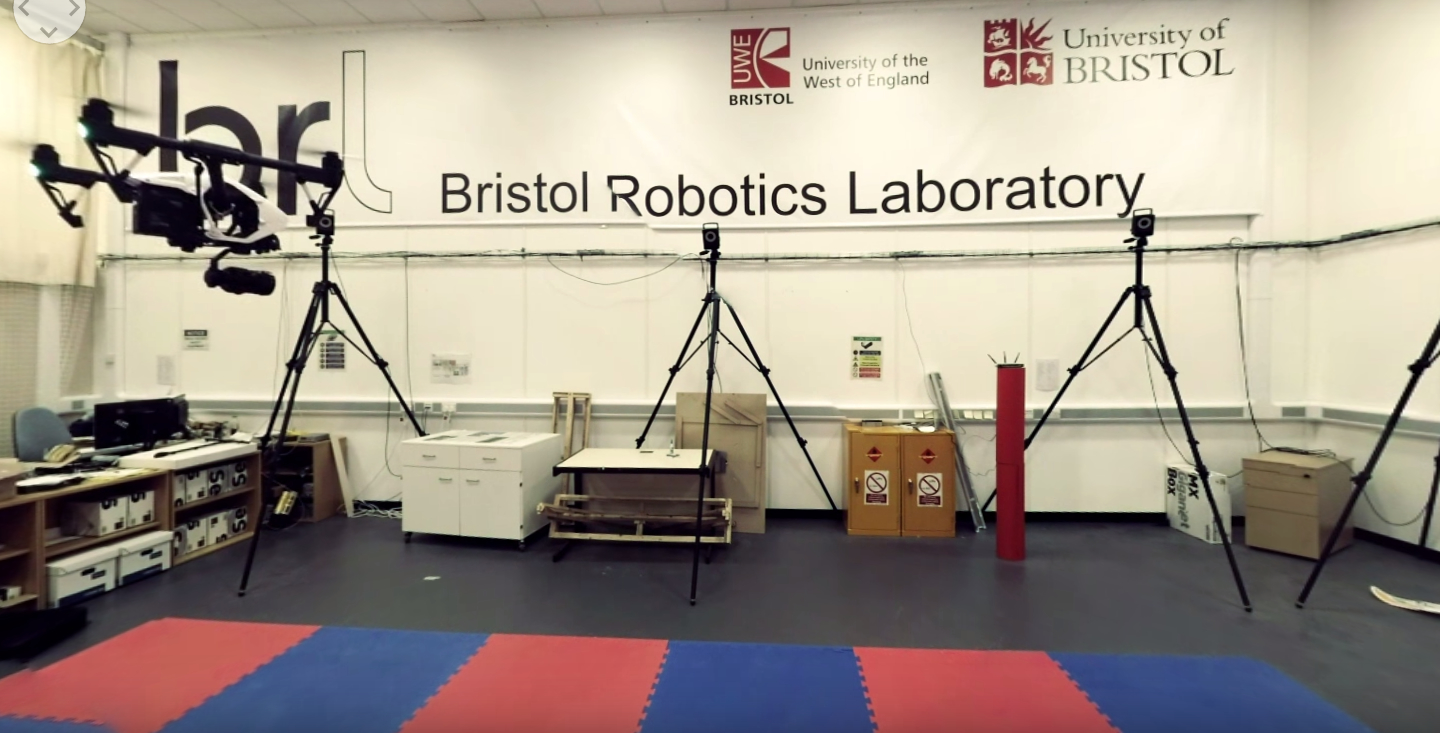
Robotics Innovation Facilities, or RIFs, are robotic labs, financed via the ECHORD++ project by the European Commission. They offer access to high-tech robotic equipment and expertise at zero risk; using the RIF is not only free of charge, they also safeguard their users’ intellectual property. Companies, institutions, and organisations can apply to use RIFs.
Currently, there are three RIFs within the ECHORD++ project located in Italy, France, and the UK. Two 360° Lab Tours are now available, the last video will be released late March.
RIF@Bristol, United Kingdom
The Bristol Robotics Laboratory is a joint lab of the University of the West of England (UWE, Bristol) and the University of Bristol, and is the largest academic centre for multi-disciplinary robotics research in the UK. View the 360° Lab Tour:
RIF@Pisa-Peccioli, Italy
The BioRobotics Institute is a research park created by Scuola Superiore Sant’Anna to house the research activities of outdoor and indoor settings. It is located at the Polo Sant’Anna Valdera, near Pisa. View the 360° Lab Tour:
RIF@Paris-Saclay, France
The Interactive Robotics Laboratory in Saclay is located within the premises of CEA LIST, about 20km southwestern from Paris. The 360° Lab Tour video will be available late March.
About ECHORD++ (The European Coordination Hub for Open Robotics Development)
The aim of ECHORD++ is to strengthen the knowledge transfer between scientific research, industry and users in robotics and to stimulate their cooperation. The EU-funded project with a runtime of five years (2013 – 2018) funds small-scale research projects called experiments, Public end-user Driven Technological Innovation (PDTI) and established Robotics Innovation Facilities (RIFs), open labs which provide state-of-the-art robotic hardware and software as well as scientific and technical support.
More information on the RIFs is available on the ECHORD++ website.
tags: Bristol Robotics Lab, EC, ECHORD++, European Commission, research

AUAI is supported by:









