
Robohub.org
South Korean gov’t robotics budget grows 8.3%, to almost $146 million (US) in 2015
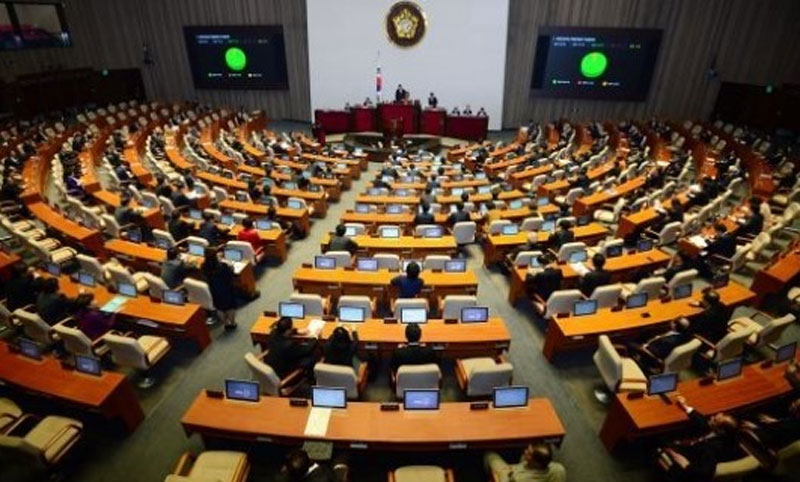 South Korea has finalized its 2015 robotics budget at around $145.8 million (US), an increase of about 8.3 percent from last year.
According to the government’s budget for next year, passed Tuesday by the National Assembly, the Robot Division’s budget has been set at $145.8 million (US), an increase of about $11.5 million from last year’s $134.3 million. This figure is also an increase of $4.3 million from the initial government budget plan presented during parliamentary budget deliberations.
The 2015 Korean Ministry of Trade, Industry, and Energy’s mechanical robots and robotic sector budget (Unit: $US)
| Project | 2014 Budget |
2015 (Government Plan) |
2015 Budget |
Increase (decrease) |
| Intelligent robot development and distribution | 14,459,091 | 14,977,273 | 15,159,091 | 700,000 |
| RobotLand construction | 22,004,545 | 24,027,273 | 24,027,273 | 2,022,727 |
| Korea Robot Industry Promotion Institute | 9,765,455 | 3,531,818 | 3,986,364 | (5,779,091) |
| Robot industry fusion core technology R&D | 62,836,364 | 65,001,818 | 65,001,818 | 2,165,455 |
| Robot industry cluster construction | 19,618,182 | 19,520,000 | 21,338,182 | 1,720,000 |
| Robot business belt construction | – | 4,545,455 | 4,545,455 | 4,545,455 |
| Developing global R&D center and commercialization mecca of medical microrobot center |
1,818,182 | 3,791,818 | 5,610,000 | 3,791,818 |
| Robot fusion component advancement | 909,091 | 1,363,636 | 1,363,636 | 454,545 |
| Healthcare robot testbed construction | – | 909,091 | 909,091 | 909,091 |
| Robot creation manpower support | 1,363,636 | 1,227,273 | 1,227,273 | (136,364) |
| Marine robot research base center | 1,554,545 | 2,727,273 | 2,727,273 | 1,172,727 |
| Amount | 134,329,091 | 141,622,727 | 145,895,455 | 11,566,364 |
The budget items are: robot industry fusion core technology R&D, $65 million; RobotLand construction $24 million; Robot industry cluster construction, $21.3 million; intelligent robot development and distribution, $15.1 million, developing a global R&D center and commercialization mecca of medical microrobot center, $5.5 million, robot business belt construction, $4.5 million, Korea Robot Industry Promotion Institute, $3.9 million; marine robot research base center, $2.7 million; robot fusion component advancement, $1.4 million; robot creation manpower support, $1.2 million; and healthcare robot testbed construction, $0.9 million.
Other than the Korea Robot Industry Promotion Institute, which has a $5.7 million impairment expense, and robot creation manpower support, where the budget decreased by $0.1 million, the items all have increased budgets compared to the previous year. The budget for the Korea Robot Industry Promotion Institute is reduced because there is no anticipated additional burden of construction costs, according to the building completion, and the budget for robot creation manpower support is reduced because the budget for the global robot camp related to Asian games is reduced.
Although the budget increased $11.5 million from the previous year, the newly organized specific regional project budgets increased $14.1 million, including increases to robot business belt construction, $4.5 million; healthcare robot testbed construction, $0.9 million; developing a global R&D center and commercialization mecca of medical microrobot center, $3.7 million; RobotLand construction, $2 million; marine robot research base center, $1.1 million, and robot industry cluster construction $1.6 million.
However, the budgets for projects that companies are actually interested in and need to support have only increased $3.3 million, including increases to robot industry fusion core technology R&D, $2.1 million; intelligent robot development and distribution, $0.7 million; and robot fusion component advancement, $0.5 million.
During budget deliberations, amounts for the following items were increased from the original government bill: robot industry cluster construction and developing a global R&D center and commercialization mecca of medical microrobot center, each $1.8 million; Korea Robot Industry Promotion Institute, $0.5 million; and intelligent robot development and distribution, $0.2 million, for a total increase of $4.3 million.
Meanwhile, the 2015 Korean government budget is $341,272 million, the budget for the Korean Ministry of Trade, Industry, and Energy is $8,308 million, and the budget for the robot sector represents 1.76% of the total budget of the Ministry of Industry.
tags: business, reports, South Korea

AUAI is supported by:









