Robohub.org
 

Theresa Richards on “What’s the best way to get a robotics education today?”


by
15 September 2013


share this:

At the high school or middle school level there is no single best way for students to get a robotics education: there are many ways, and each way reaches the students differently. The easiest way is for students to join an established team: FIRST® Robotics (FLL, FTC, or FRC) teams, VEX robotics teams, BEST Robotics teams, and Botball teams. For a shorter-term experience, students can enroll in various summer camps at a local science center or other locations.  Finally, their teachers can offer to integrate commercially-available Hummingbird Robotics kits into the curriculum at multiple levels.

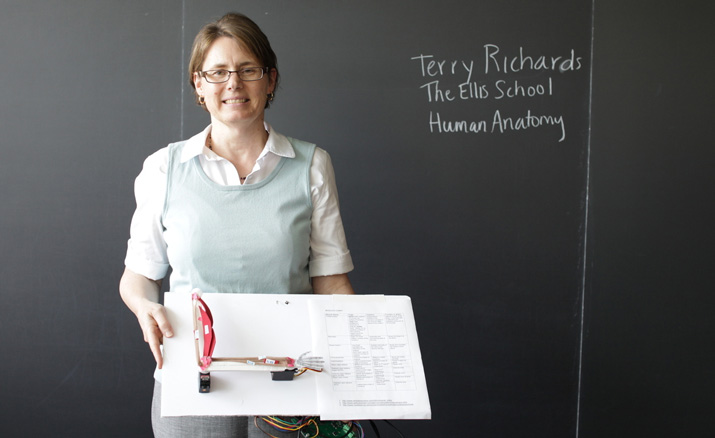
My educational robotics experience ranges from FRC- and FLL-level FIRST robotics teams to using the Hummingbird Robotics kits in the classroom and at summer camp.  For the past three years I have worked with the Girls of Steel FIRST Robotics team at Carnegie Mellon University as a high school faculty advisor/business mentor, and in each of the past two years my high school human anatomy students at The Ellis School used Hummingbird Robotics kits to create a robotic arm as a part of the unit on muscles. Most recently, my robot arm lab lesson was successfully adapted for middle school students in a C-MITES summer camp at CMU called “Anatomy and Robotics.”
theresa_richards_arm

The greater Pittsburgh area in Pennsylvania is a wonderful place to get a robotics education if you are a middle school or high school student.  Teachers here have access to workshops and professional development programs so they can be trained to bring robotics into the classroom using the Hummingbird Robotics kit or the LEGO Robotics kits. Students can enroll in summer camps to learn robotics at the Carnegie Science Center, Carnegie Mellon University, or Sarah Heinz House, and they can join FIRST or VEX community robotics teams at CMU (Girls of Steel) and Sarah Heinz House or the teams at their schools.

Read more answers →


tags: , ,


Theresa Richards is the FIRST Robotics Program Coordinator at Carnegie Mellon University's Robotics Institute.

            AUAI is supported by:


Subscribe to Robohub newsletter on substack


Related posts :

New research enables a robot to chart a better course

  17 Jun 2026
By rapidly generating a smooth path plan that cuts travel time and avoids obstacles, the open-source “MIGHTY” system could streamline disaster recovery and parcel delivery.

Entangled robotic matter with cohesive motion

  15 Jun 2026
Engineers have developed a robotic collective that behaves less like a machine and more like a material that flows.

Robot Talk Episode 160 – Robotic blacksmiths, with Edward Mehr

  12 Jun 2026
In the latest episode of the Robot Talk podcast, Claire chatted to Edward Mehr from Machina Labs about their RoboCraftsman that shapes complex metal parts for the aerospace, defence, and automotive industries.

Congratulations to the #AAMAS2026 best paper award winners

  08 Jun 2026
Find out who won in the categories of best paper, best student paper, and best blue sky paper.

Robot Talk Episode 159 – Robot sensing and manipulation, with Maria Koskinopoulou

  05 Jun 2026
In the latest episode of the Robot Talk podcast, Claire chatted to Maria Koskinopoulou from Heriot-Watt University about autonomous robotic manipulators for surgery, industry, and beyond.

Global robotics technology roadmap

  03 Jun 2026
A multi-regional, cross-domain strategic perspective for Europe, Asia, and the United States.

RoboChem Flex: democratisation of the autonomous synthesis robot

  02 Jun 2026
A versatile, modular design and the option for "human-in-the-loop" analytics.

Robot Talk Episode 158 – Autonomous robot deliveries, with Ahti Heinla

  29 May 2026
In the latest episode of the Robot Talk podcast, Claire chatted to Ahti Heinla from Starship Technologies about their AI-powered delivery robots that operate independently on streets and pavements.


AUAI is supported by:


Subscribe to Robohub newsletter on substack


©2026.05 - Association for the Understanding of Artificial Intelligence