
Robohub.org
Two profitable uses for robots
 Industrial robots keep humming along, doing the dull, dirty and dangerous work of factories around the world. Newer applications are less often known but are quickly emerging. Here are two novel ones.
ECOPPIA
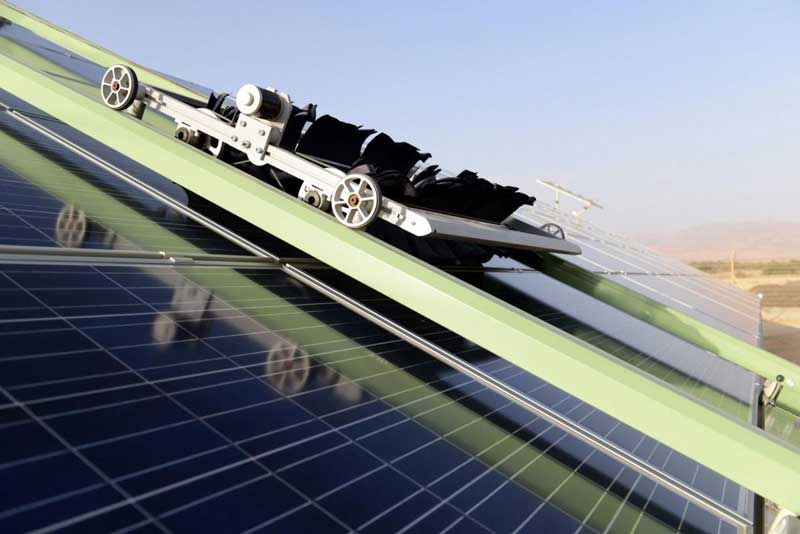
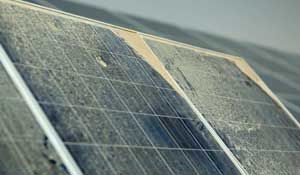 Ecoppia, a 2013 Israeli startup, is providing a robotic solar panel cleaning system to power companies with solar farms in the desert. Ecoppia recently installed and retrofitted five solar panel sites totaling more than 35MW. Their systems are cleaning about 5 million dusty panels every month.
“Desert regions are prime candidates for solar PV (photovoltaic) farms, aside from one glaring issue: soiling. Reports indicate this phenomenon can reduce overall energy generation by as much as 40 percent, which significantly eats into a system owner’s return on investment,” said Eran Meller, CEO of Ecoppia. “Three of the systems are located in the Arava desert, a region that suffers from frequent dust storms, with few rainy days to naturally wash the debris away. Prior to the Ecoppia installation, each system was cleaned manually, requiring tens of millions of liters of water and costly manpower resources. Ecoppia’s robotic, water-free cleaning solution performs daily cleaning to remove 99 percent of dust on each panel and ensure a higher output from each plant. Supported by real-time and forecasted data from The Weather Channel, the systems can be programmed with a customized cleaning schedule for optimal results.”
INSIGHT ROBOTICS
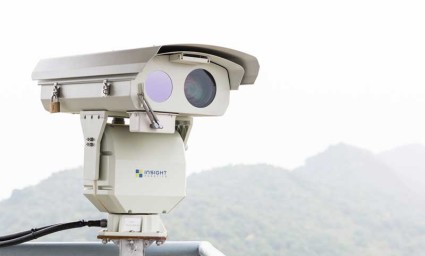 Hong Kong-based start-up and IBM SmartCamp Entrepreneur of the Year 2015 award winner Insight Robotics, uses an automated system that combines a high-precision, pan-tilt robot with thermal imaging sensors and advanced artificial intelligence vision technology to detect and protect forests. Insight systems are recording a 100% detection rate in multiple field trials and deployments. Their systems can detect and locate wood- or vegetation-based fires as small as 6′ by 3′ in size within a 3 mile radius, covering up to nearly 30 sq mi of forest and living area. The system then sends real-time images and the location of the fire to control centers for analysis. Armed with real-time image feeds, precise coordinates, microclimate data and alerts sent directly to any device, frontline centers can quickly respond with efficient firefighting plans much earlier than other methods, including smoke detection.
Insight’s early-warning system has been implemented in more than 10 forestry and local government agencies in five provinces and seven cities across the mainland and the company has set a $15 million marketing goal for 2015.
International Fire Fighter Magazine said, “The Insight Robotics Wildfire Detection System is the leading solution for long distance 24-hour wildfire detection. It is the first in the world to spot a heat source as small as a single 2m x 1m tree within a 5 km radius.”
tags: business, China, startup

AUAI is supported by:









