Robohub.org
US auto industry installed 135,000 robots and added 230,000 jobs
Source: IFR.org
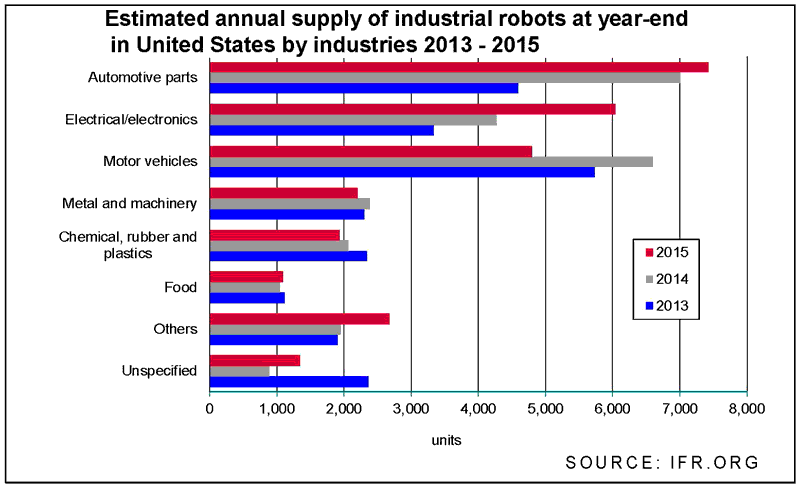
In the last six years, (2010–2015), according to the IFR (International Federation of Robotics), US industry has installed around 135,000 new industrial robots. The principal driver is automation in the car industry. During this same period, (2010–2015), the number of employees in the automotive sector increased by 230,000.
This news affirms the conclusions of a study conducted by the market research firm, Metra Martech, “Positive Impact of Industrial Robots on Employment,” that there will be growth in robot use over the next five years resulting in the creation of one million high-quality jobs around the world. “Robots, in addition to the auto industry, will help to create jobs in some of the most critical industries of this century: consumer electronics, food, solar & wind power, and advanced battery manufacturing to name just a few.”
“The rapid rise of robot use in the United States is impressive for several reasons,” said Jeff Burnstein, President of Robotic Industries Association.
- The industry’s largest user, the automotive industry, has accelerated its purchases of robots and at the same time created more jobs in the manufacturing process.
- There has been strong growth in the use of robots in general industry, as robots further penetrate industries such as life sciences, warehousing, and semiconductor and electronics manufacturing.
- The use of robots is rising in small and medium sized companies who see robotics as a key factor in improving productivity and product quality in order to stay globally competitive. We expect these trends to continue well into the future.
According to the International Federation of Robotics, car manufacturers and component suppliers will continue to be heavy users of robots. In addition, more and more new companies specialized in electric or autonomous vehicles that are starting up in the United States and are in need of modern and efficient production facilities. The electronics industry continues to be the fastest-growing emerging industry for industrial robots in the United States (2014-2015 = +41%). Increasing numbers of orders can also be expected from the metals and machinery industry, the rubber and plastics industry, the pharmaceutical and cosmetics industry, and the food and beverage industry.
tags: Automation, business, Frank Tobe, jobs, robots, The Robot Report

AUAI is supported by: