Robohub.org
Keep Calm and Carry Passengers: UK robocar projects level up
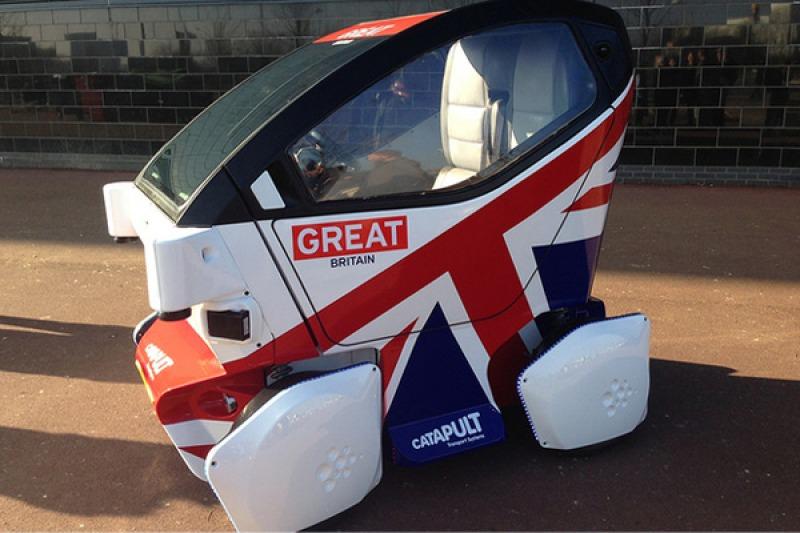 The government-baked robocar projects in the UK are going full steam, with this press release from the UK government to accompany the unveiling of the prototype Lutz pod, which should ply the streets of Milton Keynes and Greenwich.
This comes along with the realizations of laws enabling of testing of vehicles (with safety drivers) and discussion of changes to the UK vehicle code.
The new pod follows a similar path to other fully-autonomous prototypes, reminding me of the EN-V from GM, the MIT City Car and the Google buggy prototype. It’s electric, meant for “last mile” and will lose its steering wheel once testing is over.
http://youtu.be/fVL5gOaGqno
I also note they talk eagerly about the Meridian shuttle being tested in Greenwich, even though that’s a French vehicle.
When it comes to changes to the vehicle code, I think it’s premature. Even without looking at the proposed changes, I would say that we don’t know enough to work out what changes are needed, even though we all might be full of ideas.
One proposal is to remove the ban on tailgating to allow convoys. A reasonable enough thing, except people are not going to build convoys for quite some time, I think. The Volvo/SARTRE experiment found a number of problems with the idea, and you don’t want to do your first deployments with something that, if it goes wrong, could crash 10 cars instead of one. You do that later, once you feel very confident in your tech.
Another proposal called for changing how cyclists are treated. The law in the UK (and some other places) demands that cyclists be given the full berth of a car, and in practice nobody ever does that. If they did do it, it would mean they just followed along at bicycle speed, impeding traffic. One of those classic cases, like speed limits in the USA, where the law only works if nobody follows it. (Though cyclists would say that they should just get the full lane like the law says.)
We will need to fix these areas of the vehicle codes, but we should fix them only after we see a problem, unless it’s clear that the vehicles can’t be deployed without the change. Give the developers the chance to fix the problem on their own first. If you fix the law before you know what the vehicles will be like, you may ensconce old thinking into the law and have a hard time getting it out.
It is interesting to see Governments adapt so quickly to a disruptive technology. It’s quite probable that our hype is a bit too good and will come back to bite us. I predicted this sort of jurisdictional competition as governments realize they have a chance to make their regions become players in the new automotive industry, but they are embracing some things faster than I expected.
This post originally appeared on robocars.com.
tags: autonomous driving, c-Arts-Entertainment, robocars, UK