
Robohub.org
Novel robots for gait and arm rehabilitation: Interview with Robert Riener
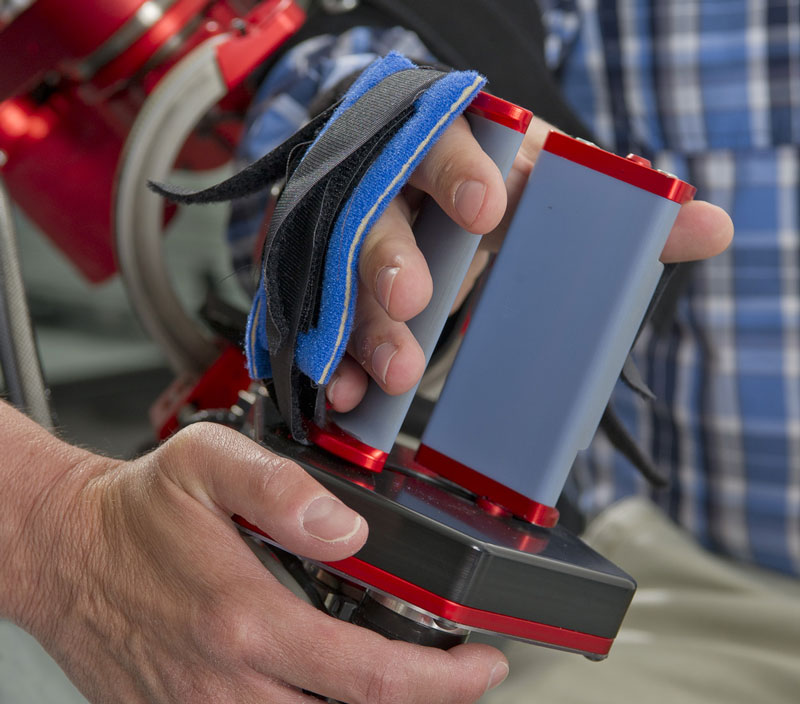
ARMin neuro-rehabilitation device.
In this pair of video lectures, Robert Riener presents his team’s research efforts in the field of rehabilitation robotics, and describes the vision behind Cybathlon, the competition for robot-assisted parathletes.
Novel robots for gait and arm rehabilitation
Patients who have limited use of their arms or legs due to stroke or spinal chord injury require intensive therapy to help them rehabilitate. This rehabilitation process is long, exhausting and expensive, and requires intensive therapy with specialists. With robotic technology, many of these challenges can be overcome.
Systems such as the Robot-Aided Gait Training enable patients to start intensive therapy right away, and for longer hours. The ARMin neuro-rehabilitation device helps stroke patients regain physical capabilities; research results show that patients subjected to ARMin training heal faster than patients working with therapists alone.
These devices involve intense human-robot cooperation and therefore have been developed according to human-robot interaction best practices. Future research will be focused on improving the effectiveness of robotic rehabilitation devices and their overall use in the medical field.
You can download the .pdf presentation here: Novel Robots for Gait and Arm Rehabilitation.
Riener R. IJARS Video Series: Novel Robots for Gait and Arm Rehabilitation [online video]. International Journal of Advanced Robotic Systems, 2014, 11:V2. DOI: 10.5772/59833
Cybathlon 2016, The Championship for Robot-Assisted Parathletes
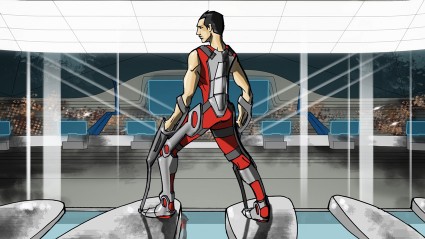 Research labs around the world have been focused on developing novel assistive technologies such as wheelchairs, exoskeletal and mechatronic devices to help patients with spinal chord injuries in their daily life activities. There is still a long way to go before these kinds of devices will enable complete movement for these patients.
That is why Dr. Robert Riener and his team of collaborators are organising a special kind of event – Cybathlon 2016 – similar to the paralympic games. During Cybathlon, participants will compete in six disciplines while using wheelchairs, exoskeletons, brain and muscle stimulation devices, and other technologies.
The goal for researchers is to learn the strengths and the weaknesses of these devices and ultimately make them more effective for patients. The project also aims to promote wider use of robotic technology solutions in the fields of medical treatment where extensive physical therapy and assistance is required.
Riener R. IJARS Video Series: Cybathlon 2016, The Championship for Robot-Assisted Parathletes [online video]. International Journal of Advanced Robotic Systems, 2014, 11:V3. DOI: 10.5772/59837
 Robert Riener is Full Professor for Sensory-Motor Systems at the Department of Health Sciences and Technology, ETH Zurich. He has been Assistant Professor for Rehabilitation Engineering at ETH Zurich since May 2003. In June 2006 he was promoted to the rank of an Associate Professor and in June 2010 to the rank of a Full Professor. As he holds a Double-Professorship with the University of Zurich, he is also active in the Spinal Cord Injury Center of the Balgrist University Hospital (Medical Faculty of the University of Zurich).
His current research interests involve human motion synthesis, biomechanics, virtual reality, man-machine interaction, and rehabilitation robotics. He has authored and co-authored more than 400 peer-reviewed journal and conference articles and 20 patents. He is a member of several scientific societies (e.g., IEEE/EMBS, DGBMT/VDE, IFESS) and an associate editor of several scientific journals. For his development of the arm therapy robot ARMin, he was awarded with several prizes including the humanTech Innovation Prize and the Swiss Technology Award. He was awarded also with the IEEE TNSRE Best Paper Award 2010 and the euRobotics Technology Transfer Awards 2011 and 2012.
If you liked this post, you may also be interested in:
- Robots Podcast: Ekso Bionics
- 3 exoskeleton companies go public
- Noonee: The chairless Chair
- Exoskeleton with haptic sensors helps paralysed man to kick off World Cup
- Rehab robots, smart prostheses and exoskeletons to reach $1.8 billion by 2020
- Robotics then and now: IJARS interview with Peter Corke
See all the latest robotics news on Robohub, or sign up for our weekly newsletter.
tags: ETH Zurich, healthcare, research, Robert Riener, video
AUAI is supported by:









