
Robohub.org
Robo-Wars: The regulation of robotic weapons
by Alexander Leveringhaus and Oxford Martin School, University of Oxford
05
December
2014
share this:
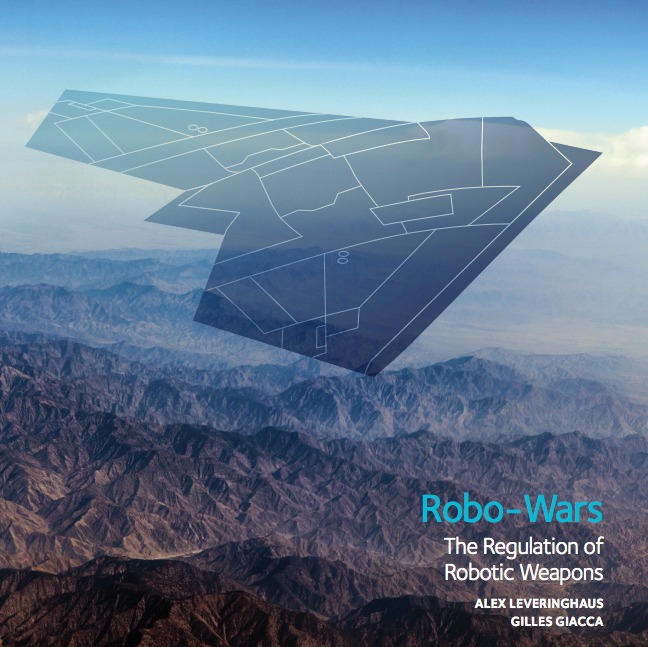
Robotic weapons, whether autonomous or remote controlled, have generated widespread controversy in recent years.
Alex Leveringhaus, James Martin Fellow, Oxford Institute for Ethics, Law and Armed Conflict, discusses the ethics of autonomous weapons, and in a recent policy paper titled Robo-Wars: The Regulation of Robotic Weapons, urges governments to recognise the increasing prominence of these weapons in contemporary and future forms of warfare and proposes steps towards suitable regulation.
What is an autonomous weapon?
Can the use of autonomous weapons ever be ethically sound?
If you liked this article, you may also be interested in:
- RoboLaw: Why and how to regulate robotics
- A call for debate on robot policy
- US DoD report: Preparing for war in the robotic age
- Hot topic: Regulating robotics
See all the latest robotics news on Robohub, or sign up for our weekly newsletter.
tags: human-robot interaction, military, policy, politics, Robohub focus on regulating robotics, robot ethics

Alexander Leveringhaus
is a Post-Doctoral Research Fellow (ELAC and Delft University of Technology) and James Martin Fellow (Oxford Martin School).
Alexander Leveringhaus
is a Post-Doctoral Research Fellow (ELAC and Delft University of Technology) and James Martin Fellow (Oxford Martin School).

Oxford Martin School, University of Oxford
is a unique, interdisciplinary research community of over 300 scholars working to address the most pressing global challenges and harness the potential opportunities.
Oxford Martin School, University of Oxford
is a unique, interdisciplinary research community of over 300 scholars working to address the most pressing global challenges and harness the potential opportunities.
AUAI is supported by:








Related posts :
Humanoid robots can sprint and box – but the real test is doing the laundry
The Conversation
12 Oct 2026
No robot system can yet reliably handle the whole laundry process. Even folding remains a challenge.
Robot Talk Episode 165 – Robots behind the research, with Kushant Patel
Robot Talk
09 Oct 2026
In the latest episode of the Robot Talk podcast, Claire chatted to Kushant Patel from Brookhaven National Laboratory about robots that work in scientific facilities, such as particle accelerators.
What three days building a robot taught me
Devashish Tambade and UK RAS STEPS
07 Oct 2026
The brief sounded simple: build a small autonomous robot, then make it survive increasingly difficult mazes. Simple... right? Until you actually have to build one.
Research could guide the future design of social robots
the University of Glasgow
05 Oct 2026
Giving robot companions animal-like or anime-style faces and voices could maximise their emotional appeal to users, according to new research which could help guide the growing field of social robotics.
Robot Talk Episode 164 – Accelerating robot learning, with Michelle Lu
Robot Talk
02 Oct 2026
In the latest episode of the Robot Talk podcast, Claire chatted to Michelle Lu from Vsim Technology about using simulation and artificial intelligence to teach robots new skills.
Robotics and automation? Informal reflections on familiar terms
IEEE Robotics and Automation Society (RAS)
30 Sep 2026
IEEE experts reflect on what is meant by the term "robotics and automation".
Small, medium or large, a robotic fish maintains its swimming ability
EPFL
28 Sep 2026
Researchers at EPFL and New York University have developed a robotic fish that can be made in various sizes for studying shallow creeks to open water.
Robot Talk Episode 163 – Robots helping people, with Aaron Edsinger
Robot Talk
25 Sep 2026
In the first episode of Robot Talk season 7, Claire chatted to Aaron Edsinger from Hello Robot about their Stretch robots that can help people with mobility issues live more independently.

