
Robohub.org
Robots may save the global economy

A recent article in The Washington Post by Morgan Stanley strategist and author of “The Rise and Fall of Nations” Ruchir Sharma, provides a nuanced overview of the issues of jobs, robots, productivity and income disparity.
In the article, Sharma suggests that because the labor pool isn’t growing fast enough to support our needs, it may not be long before economists worry about a global shortage of robots to fill those needs.
“In many industrial countries, from Germany to Japan to South Korea, growth in the working-age population has already peaked, acting as a drag on the economy. Widely overlooked, however, is the fact that the population-growth slowdown is unfolding even faster in the emerging world.”
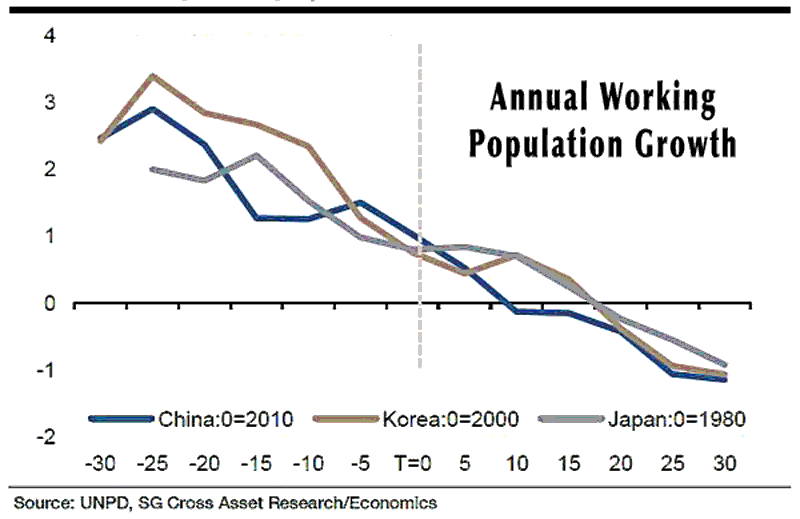
China, the most prominent of those emerging countries, is already feeling the effects of four disruptive population trends:
- China’s working-age population growth just turned negative and China is expected to lose 1 million workers each year for the foreseeable future.
- Of those coming of working age, because of education and other social reasons, they don’t want to work in factories.
- China’s elderly share of the population is rising twice as fast as in the U.S. and four times faster than in France. Unlike France and the U.S.
- Given the widespread political backlash against immigration, compensatory immigrant increases to offset ageing workforces are unlikely.
Sharma cited an instance where Daniel Kahneman, the Nobel prize-winning psychologist/economist who wrote “Thinking, Fast and Slow,” a 2011 best seller, had occassion to comment on the subject:
“Asked by an alarmed dinner companion about the threat robots posed to jobs in China, Nobel economist Daniel Kahneman responded: “You just don’t get it. In China, the robots are going to come just in time.” No wonder Beijing now offers heavy subsidies to companies involved in industrial automation.”
Strategic long-view planning such as that exhibited by the Chinese series of 5-year plans focused on bringing robotics to China, creating an in-country robotics industry, and expanding the use of robots to provide social assistance in addition to industrial production, is being replicated in Japan, Korea and throughout the EU.
It remains to be seen how this will play out in the U.S.
If you enjoyed this article about robots and jobs, you may also want to read:
- US auto industry installed 135,000 robots and added 230,000 jobs
- What coachmen from the 1920s can tell us about robots and jobs
- Stop talking about bringing jobs back from China
- ‘Robots or jobs’ is key focus of #ERF2015
- Obama connects robots to jobs in State of the Union address
See all the latest robotics news on Robohub, or sign up for our weekly newsletter.
tags: Automation, c-Business-Finance, China, economy, Frank Tobe, jobs, robots, The Robot Report, US

AUAI is supported by:









