Robohub.org
ep.

070

podcast
 

Odor source localization with Hiroshi Ishida and Thomas Lochmatter


by
28 January 2011


share this:

In this episode we revisit robot olfaction and take a closer look at the problem of odor source localization. Our first guest, Hiroshi Ishida from the Tokyo University of Agriculture and Technology is an expert in the field, whose sniffing robots range from blimps to ground and underwater robots. Our second guest, Thomas Lochmatter from EPFL talks about tradeoffs between biologically inspired and probabilistic approaches to navigate a gas plume.

Hiroshi Ishida
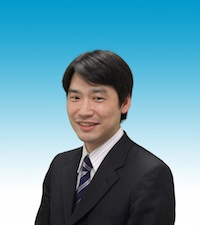
Hiroshi Ishida is Associate Professor in the Department of Mechanical Systems Engineering, Tokyo University of Agriculture and Technology, Japan.
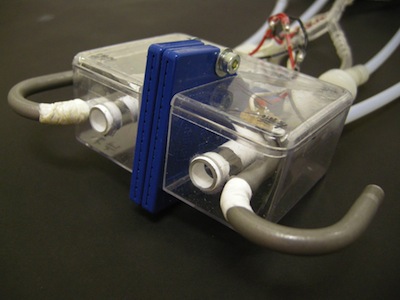
The focus of his research group is to develop robots that can find sources of airborne gas plumes or underwater chemical plumes. To this end, they developed the Active Stereo Nose (see figure below), a differential gas sampling system inspired by the dog’s nose, and the Crayfish robot that mimics the mechanism used by crayfish in nature to create unidirectional water currents.

Thomas Lochmatter

image credit: SNF

During his PhD at the Distributed Intelligent Systems and Algorithms Lab at EPFL in Switzerland, Thomas Lochmatter developed a modular odor system for the Khepera III robot. His research focused on the pros and cons of biologically-inspired and probabilistic algorithms for odor localization, while dealing with both single and multi-robot systems.

Links:


tags:


Podcast team The ROBOTS Podcast brings you the latest news and views in robotics through its bi-weekly interviews with leaders in the field.


Subscribe to Robohub newsletter on substack


Related posts :

Robot Talk Episode 151 – Robots to study the ocean, with Simona Aracri

  10 Apr 2026
In the latest episode of the Robot Talk podcast, Claire chatted to Simona Aracri from National Research Council of Italy about innovative robot designs for oceanography and environmental monitoring.

Generative AI improves a wireless vision system that sees through obstructions

  08 Apr 2026
With this new technique, a robot could more accurately detect hidden objects or understand an indoor scene using reflected Wi-Fi signals.

Resource-constrained image generation and visual understanding: an interview with Aniket Roy

  07 Apr 2026
Aniket tells us about his research exploring how modern generative models can be adapted to operate efficiently while maintaining strong performance.

Back to school: robots learn from factory workers

  02 Apr 2026
A Czech startup is making factory automation easier by letting workers teach robots new tasks through simple demonstrations instead of complex coding.

Resource-sharing boosts robotic resilience

  31 Mar 2026
When a modular robot shares power, sensing, and communication resources among its individual units, it is significantly more resistant to failure than traditional robotic systems.

Robot Talk Episode 150 – House building robots, with Vikas Enti

  27 Mar 2026
In the latest episode of the Robot Talk podcast, Claire chatted to Vikas Enti from Reframe Systems about using robotics and automation to build climate-resilient, high-performance homes.

A history of RoboCup with Manuela Veloso

and   24 Mar 2026
Find out how RoboCup got started and how the competition has evolved, from one of the co-founders.

Robot Talk Episode 149 – Robot safety and security, with Krystal Mattich

  20 Mar 2026
In the latest episode of the Robot Talk podcast, Claire chatted to Krystal Mattich from Brain Corp about trustworthy autonomous robots in public spaces.


Robohub is supported by:


Subscribe to Robohub newsletter on substack


©2026.02 - Association for the Understanding of Artificial Intelligence