
Robohub.org
Why is Japan the first to get Dyson’s new 360 Eye?
This post originally appeared on Akihabara News.
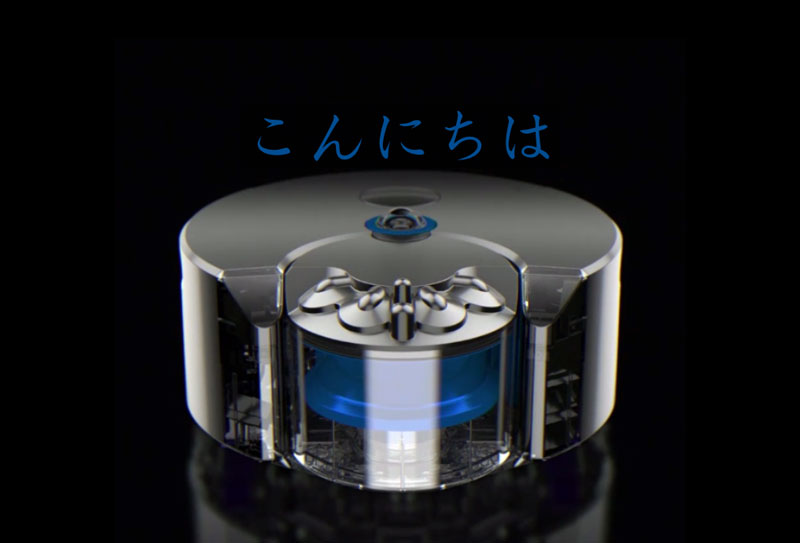
The Dyson 360 Eye autonomous vacuum cleaner went public in Tokyo on September 4th, and it got a lot of attention – enough to make almost any product from almost any industry jealous. There are several obvious reasons: Dyson products are aesthetically pleasing, Dyson products are unique, Dyson products perform well above average across the board, and Dyson is badass at marketing. Just look at their website; a company that makes cleaning machines and fans has a slicker web presence than … actually, than most companies that make or do anything at all.
Also, there’s the new device itself. The steadily plodding iterations of iRobot’s Roomba and its legion of copycats are old hat, and we aren’t really impressed anymore. While the 360 Eye performs the same task, it stands out, and just kinda has that new robot smell. The talking points/broad strokes/things to know are:
- Dyson 360 Eye: Sixteen Years of Research; $47 million Investment
- Cyclone Suction Tech: Miniaturized and Incorporated
- Navigation & Mapping: Innovative 360-Degree Visual Mapping
- App Enabled: Remotely Activate/Schedule Cleanings from iOS or Android
- Mobility: Purple Tank Tracks for Carpet, Hard Surfaces, and Obstacle Negotiation
- Color Variations: Fuchsia; Blue
- Dimensions: Width 242 × Depth 230 × Height 120mm; 2.37kg
- Price: Initially Estimated at $1,200
- Availability: Spring 2015; Japan Only, Other Markets to Follow
… and that last point brings us to:
Q. Why Japan first? Why Japan only (for a time, anyway)?
A. Japan is first now, because Japan was first then (and the market is huge)
In design and engineering circles, James Dyson is famous for meticulous attention to both the performance and the appearance of his company’s products. Lore tells of Dyson creating over 5000 prototype designs before deciding that he’d perfected his first ‘Dual Cyclone’ dust/dirt separation tech. We’re pretty sure someone’s counting scribbles on cocktail napkins there, but the point remains.
In the early 1980s, Dyson finally had a model he believed ready for production, but no household appliance makers in his native UK or in the US were interested. Whether accurate or not, lore also speaks of a Little Guy Makes Good story, i.e., he was dismissed by Hoover and friends because the home cleaning giants were worried about monkeywrenching their comfortable hold on a hugely lucrative market.
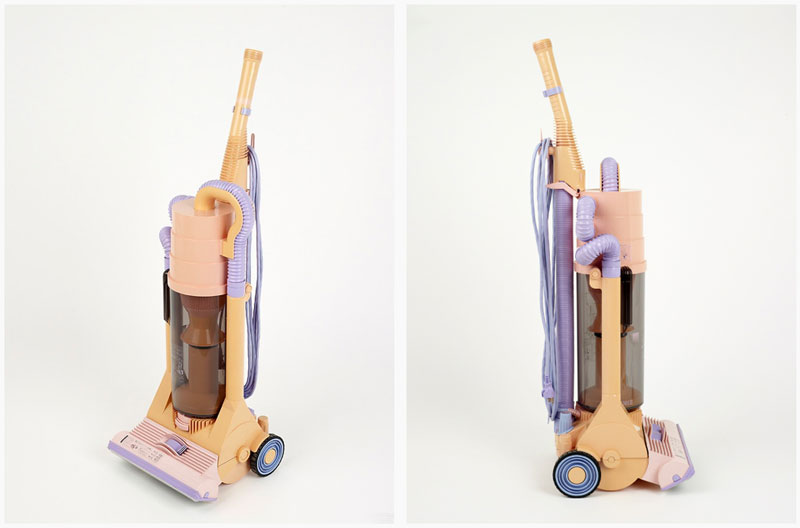
But guess who was interested: Japanese appliance company Apex, Inc. They licensed Dyson’s technology and in 1983 produced the G-Force Cleaner. The big pink vacuum was a hit, and it was with the earnings from this licensing venture that Dyson the man created Dyson the company – and things have gone quite well since. So, in a way, bringing the 360 Eye to Japan before all other markets is a full-circle .
And it’s a good place to start
At the nation-state level, Japan is currently the world’s largest market for puck-shaped robotic cleaners , and there are a number of homegrown and foreign models available. However, as we reported last year, the Roomba, available in Japan for 10 years now, dominates with a 75% share. And it’s important to note that it’s 75% of a fairly large pie:
…Sales in Japan are booming. According to Seed Planning (a Japanese market research and consulting firm), since 2008 the home cleaning robot market has seen a 6-fold increase in yearly sales (approx. 380,000 units sold in 2012), and they project sales of 900,000 units in 2018. In a nation of about 128 million people, if realized that’s some serious market penetration. Given that homes in Japan generally aren’t all that big and don’t have a lot of carpeting, it’s all the more impressive. Among Japan’s massive, dominant middle-class, such expenditures are a luxury but not quite as economically extravagant as one might think…
That was us a year ago, and not a whole lot has changed. The Roomba still rules, but lookout iRobot – Japan’s known the Dyson name for 20 years, and the 360 Eye is coming for you .
http://youtu.be/4y_9V7O1pac


If you liked this article, you may also be interested in:
- Recent robotic vacuum launches change industry from niche to mainstream
- Housework 2.0: The battle of the robot vacuum cleaners begins!
- Has Dyson’s robotic dream become a reality?
- Dyson invests £5m in robot lab
See all the latest robotics news on Robohub, or sign up for our weekly newsletter.
tags: 360 Eye, consumer robotics, Dyson, household, iRobot, Japan, robot vacuum

AUAI is supported by:









