
Robohub.org
3D Robotics undergoing layoffs and other challenges
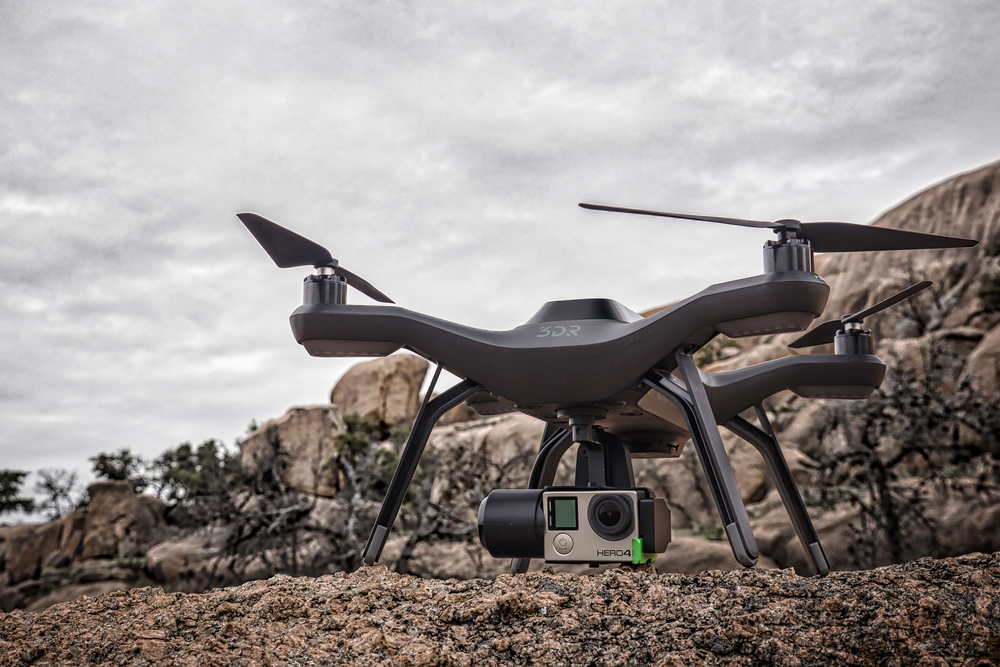
Source: press.3dr.com
3D Robotics unveiled sweeping changes by closing its San Diego facility, reducing staff at its Berkeley headquarters and in Austin, TX, and acknowledging that co-founder and president Jordi Muñoz left the company at the end of 2015.
The latest staff reductions follow more extensive layoffs that took place at the end of 2015, after 3DR shifted its manufacturing operations from Tijuana to Shenzhen to economically mass produce their new Solo quadcopter which was intended to compete with DJI’s Phantom line of quadcopters.
In an interview with Xconomy’s Bruce Bigelow, Anderson described the changes as something that was part of 3DR’s plan all along.
This is a consolidation we’ve been working on since before October of last year. As we shifted from the DIY era to consumer and to enterprise customers, we ended up with a different organization each time.
Anderson omitted talking about the problems 3DR faced with their Solo drone. The Solo started off with a flashy launch video that introduced the product about a year ago. DJI, at about the same time, released their new Phantom 3 with a list of features that surpassed the Solo. Because of producing and warehousing drones in China, 3DR made too many Solos particularly given how fast competitors were dropping prices and flooding the market. They built up a massive and costly inventory. A fully equipped Solo was priced too high for the market. 3DR was forced to lower prices to just $799 plus $199 for the gimbaedl platform, down from the initial price of $1,000 and $400. Keeping up the pressure, DJI cut its Phantom 3 prices ahead of its launch of the Phantom 4, a smarter and more sensor-laden drone all inclusively priced at $1,399.
In another interview with MarketWatch, Anderson said that 3DR was moving to the commercial market due to heavy competition in the consumer drone marketplace.
DJI is doing great, it’s because they are moving so fast, it’s forcing the others to adapt. Some companies are adapting by leaving, and others are adapting by moving upstream to the enterprise, which was always our plan. And [that move] is just accelerating right now.
3DR will now be focusing more narrowly on enterprise customers that are interested in using drones for such projects as utility line and pipeline inspections, and construction site inspections. As part of that move, 3DR announced the release of its Site Scan aerial analytics platform earlier this month. The technology enables corporate customers to conduct inspections and scan work sites with the Solo smart drone, and transmit the data to the cloud for processing and analytics. The system has a software-as-a-service monthly subscription model, which integrates Autodesk software, where using the 3DR Solo drone, businesses can upload aerial images, analytics and other data to the 3DR cloud. The system uses a tablet from Sony, a GoPro camera and starts at $3,249 for the hardware.
Anderson remains CEO, and Jeevan Kalanithi, 3DR’s chief product officer, becomes president. 3DR had ramped up to more than 350 employees but, with the current layoffs, will be down to below 80. The company’s former president, co-founder Jordi Muñoz, left the company last year as part of the ramping down of 3DR’s operations in San Diego and Tijuana.
“By making job cuts and refocusing, 3DR currently has enough financial runway until the second quarter of 2017 without having to go back to investors,” Anderson said. “We want to make sure we have a good long year of runway,” he said. “You don’t want to have to go back to the market every six months. This is a moment when the investors want to see a profitable, lean operation, and we are doing that.”
tags: 3D Robotics, c-Business-Finance, cx-Aerial, Frank Tobe, The Robot Report

AUAI is supported by:









