
Robohub.org
 

Rain on Google’s self-driving car parade

by
02 September 2014


share this:
Google-Driverless-car_585_390_80

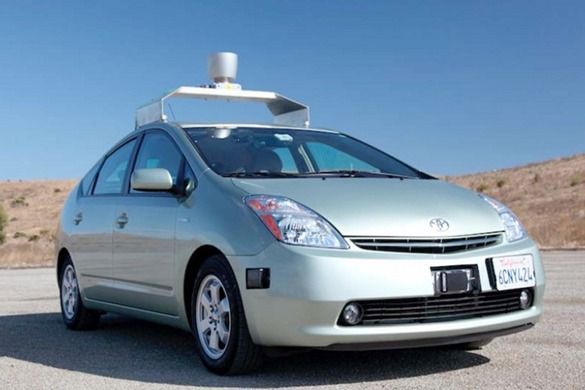
Auto World News reminds us that Google’s self-driving car can’t navigate heavy rain or most roads and that there are still many challenges to solve.

Citing an MIT Technology Review report, Auto World News says that Google relies heavily on maps and detailed data such that it cannot drive itself in 99% of the country. 

The public seems to think that all of the technology issues are solved… but that is simply not the case,” said Steven Shladover, a UC Berkeley researcher in the MIT report, which went on to say:

Google often leaves the impression that, as a Google executive once wrote, the cars can “drive anywhere a car can legally drive.” However, that’s true only if intricate preparations have been made beforehand, with the car’s exact route, including driveways, extensively mapped. Data from multiple passes by a special sensor vehicle must later be pored over, meter by meter, by both computers and humans. It’s vastly more effort than what’s needed for Google Maps.

Also unsolved are driving in the snow, heavy rain, road construction detours, open parking lots or multilevel garages.

These are the challenges that are being worked on at various research labs around the world, including Google.


tags: , , ,


Frank Tobe is the owner and publisher of The Robot Report, and is also a panel member for Robohub's Robotics by Invitation series.

            AUAI is supported by:


Subscribe to Robohub newsletter on substack


Related posts :

Developing active and flexible microrobots

  13 May 2026
This class of robots opens up possibilities for biomedical applications.

How to teach the same skill to different robots

  11 May 2026
A new framework to teach a skill to robots with different mechanical designs, allowing them to carry out the same task without rewriting code for each.

Robot Talk Episode 155 – Making aerial robots smarter, with Melissa Greeff

  08 May 2026
In the latest episode of the Robot Talk podcast, Claire chatted to Melissa Greeff from Queen's University about autonomous navigation and learning for drones.

New understanding of insect flight points way to stable flapping-wing robots

  07 May 2026
The way bugs and birds flap their wings may look effortless, but the dynamics that keep them aloft are dizzyingly complex and difficult to quantify.

Robotically assembled building blocks could make construction more efficient and sustainable

  05 May 2026
Research suggests constructing a simple building from interlocking subunits should be mechanically feasible and have a much smaller carbon footprint.

Robot Talk Episode 154 – Visual navigation in insects and robots, with Andrew Philippides

  01 May 2026
In the latest episode of the Robot Talk podcast, Claire chatted to Andrew Philippides from the University of Sussex about what we can learn from ants and bees to improve robot navigation.

Ultralightweight sonar plus AI lets tiny drones navigate like bats

  29 Apr 2026
Researchers develop ultrasound-based perception system inspired by bat echolocation.

Gradient-based planning for world models at longer horizons

  28 Apr 2026
What were the problems that motivated this project and what was the approach to address them?


AUAI is supported by:


Subscribe to Robohub newsletter on substack


©2026.02 - Association for the Understanding of Artificial Intelligence









