
Robohub.org
Ability to self-repair isn’t the same as consciousness: Analyzing Automata from a tech standpoint
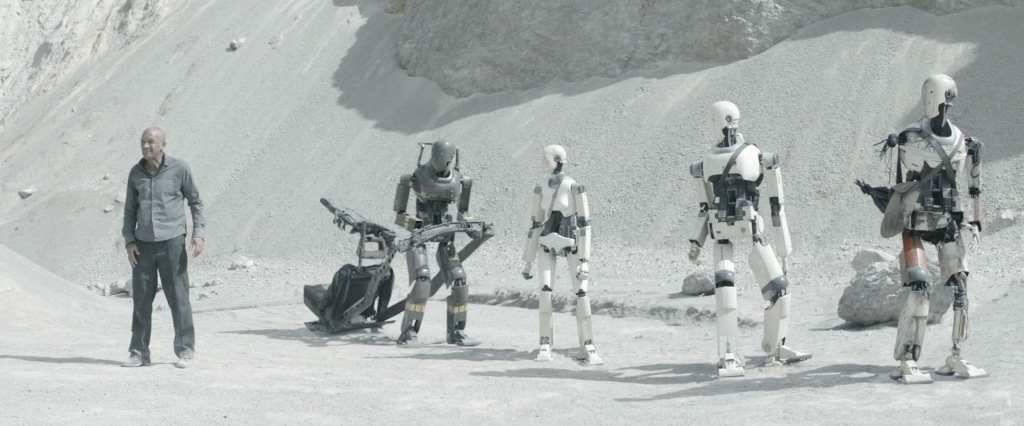
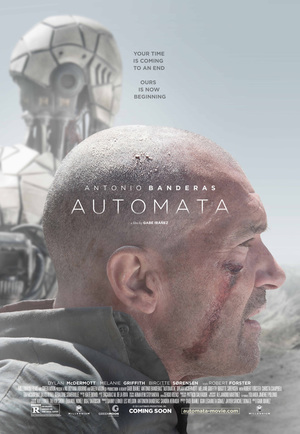
I recently had a chance to view Automata and wanted to share my thoughts on the movie based upon the current and future state of robotics and artificial intelligence. As a film, this was a tough one to sit through, and won’t make any must-see lists from me. Unless you’re really into Antonio Banderas, I’d skip this. My deep interest in robotics was the only reason I struggled to the end.
From a technology standpoint the film’s underlying premise – that robots seeking to repair themselves have a consciousness – is not as simple as it would seem. While there is no universal test for self-awareness, like a Turing or mirror test, the film seems to suggest that if a robot seeks to self-repair or self-mutilate, it shows it has at least some level of consciousness. But I see this as problematic: to me, self-repair is simply a good algorithm, something we see regularly in the process automation industry, for example when a system clears a jam, or adjusts to a flow rate due to over- or under-loading.
In fact, in May 2014, Dextre and the Canadarm became the first robotic system to self-repair on board the International Space Station. Measured by this standard, the future has already arrived – but I’m not so certain robots will be taking over the earth any time soon. And even if I’m wrong, and the Canadarm seeks to become a human overlord, we still have a 200+ miles and a seriously hot re-entry to buffer us.
For another example, take NAO or the soon to be released Pepper by Aldebaran: by recognizing facial expressions they can estimate human emotion. Is that a sign of intelligence, or just another really good algorithm? Research into human-robot interaction often concludes that people believe they have formed emotional connections with robots. Soldiers frequently develop emotional relationships with their robot companions. Are these human feelings a sign of robot consciousness? No! Are they a sign of robot intelligence? Not really. Most of these machines are tele-operated and are extensions of the soldier, providing him with some added abilities (like infrared vision) and protection (distance from a blast perimeter).
Automata does end with a philosophical premise that as the human population on earth diminishes, robots evolve to carry the torch and recolonize earth. When we end, they begin. Perhaps that is where the movie should have started.
tags: arts & entertainment, film, reviews

AUAI is supported by:









