
Robohub.org
The Drone Center’s Weekly Roundup: 11/16/15
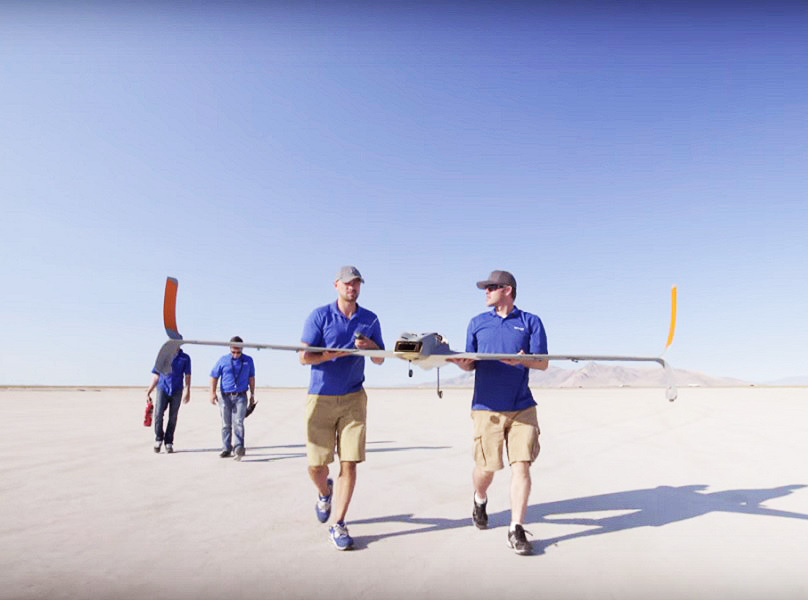
The Aurora Flight Sciences and Stratasys 3-D printed jet powered drone. Credit: Stratasys
At the Center for the Study of the Drone
By now, we are well-acquainted with drones that fly, crawl, and sail, but what about drones that plumb the depths of the ocean, scouring the seas for everything from enemy mines to shipwrecks? What do undersea drones look like? How do they work? And who is developing them? Here’s what you need to know.
News
A US drone strike in Syria killed Mohammed Emwazi, the executioner for ISIS who was also known as “Jihadi John.” The strike targeted a vehicle carrying Emwazi, a British citizen, outside of Raqqa. (New York Times)
Bloomberg News reports that India is interested in purchasing the Predator Avenger, a next-generation drone, which is developed by U.S. contractor General Atomics, that will be faster and stealthier than existing Predator and Reaper models. The possible sale would have to be approved by the U.S. State Department.
Construction work began at a training academy for drone pilots in North Dakota. The $2.5 million school and business park, a project led by drone manufacturer General Atomics, is located on part of Grand Forks Air Force base, where the Air National Guard and the Customs and Border Protection agency already operate Predator and Reaper drones. (Grand Forks Herald)
Three Vietnamese tourists were reportedly arrested after attempting to fly a drone over Cambodia’s Royal Palace in Phnom Penh. Cambodian police released the three individuals without charges after questioning. (Xinhua)
Police in Seattle, Washington are investigating an incident in which a drone reportedly crashed into the Great Wheel, a 175-foot-tall ferris wheel and city landmark on Seattle’s waterfront. (BBC)
Police in Britain’s West Yorkshire province are investigating whether a drone was involved in the death of a police horse. The horse, known as Fimber, died after hitting a wooden post. “There is a possibility that Fimber was reacting to the drone landing nearby or being close to him,” Detective Superintendent Simon Atkinson said in an interview with the BBC.
Commentary, Analysis, and Art
At Vox, Eli Dourado argues that it’s unlikely that the FAA’s drone registration plan will meet the “good cause” exception that would allow it to bypass public scrutiny before going into effect later this year.
At the Atlantic, Alana Semuels writes that the anti-drone protest movement in New York, which began by protesting military drones, is turning its sights on the commercial market.
At the St. Cloud Times, Mitch LeClair writes that some commercial drone operators in Minnesota have to contend with strict rules as well as individuals who shirk regulations.
At the Motley Fool, Rich Smith writes that recent sales of military drones indicates that the U.S. is becoming more willing to sell the technology to international partners.
At the MIT Technology Review, Tom Simonite takes a look at what’s at stake for the future of the drone industry in upcoming FAA safety trials.
Researchers at Virginia Tech’s Department of Mechanical Engineering have modelled the possible consequences of a drone striking the engine of a commercial airliner. (Collegiate Times)
At War on the Rocks, Adam Elkus examines the Pentagon’s plan to invest in technologies that team humans with machines.
At NBC News, Elizabeth Chuck and Helen Kwong present a timeline of U.S. targeted killing over the years.
At the Los Angeles Times, W.J. Hennigan writes that the Air Force continues to struggle to recruit and retain drone pilots.
A bipartisan group of 35 lawmakers urged Speaker of the House Rep. Paul Ryan to schedule a vote on an Authorization for Use of Military force against ISIS in Syria. (The Hill)
Ahead of a meeting of the U.N.’s Convention on Certain Conventional Weapons in Geneva, Amnesty International has called for a ban on lethal autonomous weapons systems. (NBC News) For more on “killer robots,” click here.
Pilots in Texas have expressed concerns that drones could pose a threat to medical helicopters. (NBC DFW)
At Forbes, Kalev Leetaru argues that drones are “pushing the boundaries of how aerial imagery technology can reshape our ability to respond to disasters rapidly.”
Know Your Drone
CNBC profiles DroneShield, a Virginia-based company that produces drone detection systems.
Aurora Flight Sciences and Stratasys have unveiled the world’s first 3-D printed jet-powered drone. (Gizmag)
A U.S. startup is developing underwater drones for mapping the ocean floor. (New Scientist)
A British company is equipping small tactical drones with adaptive camouflage that makes them almost invisible to the naked eye. (Popular Mechanics)
Drones at Work
Drone racing, a budding sport, has experienced a surge in popularity in the past year. (New York Times)
Managers of construction sites are using drones to obtain real-time information on the status of particular areas. (Washington Post)
Photographer Graeme Robertson used a drone to get an aerial perspective of the changing leaves at Britain’s National Arboretum. (The Guardian)
An Indian restaurant in the U.K. is looking into using drones to deliver curry dishes. “I’m 80 percent sure I will be allowed,” Aki Rahman, owner of The Don restaurant, told Yahoo! News.
Mussel farmers in the Prince Edward Island Aquaculture Alliance are planning on using drones to scare ducks away in order to protect their shellfish. (Motherboard)
The Weekly Drone Roundup is a newsletter from the Center for the Study of the Drone. It covers news, commentary, analysis and technology from the drone world. You can subscribe to the Roundup here.
tags: c-Aerial, drones, UAVs

AUAI is supported by:









