
Robohub.org
Aerial Manipulation: Lecture by Bruno Siciliano
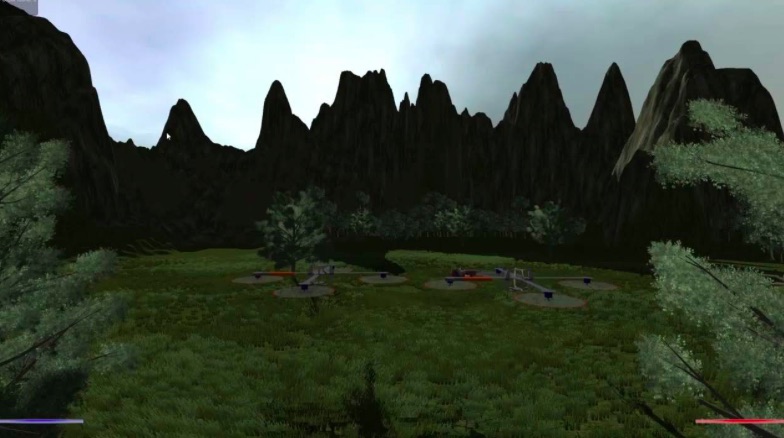 In this video lecture, Bruno Siciliano from PRISMA Lab at the University of Naples, Italy, walks us through advances in aerial manipulation with reference to three projects funded through the European Union’s (EU’s) Seventh Framework Programme.
Aerial manipulation is generally defined as the grasping, transporting, positioning, and assembly or disassembly of mechanical parts, measurement instruments, and objects, performed by Unmanned Aerial Vehicles (UAVs) with a gripper or robotic arm.
Aerial robotics has become a new frontier in the service industry and is equally useful in rescue, patrolling and localisation operations that seriously put at risk human lives. It’s also proved to be an attractive business opportunity, famously captured by Amazon’s plans for drones to deliver online ordered packages. There are, in fact, numerous industrial applications for drones in inspection and manipulation.
Siciliano and his team at PRISMA have been researching this area for the past seven years and, in this lecture, he focuses on their AIRobots, ARCAS and SHERPA projects, funded by the EU:
- AIRobot (2010-2013) – impedance control techniques for aerial manipulation.
- ARCAS – in its second of four years of planned development and validation of the first cooperative free-flying robot system for assembly and construction
- SHERPA – in its first year of developing a mixed ground and aerial robotic platform to support search and rescue activities in a real-world hostile environments, such as alpine rescue.
Download the full presentation here.
Bruno Siciliano is a Professor of Control and Robotics, and Director of the PRISMA Lab in the Department of Electrical Engineering and Information Technology at the University of Naples. His research interests include: identification and adaptive control, impedance and force control, visual tracking and servoing, redundant and cooperative manipulators, lightweight flexible arms, aerial robots, human-centered and service robotics.
He has co-authored 11 books, 70 journal papers and 200 conference papers and chapters. His book, Robotics: Modelling, Planning and Control, is one of the most widely adopted textbooks worldwide. He has delivered more than 100 lectures and seminars.
Siciliano B. IJARS Video Series: Aerial Manipulation [online video]. International Journal of Advanced Robotic Systems, 2015, 12:V4. DOI: 10.5772/60874
If you liked this lecture, you may also be interested in:
- #ERF2015 webcam: Horizon2020 project pitches Part I
- #ERF2015 webcam: Horizon2020 project pitches part II
- The Drone Center’s Weekly Roundup: 5/18/15
See all the latest robotics news on Robohub, or sign up for our weekly newsletter.
tags: Bruno Siciliano, FP7, Italy, lectures & seminars, research, UAVs & drones
AUAI is supported by:









