Robohub.org
ep.

253

podcast
 

eSIM in Wearable Technology with Karl Weaver

by
05 February 2018


share this:


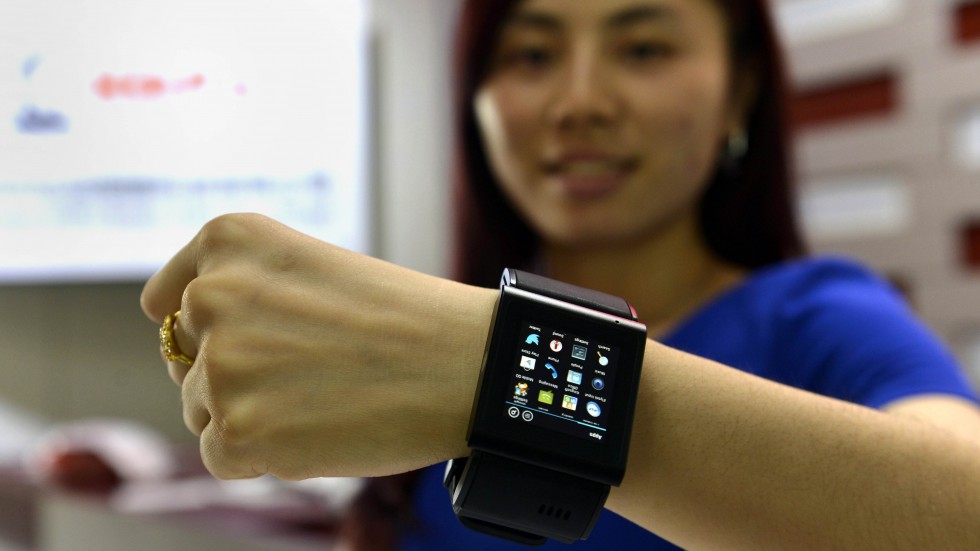
Image from the South China Morning Post

In this episode, Audrow Nash speaks with Karl Weaver (魏卡爾), formerly the Original Equipment Manufacturer Business Development Director for Oasis Smart SIM. Weaver discusses how wearable technology is growing as a form of payment system in China. He speaks about wireless technology, including Near-Field Communications (NFC) and Embedded SIM cards (eSIM), in wearable technology and in other applications, such as bike rental.

Karl Weaver (魏卡爾)

Since the recording of this interview, Karl has begun working for ARM promoting eSIM and iUICC to Greater China and Asia.

Karl Weaver (魏卡爾) previously worked as the Original Equipment Manufacturer Business Development Director (North America and Northeast Asia) for Oasis Smart SIM. Prior to Oasis, Karl worked for Rivetz Corp, a Massachusetts-based start-up to promote developer tools for design-in of TEE-enables applications on Smartphones for payment and security. Karl also spent 5 years working in China for Gemalto (and Trustonic) as liaison and evangelist of embedded Mobile Near-Field Communications Payments & TEE security technologies to the OEM Smartphone/Tablet PC ecosystem. Weaver has a B.S degree in Business Management from Salve Regina University and a Certification in Mandarin Chinese Language, Customs, and Culture from National Taiwan Normal University.


Links


tags: , , , , , ,


Audrow Nash is a Software Engineer at Open Robotics and the host of the Sense Think Act Podcast

            AUAI is supported by:


Subscribe to Robohub newsletter on substack


Related posts :

First 11 vs 11 humanoid soccer game played at RoboCup 2026

  28 Aug 2026
Watch highlights from this historic match.

How green is your robot? And other awkward questions

Robots clean rivers and sort waste, monitor ecosystems, and inspect renewable-energy infrastructure. But even the greenest robot has an environmental footprint.

These tiny drones are powered by sound

  24 Aug 2026
EPFL engineers have designed acoustic cavities that convert sound waves into thrust, propelling small robots and ultralight aerial vehicles without on-board actuators or electronics.

#AAMAS2026 blue sky award winner: Foundation world models for agents in changing environments

and   21 Aug 2026
Hear from the AAMAS 2026 Best Blue Sky Paper Award winner.

Robotics roadmaps from around the world spotlight of the month: Japan

Robots have been a prolific theme in Japanese pop culture and media since the 1950s

Intermittent swimming promotes the energy efficiency of fish-like robot movements

How zebrafish-inspired robots save energy by swimming in bursts.

What does it take for a robot to hold a conversation with a room, not just a person?

and   14 Aug 2026
Find out about a summer school held at Imperial College London.

Robotics roadmaps from around the world

We embark on a tour into some of the recent and prominent robotics roadmaps from around the world.


AUAI is supported by:


Subscribe to Robohub newsletter on substack


©2026.05 - Association for the Understanding of Artificial Intelligence