Robohub.org
 

Into the heart of a glacier — with a drone

by and
20 January 2016


share this:
Photo credit: Pierre-Yves Guernier

Photo credit: Pierre-Yves Guernier

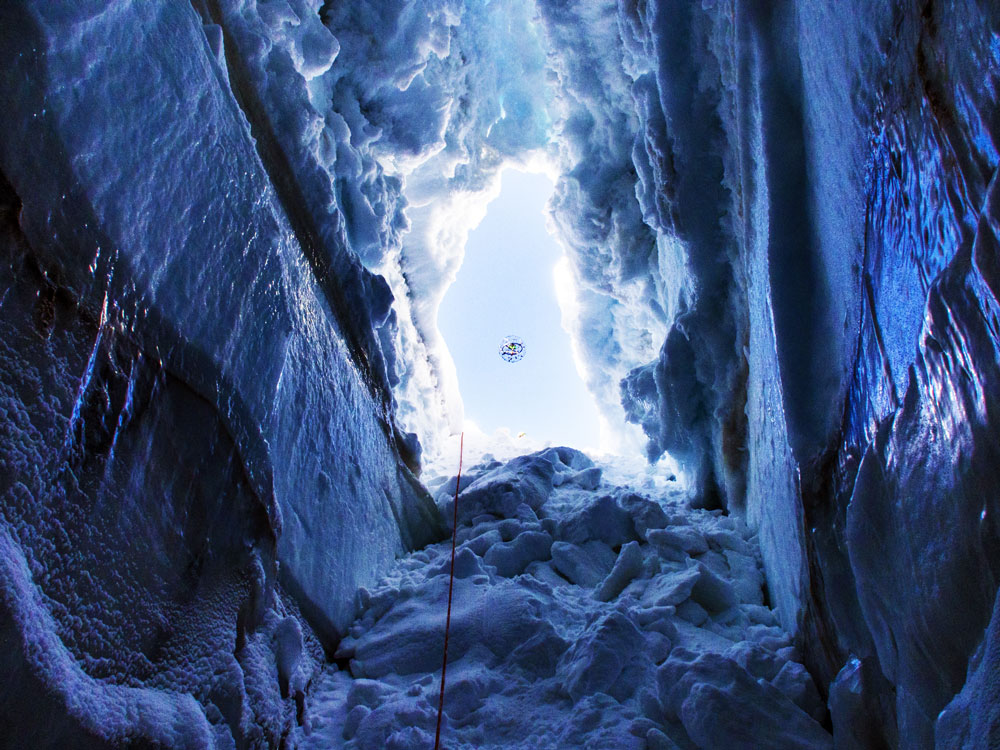
With their near-vertical walls and deep fractures, glacier crevasses are dangerously narrow ice caves that present a huge risk to search and rescue teams. In a partnership between Flyability (Winner of the 2015 UAE Drones for Good Award) and the Zermatt Glacier mountain rescue team, drones were used to explore a remote crevasse in the Swiss Alps. The goal is to one day use the drones to help locate injured parties before dispatching a rescue team into dangerous territory, and also to help refine rescue techniques related to crevasse fall emergencies.
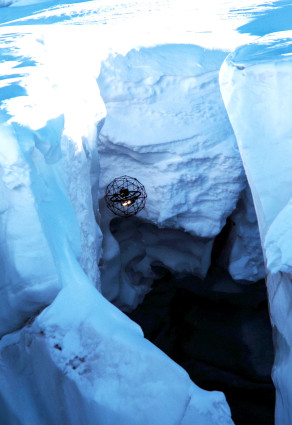
Photo credit: Pierre-Yves Guernier

Photo credit: Pierre-Yves Guernier

Until now, crevasses have been largely inaccessible (both to people and to robotic technologies) because their uneven narrow walls make them extremely difficult to navigate. The Flyability drone, however, turned this to advantage by using its spherical, freely rotating protective cage — called a gimbal — to bump its way safely down into the crevasse and back up to the surface, capturing a rare view of the landscape along the way. The embedded full HD camera, digital live video transmission, and powerful lighting system allowed the drone to operate in the heart of the mountain glacier, tens of meters below the surface.

The gimbal also makes the drone safe to fly close to humans, even while being remotely operated by an untrained pilot — another feature of critical importance in search and rescue operations.

Flyability SA develops collision-resistant drones for the inspection and exploration of inaccessible and confined environments such as those found in industrial inspection and search and rescue scenarios, in order to quickly and cost effectively provide crucial image and thermal information needed to locate damage or victims.
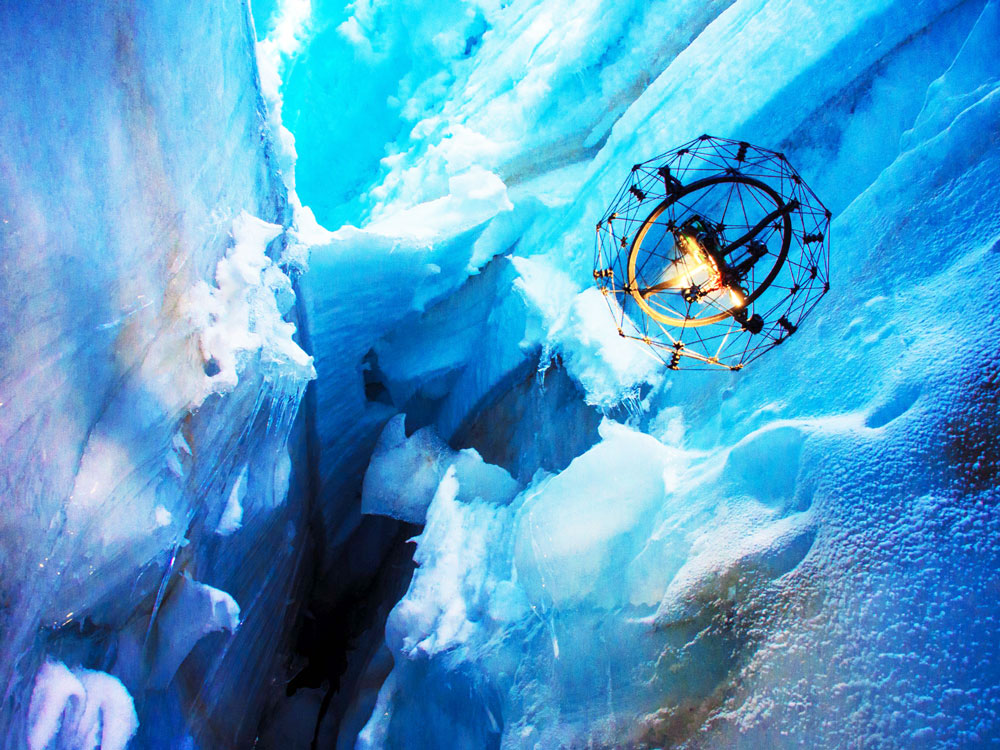
Photo credit: Pierre-Yves Guernier
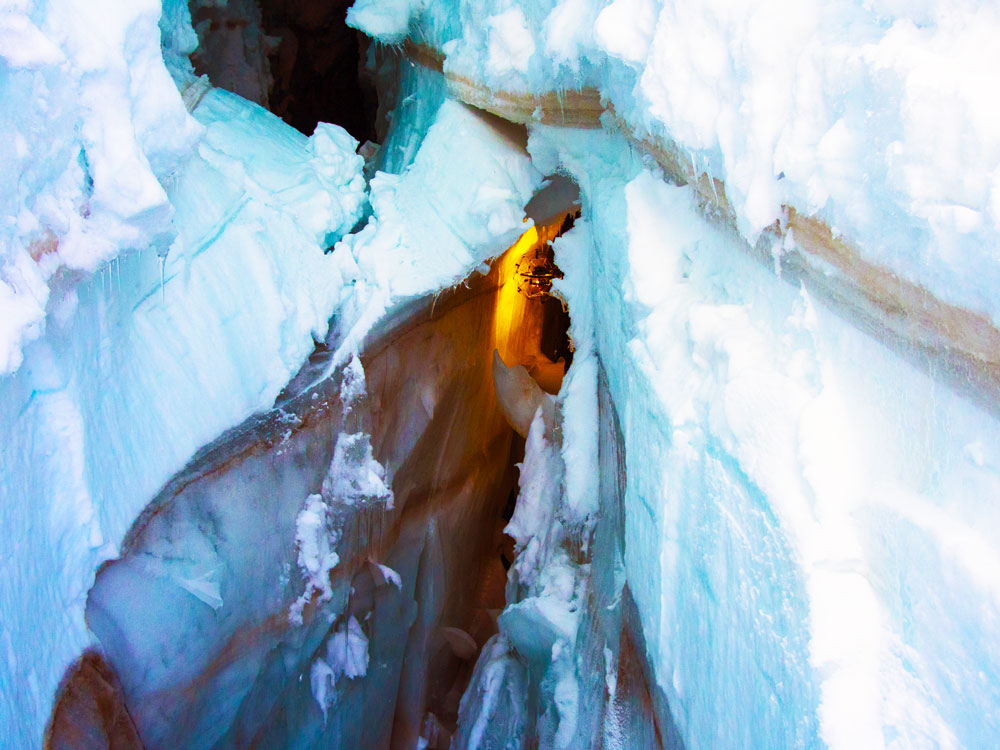
Photo credit: Pierre-Yves Guernier

Photo credit: Pierre-Yves Guernier
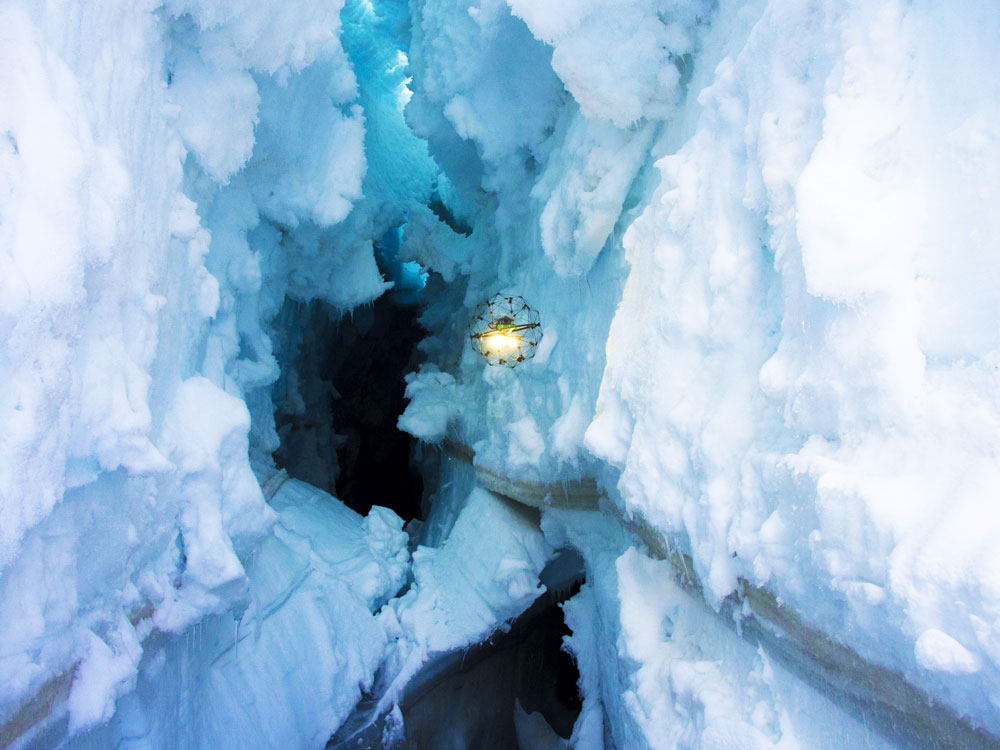
Photo credit: Pierre-Yves Guernier

Photo credit: Pierre-Yves Guernie

Photo credit: Pierre-Yves Guernier

Photo credit: Pierre-Yves Guernie

Photo credit: Pierre-Yves Guernier


tags: , , , ,


Adrien Briod is co-founder and CTO of Flyability.

Hallie Siegel robotics editor-at-large

            AUAI is supported by:


Subscribe to Robohub newsletter on substack


Related posts :

Developing active and flexible microrobots

  13 May 2026
This class of robots opens up possibilities for biomedical applications.

How to teach the same skill to different robots

  11 May 2026
A new framework to teach a skill to robots with different mechanical designs, allowing them to carry out the same task without rewriting code for each.

Robot Talk Episode 155 – Making aerial robots smarter, with Melissa Greeff

  08 May 2026
In the latest episode of the Robot Talk podcast, Claire chatted to Melissa Greeff from Queen's University about autonomous navigation and learning for drones.

New understanding of insect flight points way to stable flapping-wing robots

  07 May 2026
The way bugs and birds flap their wings may look effortless, but the dynamics that keep them aloft are dizzyingly complex and difficult to quantify.

Robotically assembled building blocks could make construction more efficient and sustainable

  05 May 2026
Research suggests constructing a simple building from interlocking subunits should be mechanically feasible and have a much smaller carbon footprint.

Robot Talk Episode 154 – Visual navigation in insects and robots, with Andrew Philippides

  01 May 2026
In the latest episode of the Robot Talk podcast, Claire chatted to Andrew Philippides from the University of Sussex about what we can learn from ants and bees to improve robot navigation.

Ultralightweight sonar plus AI lets tiny drones navigate like bats

  29 Apr 2026
Researchers develop ultrasound-based perception system inspired by bat echolocation.

Gradient-based planning for world models at longer horizons

  28 Apr 2026
What were the problems that motivated this project and what was the approach to address them?


AUAI is supported by:


Subscribe to Robohub newsletter on substack


©2026.02 - Association for the Understanding of Artificial Intelligence