
Robohub.org
Phiro is a smart robot that lets kids learn to code 5 different ways
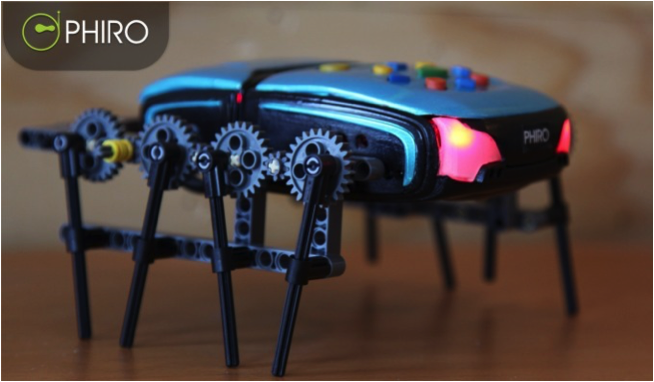
Just like reading, writing and arithmetic, problem solving and innovative thinking are essential 21st century skills our children need. Research shows that one of the most effective ways for kids to learn problem solving is through coding and robotics.
My sister and I lead our robotics education startup, Robotix USA and with our team, we have created Phiro. Phiro is a LEGOⓇ compatible robotics & coding platform that helps young children learn to code and teaches problem solving and computational thinking, basic skills required for the next generation. Phiro robots make learning to code accessible and less intimidating to kids by bringing coding to the physical world where they can visualize the outcome of code they have created.
There is a growing movement to help kids everywhere to learn to code. We want to empower kids to be computational thinkers and creative problem solvers by learning to program a fun robot. We have launched a crowdfunding campaign to get Phiro into the hands of kids worldwide. Backers of the campaign can be the first to get their own Phiro robots or pledge money and for every $99 raise we will donate Phiro robots to an All Girl’s Orphanage in India, to help bridge the gender gap for girls in STEM fields.
https://www.kickstarter.com/projects/2074714954/phiro-a-smart-robot-for-kids-learn-to-code-in-5-wa?ref=nav_search
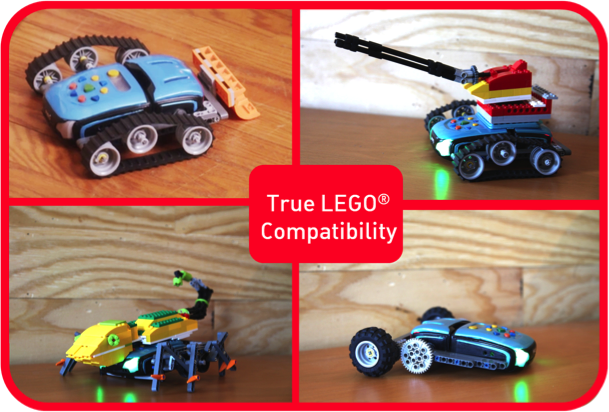
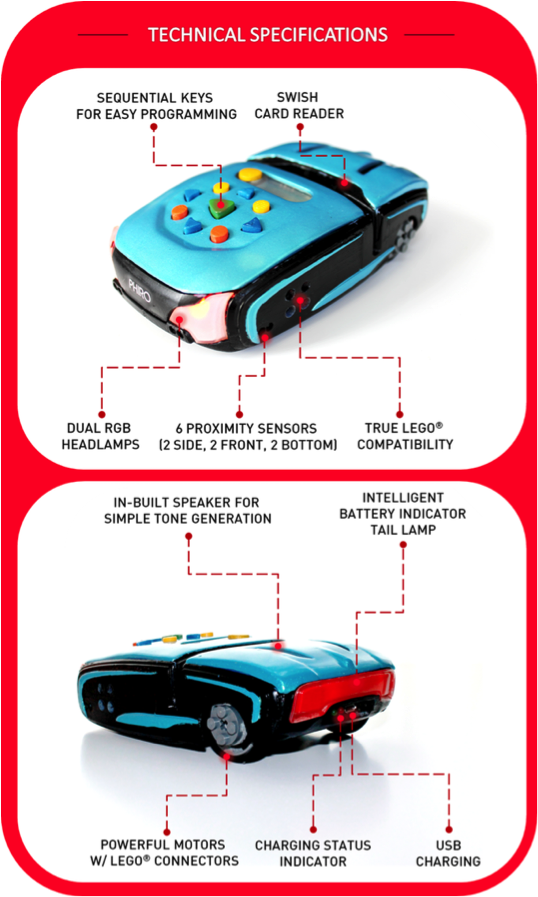
With Phiro, kids can create their own interactive games and stories, program Phiro to do anything they imagine while learning to solve problems. Phiro engages kids for a long time and it is super easy to get kids started with the robots. Kids can be endlessly creative and transform Phiro into an animal, alien, car, join your tea party, or anything you imagine with Phiro’s True LEGOⓇ Compatibility and LEGOⓇ compatible connector. Kids can personalize their own Phiro robots!
With many years of experience teaching STEM, robotics and coding in K-12 schools, we at Robotix have evaluated robots from all over the world and found several gaps. They are usually expensive, use proprietary programming languages and are not so fun to use. We created Phiro, an affordable robot that has a lot of learning, creativity and fun packed into it. We didn’t just add one way to code and control Phiro, we added five ways! We designed it to enable many ways to problem solve without a computer or with open-source programming languages that millions of kids use and love. Kids can be endlessly creative and innovative with Phiro’s LEGOⓇ compatibility and Smartphone Mount.
We have created two robots:
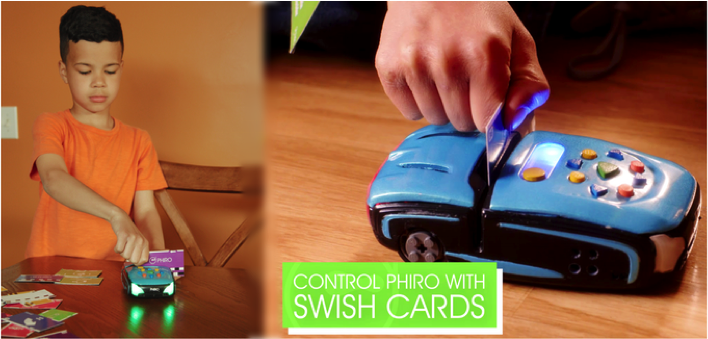
Phiro Unplugged for kids aged 4 to 8. Kids can learn to code and program the robot without a computer! Phiro Unplugged is a great robotic tool to learn sequential programming and fundamentals of binary coding. Parents love that Phiro Unplugged does not require visual screen time from tablets, smartphones or computers for their little ones!
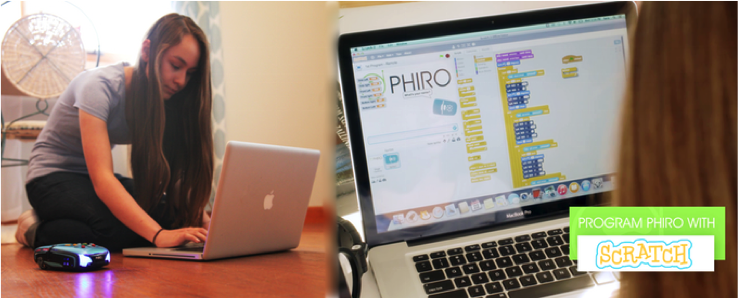
Phiro Pro for young people aged 9 to 18. Phiro Pro engages young people at the next level by stimulating coding concepts using free open-source programming languages. Children can program and control Phiro Pro wirelessly, with a computer, tablet or smartphone connected in bluetooth mode, to Scratch 2.0 (MIT, USA), Snap4Arduino (UC Berkeley/Citilab, Spain), Pocket Code mobile apps (Catrobat project headquartered at Graz University of Technology, Austria). Through the online community of Scratch, Snap4Arduino and Pocket Code, kids can share their code for Phiro with friends across the world, collaborate to create entirely new robot commands and learn coding tricks from them! Phiro Pro has all the capabilities of Phiro Unplugged as well.
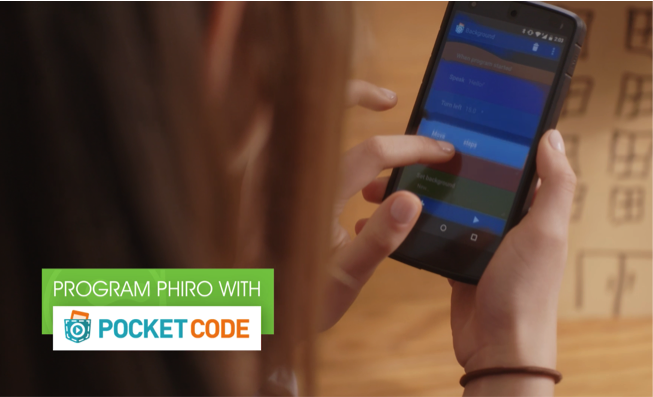
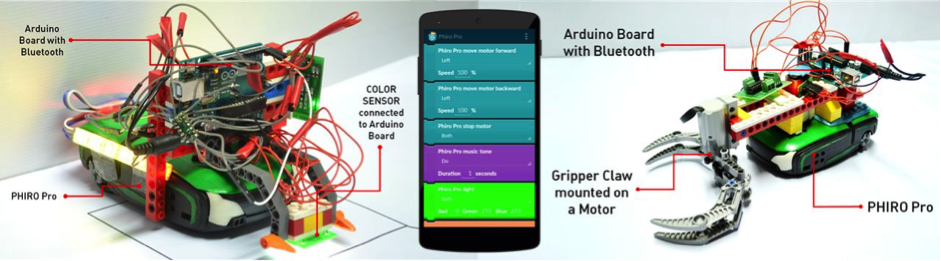
Phiro robots are set to join the Arduino and Maker communities! For the first time in the world a Phiro robot and Arduino board can be programmed and controlled wirelessly via bluetooth, both simultaneously using the Pocket Code app on a smartphone! Until now there has been no smartphone app that can program and control even one Arduino board wirelessly via bluetooth. Our smartphone app, Pocket Code for Phiro, can program and control both Arduino and Phiro robot simultaneously without live Internet, once downloaded on the smartphone. This opens up endless possibilities for tinkering and extending the capabilities of Phiro Pro and Arduino with Pocket Code.
Watch the video to see how this work in a fun board game that kids can create themselves.
Check out our campaign page.
tags: c-Education-DIY, Crowd Funding, educational robotics

AUAI is supported by:









