Robohub.org
ep.

308

podcast
 

Seeing like a Rover with Janet Vertessi

by
28 April 2020


share this:


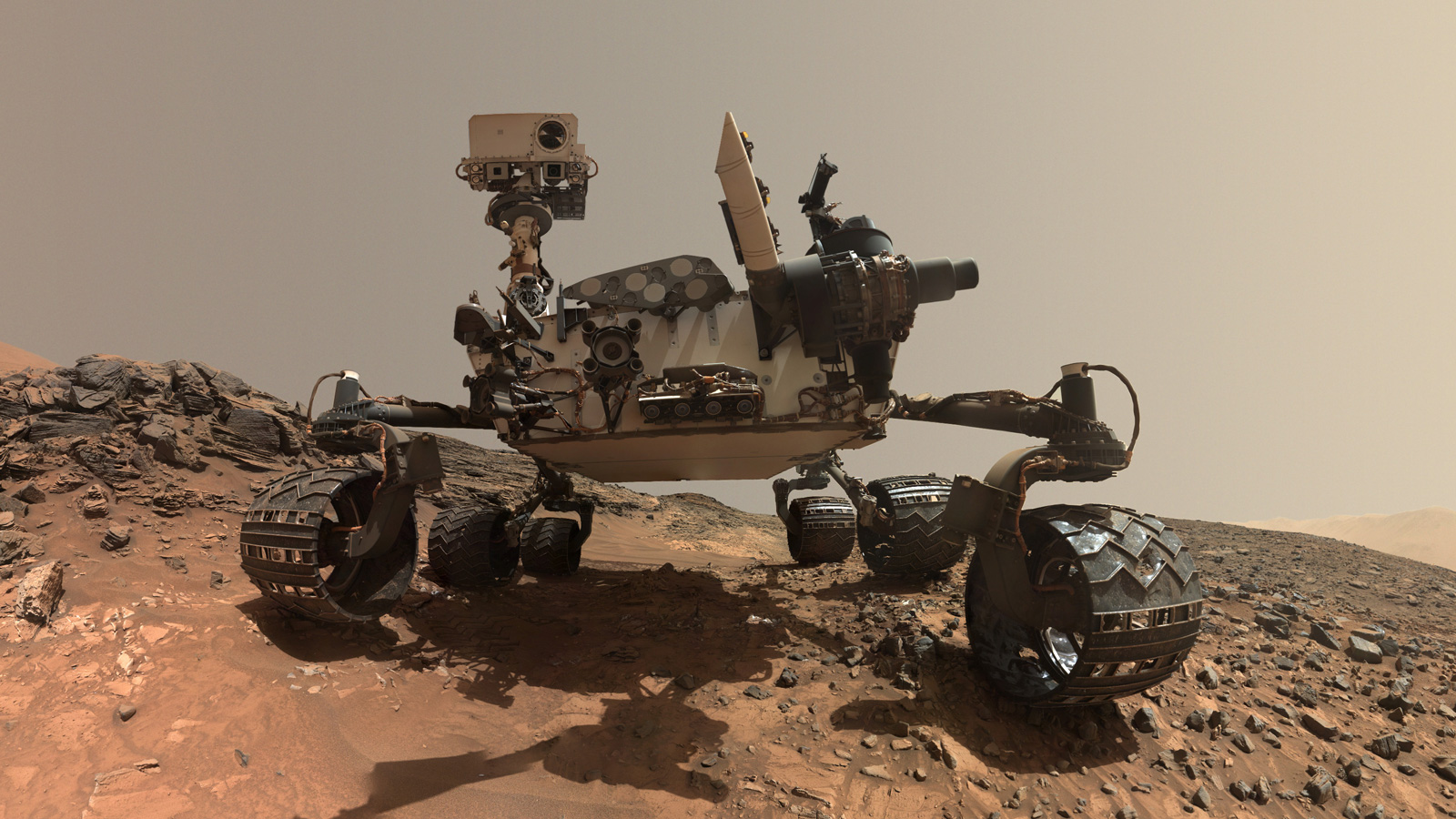
In this episode, Audrow Nash speaks with Janet Vertessi, Assistant Professor of Sociology at Princeton, on her book Seeing Like a Rover: How Robots, Teams, and Images Craft Knowledge of Mars. The book is written about her experience living and working with NASA’s Mars Rover team, and includes her observations about the team’s leadership and their relationship with their robot millions of miles away on Mars. She also gives some advice from her findings for teams.

Janet Vertessi

Janet Vertesi specializes in the sociology of science, knowledge, and technology. She has spent the past 7 years studying several NASA spacecraft teams as an ethnographer. Her book, Seeing like a Rover: Images and Interaction on the Mars Exploration Rover Mission (Chicago, 2014) draws on over two years of ethnographic immersion with the Mars Exploration Rover mission to show how scientists and engineers use digital images to conduct scientific research on another planet. She is currently working on followup study of the NASA-ESA Cassini mission to Saturn focusing on the role of sociotechnical organization in research, data-sharing, and decision-making on robotic spacecraft teams. Vertesi is also interested in the digital sociology: whether studying computational systems in social life, shifting sociological methods online, or applying sociological insights to build new technologies.  She holds a Master’s degree from Cambridge and a PhD from Cornell, has received several grants from the National Science Foundation, and was awarded the Hacker-Mullins prize for best graduate student paper from the American Sociological Association, Science, Knowledge and Technology section in 2007.

Links


tags: , , , ,


Audrow Nash is a Software Engineer at Open Robotics and the host of the Sense Think Act Podcast


Subscribe to Robohub newsletter on substack


Related posts :

AI system learns to keep warehouse robot traffic running smoothly

  20 Apr 2026
This new approach adapts to decide which robots should get the right of way at every moment, avoiding congestion and increasing throughput.

Robot Talk Episode 152 – Dexterous robot hands, with Rich Walker

  17 Apr 2026
In the latest episode of the Robot Talk podcast, Claire chatted to Rich Walker from Shadow Robot Company about their advanced robotic hands for research and industry.

What I’ve learned from 25 years of automated science, and what the future holds: an interview with Ross King

and   14 Apr 2026
Ross King created the first robot scientist back in 2009. He spoke to us about the nature of scientific discovery, the role AI has to play, and his recent work in DNA computing.

Robot Talk Episode 151 – Robots to study the ocean, with Simona Aracri

  10 Apr 2026
In the latest episode of the Robot Talk podcast, Claire chatted to Simona Aracri from National Research Council of Italy about innovative robot designs for oceanography and environmental monitoring.

Generative AI improves a wireless vision system that sees through obstructions

  08 Apr 2026
With this new technique, a robot could more accurately detect hidden objects or understand an indoor scene using reflected Wi-Fi signals.

Resource-constrained image generation and visual understanding: an interview with Aniket Roy

  07 Apr 2026
Aniket tells us about his research exploring how modern generative models can be adapted to operate efficiently while maintaining strong performance.

Back to school: robots learn from factory workers

  02 Apr 2026
A Czech startup is making factory automation easier by letting workers teach robots new tasks through simple demonstrations instead of complex coding.

Resource-sharing boosts robotic resilience

  31 Mar 2026
When a modular robot shares power, sensing, and communication resources among its individual units, it is significantly more resistant to failure than traditional robotic systems.


Robohub is supported by:


Subscribe to Robohub newsletter on substack


©2026.02 - Association for the Understanding of Artificial Intelligence