
Robohub.org
U of Washington Tech Policy Lab answers the question: What is a robot?
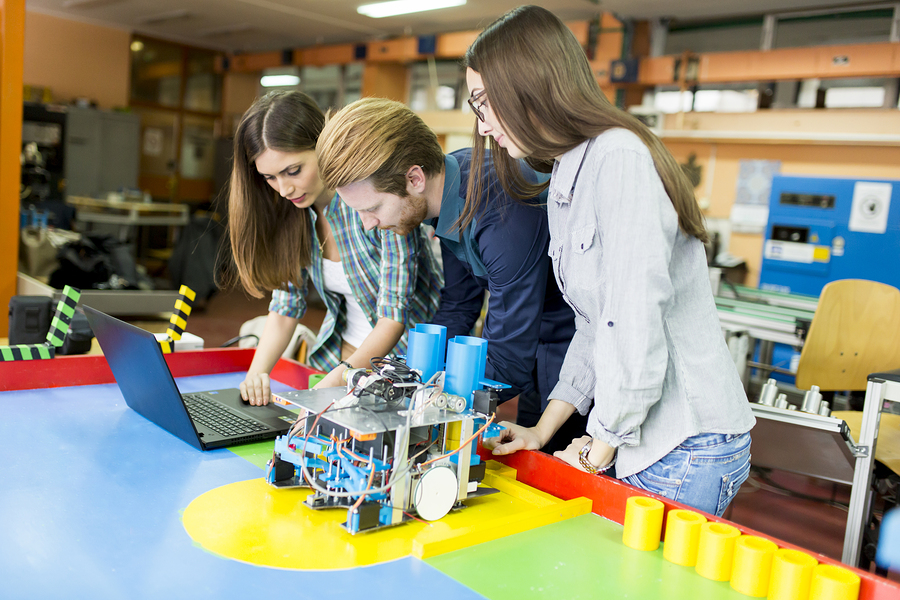
What is a robot? There are business, legal, insurance and safety considerations which make that definition important and the Tech Policy Lab at the University of Washington gave it a try with an interesting 6-minute video.
The Tech Policy Lab at the University of Washington is chartered to enhance technology policy through research, education and thought leadership. They just finished putting together a series of workshops co-hosted with the White House to prepare for the future of artificial intelligence.
- May 24, 2016: Legal and Governance Implications of Artificial Intelligence in Seattle, WA
- June 7, 2016: Artificial Intelligence for Social Good in Washington, DC
- June 28, 2016: Safety and Control for Artificial Intelligence in Pittsburgh, PA
- July 7: The Social and Economic Implications of Artificial Intelligence Technologies in the Near-Term in New York City
Earlier the lab produced a primer video for a Concepts in Tech and the Law workshop that included this 6-minute video, What is a Bot?
Today’s use of the term “robot” is regularly misused by the very people that set trends: the media and businesses in their marketing and software (and A.I.) as their products encroach on the traditional definitions offered by the International Federation of Robotics. The regularity with which this misuse is occurring indicates changes in the definition will be happening soon, particularly as software bots such as Amazon’s Echo and Microsoft’s Xiaoice become more ubiquitous. Amazon has already sold over 3 million Echos!
Robohub held a roundtable to answer the same question. It was predicated on the assumption that having a precise definition is important to all of the stakeholders involved in making and using robotics. What they concluded is highlighted below:
“Ask a roboticist and you’ll likely get a dozen different responses. If we were to look at robotics as a set of enabling technologies (machine learning, internet of things, sensors, computation, hardware), we’d end up with nearly everything being a “robot”: from your toaster to your home. Not to mention, technology is constantly changing over time, which can easily be forgotten. Instead of having a rigid, well-defined easy answer, it appears we’re forced to accept the definition is fluid, depending on the purpose it serves. Defining what a robot is will be uniquely different if you’re a lawyer, philosopher, researcher, or a company.”
Enjoy the video as you ponder the question “What is a robot?” and how the answer relates to you. Or you could ask Xiaoice or Alexa for their opinion.

AUAI is supported by:









