Robohub.org
Unmanned combat robots beginning to appear
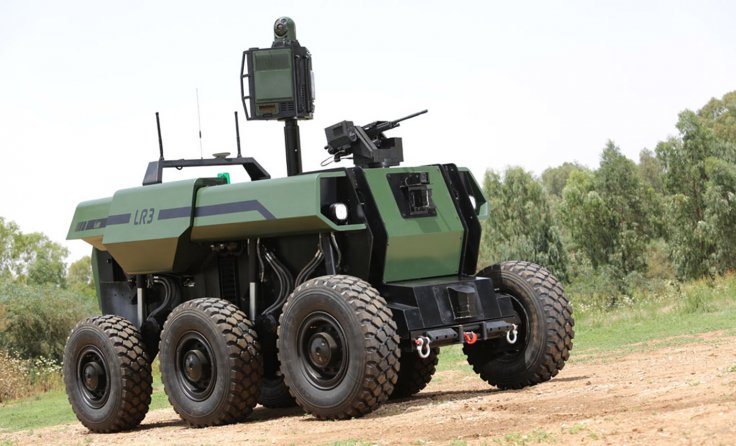
Source: IAI
IAI’s RoBattle unmanned, heavy duty, highly maneuverable, combat and support robotic system (UGV) is being shown at the Eurosatory 2016 Land and Airland Defence and Security tradeshow in Paris this week.
The system, by Israel Aerospace Industries (IAI), is designed to be integrated with tactical forces in mobile or dismounted operations and support a wide range of missions including intelligence, surveillance and armed reconnaissance and convoy protection, decoy, ambush and attack. RoBattle comes equipped with a modular robotic kit comprised of vehicle control, navigation, realtime mapping and autonomy, sensors and mission payloads. The system can be operated autonomously and configured with wheels or tracks.
UGVs have been a consistent feature of military operations since the start of the conflicts in Afghanistan and Iraq. Thousands of UGVs were deployed during these conflicts predominantly to perform explosive ordnance disposal (EOD) operations.
Several countries – Russia, China, the US, UK, Taiwan, Estonia and Iran, to name a few – are developing teleoperated UGVs equipped with remote weapon stations. One company displayed a family of UGVs at the Singapore Air Show in February 2016 that included a stabilised 7.62mm machine guns. The same vendor is planning a non-line-of-sight missile-launching UGV (according to IHS Jane’s).
Stuart Hatfield, the robotics chief for the US Army G-8 gave a talk at the Xponential 2016 exhibition in Philadelphia in which he noted that the Army’s funding for ground robotics had tripled from $290 million in the FY 2014-2018 five-year funding plan to $900 million in the FY 2017-2021 plan. According to Hatfield, the future of UGVs is “not about a lack of resources right now… but rather the requirements, technology and funding all have to come together at the right time.”
UGV technology has made steady strides in the past several years albeit incremental baby steps. In many cases, however, challenges still remain to better optimise UGV effectiveness across the range of envisioned applications. As with most unmanned systems, increased autonomy tops the list of technology development priorities.
If you enjoyed this article, you may also enjoy reading:
- Robots, soldiers and cyborgs: The future of warfare
- Should robots make life/death decisions? UN to discuss lethal autonomous weapons next week
- Active military robots around the world
- Mobile robots fight against deadly legacies of war
- Robohub focus: Robots and warfare
See all the latest robotics news on Robohub, or sign up for our weekly newsletter.
tags: military

AUAI is supported by: