
Robohub.org
Driven by care needs, will it be the booming senior population that spurs wider acceptance of robots?
Tony Prescott, Professor of Cognitive Neuroscience and Director of the Sheffield Center of Robotics believes that the medical industry could be at the forefront of changing the public perception of robotics. Why? Because this is an industry that already understands how paramount it is, when dealing with the elderly, disabled and ill, to provide a service that is helpful, friendly and nonthreatening.
Speaking this week at RE.WORK – an event that explores the challenges of commercializing robotics – Prescott recalled the fear people had in the 90s about the coming of the Internet. Similarly, he said, reporters often ask him: “When will robots take over the world?” The question has perhaps become a cliché among roboticists, but in his presentation (aptly titled “Robots that know themselves will make better carers”) Prescott suggested that much can be learned from neuroscience and psychology to improve the safety and effectiveness – and by extension the public perception – of human-robot interaction.
The aging population is increasing rapidly, and there are not enough caregivers to satisfy the growing demand. It is projected that by 2060, there will be one dependent person for every working person in the EU. Per visit, caretakers have limited time in which to interact the elderly people in their care, and time must be divided between aiding with personal hygiene tasks, ordering/preparing food, and one-on-one conversation time. As such, seniors must often make difficult decisions to prioritize the services they wish to receive from caregivers.
Prescott said that personal robots could aid seniors with time consuming household tasks such as making a pot of tea, reaching for the salt, opening a jar, or microwaving food – tasks that could be frustrating if you have to wait around for help. Personal hygiene tasks such as showering or using the toilet can create an embarrassing dynamic between the elderly and the caretaker, and so also make ideal tasks for robot care assistants.
Prescott points out that the role of a robot should be to assist the senior and the caregiver, not to take over. “Robots can help caregivers, not by replacing them, (but by working with them).” With the aid of personal robots, caretakers could spend more time engaging in one-on-one conversation with the elderly, providing valuable social interaction.
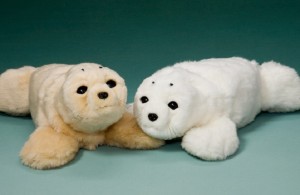
Paro therapeutic robot
And yet we cannot stop people from getting personally attached to the items they own, Prescott explains. People like to glue fur to their Roombas to make them feel more like pets, and robot companions like the Paro have been shown to induce relaxation, reduce stress, and stimulate communication between patients and caregivers. The important distinction to remember, suggested Prescott, is that the companionship people feel toward their robots is more in line with how they feel toward their pets, and the need for human companionship will always remain critical.
If we can learn to design robots that can work as part of a care team, public perception of robots is sure to change.
tags: c-Politics-Law-Society, cx-Business-Finance, cx-Events, EU perspectives, opinion, PARO, robots for eldercare

AUAI is supported by:









