Robohub.org
Intel to acquire Mobileye for $15.3 billion
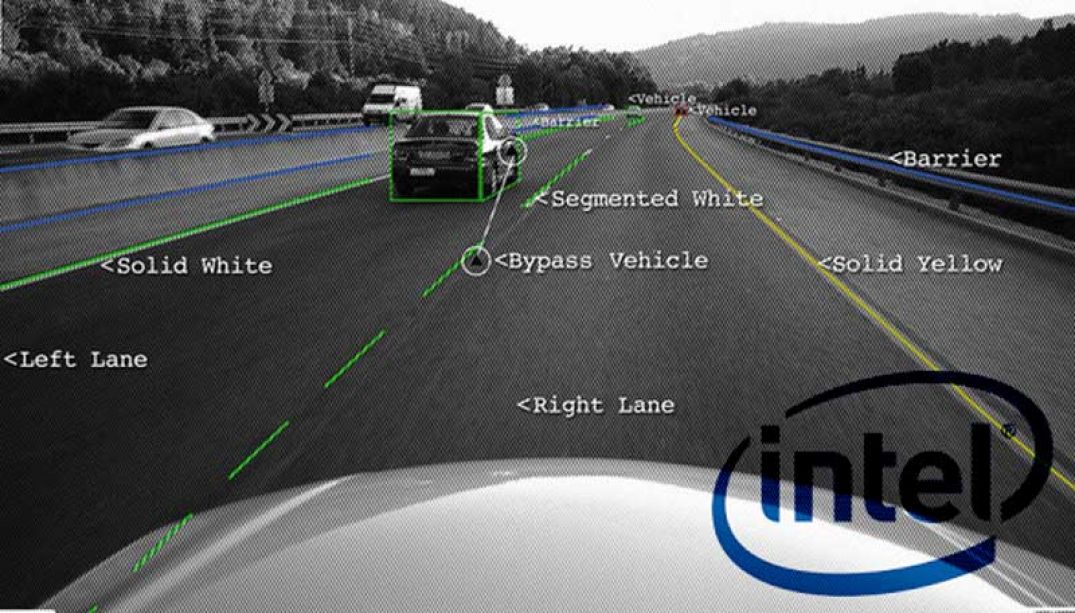
Source: Intel
Intel announced plans to acquire Israel-based Mobileye, a developer of vision technology used in autonomous driving applications, for $15.3 billion. Mobileye share prices jumped from $47 to $61 (the tender offering price is $63.54) on the news, a 30% premium. The purchase marks the largest acquisition of an Israeli hi-tech company ever.
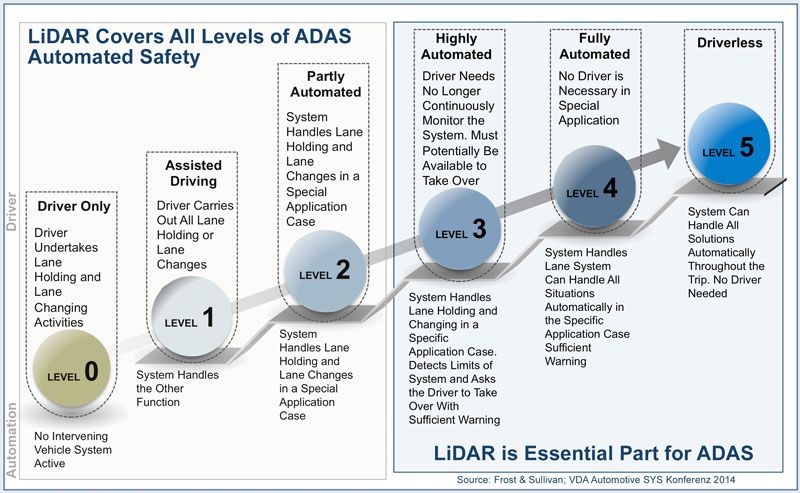
Source: Frost & Sullivan;VDS Automotive SYS Konferenz 2014/
This transaction jumpstarts Intel’s efforts to enter the emerging autonomous driving marketplace, an arena much different than Intel’s present business model. The process to design and bring a chip to market involves multiple levels of safety checks and approvals as well as incorporation into car company design plans – a process that often takes 4 to 5 years – which is why it makes sense to acquire a company already versed in those activities. As can be seen in the Frost & Sullivan chart on the right, we are presently producing cars with Level 2 and Level 3 automated systems. Intel wants to be a strategic partner going forward to fully automated and driverless Level 4 and Level 5 cars.
Mobileye is a pioneer in the development of vision systems for on-board Driving Assistance Systems; providing data for decision making applications such as Mobileye’s Adaptive Cruise Control, Lane Departure Warning, Forward Collision Warning, Headway Monitoring, High Beam Assist and more. Mobileye technology is already included in BMW 5-Series, 6-Series, 7-Series, Volvo S80, XC70 and V70 models, and Buick Lucerne, Cadillac DTS and STS.
Last year, Intel reorganized and created a new Autonomous Driving Division which included strategic partnerships with, and investments in, Delphi, Mobileye and a bunch of smaller companies involved in the chipmaking and sensor process. Thus, with this acquisition, Intel gains the ability to offer automakers a larger package of all of the components they will need as vehicles become autonomous and perhaps gaining, as well, on their competitors in the field: NXP Semiconductors, Freescale Semiconductor, Cypress Semiconductor, and STMicroelectronics, the company that makes Mobileye’s chips.
Mobileye’s newest chip, the EyeQ4, designed for computer vision processing in ADAS applications, is a low-power supercomputer on a chip. The design features are described in this article by Imagination Technology.
Bottom line:
“They’re paying a huge premium in order to catch up, to get into the front of the line, rather than attempt to build from scratch,” said Mike Ramsey, an analyst with technology researcher Gartner in a BloombergTechnology article.
tags: Autonomous Cars, autonomous vehicles, c-Business-Finance, Intel, LIDAR, MobilEye