Robohub.org
Robust bipedal Cassie to transform robot mobility
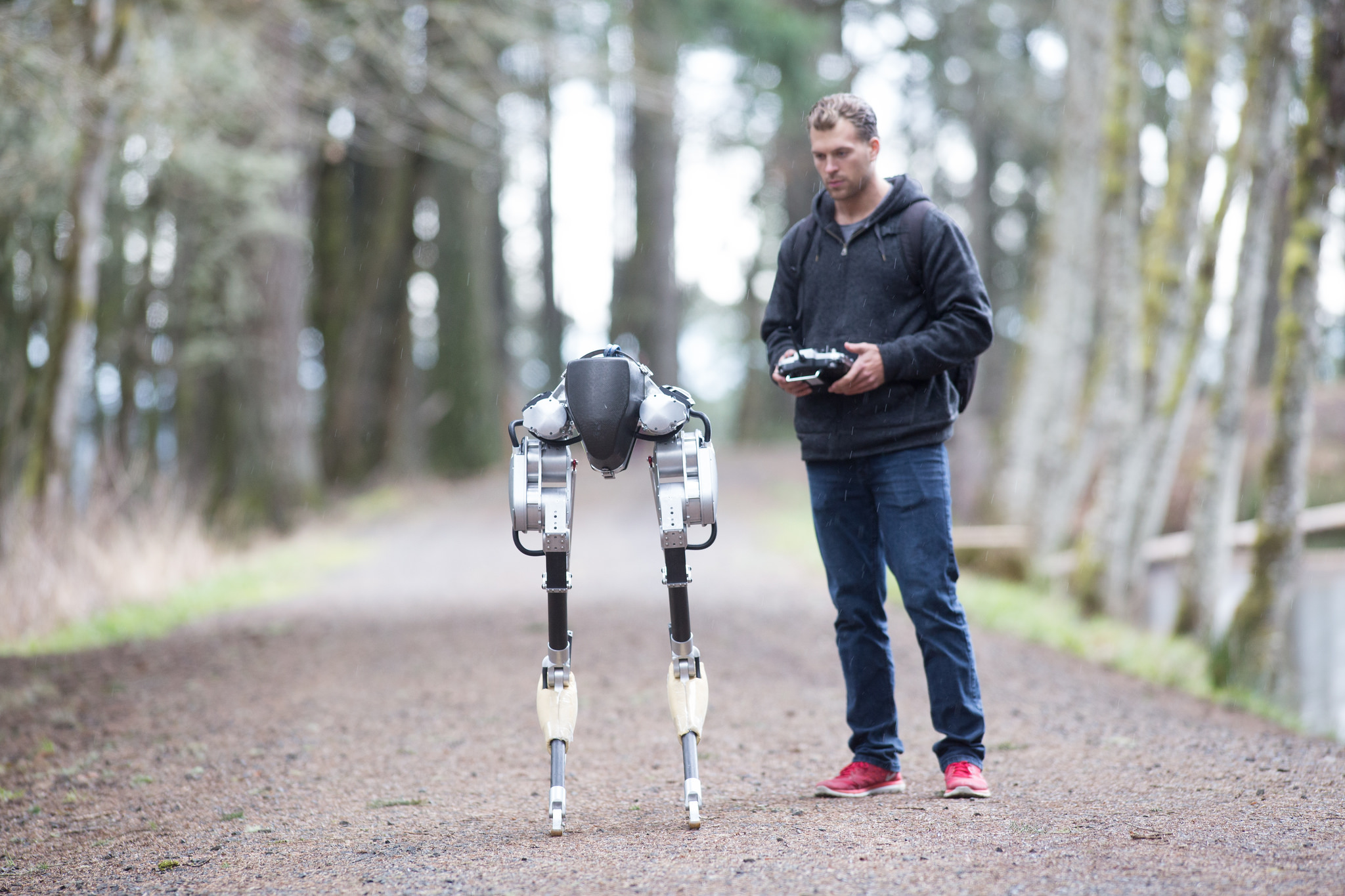
Cassie is an advanced legged mobility robot. Created by Oregon State University spin-off, Agility Robotics, Cassie’s engineering team has big plans for this robot to assist rescuers in disaster relief and go the extra mile when delivering packages right to our doors, potentially helping to revolutionise the retail market.
If bipedal robots are not especially efficient why do we keep trying to build them? Simply put, these types of robots are useful in navigating around in human-created environments. Just watching the, albeit, slightly hilarious, compilation video from the DARPA competition makes you realise that creating efficient mobility in robotics is incredibly difficult; indeed, it’s nowhere near good enough. Cassie’s design may change how we utilise mobility in robots in the future.
Jonathan Hurst, Associate Professor of Robotics and CTO at Agility Robotics, says that robots with legs are able to “go to a lot of places that wheels cannot.” In doing so, this “will be key to deliveries that can be made 24 hours a day, 365 days a year, by a fleet of autonomous vans that pull up to your curb and an onboard robot that delivers to your doorstep.”
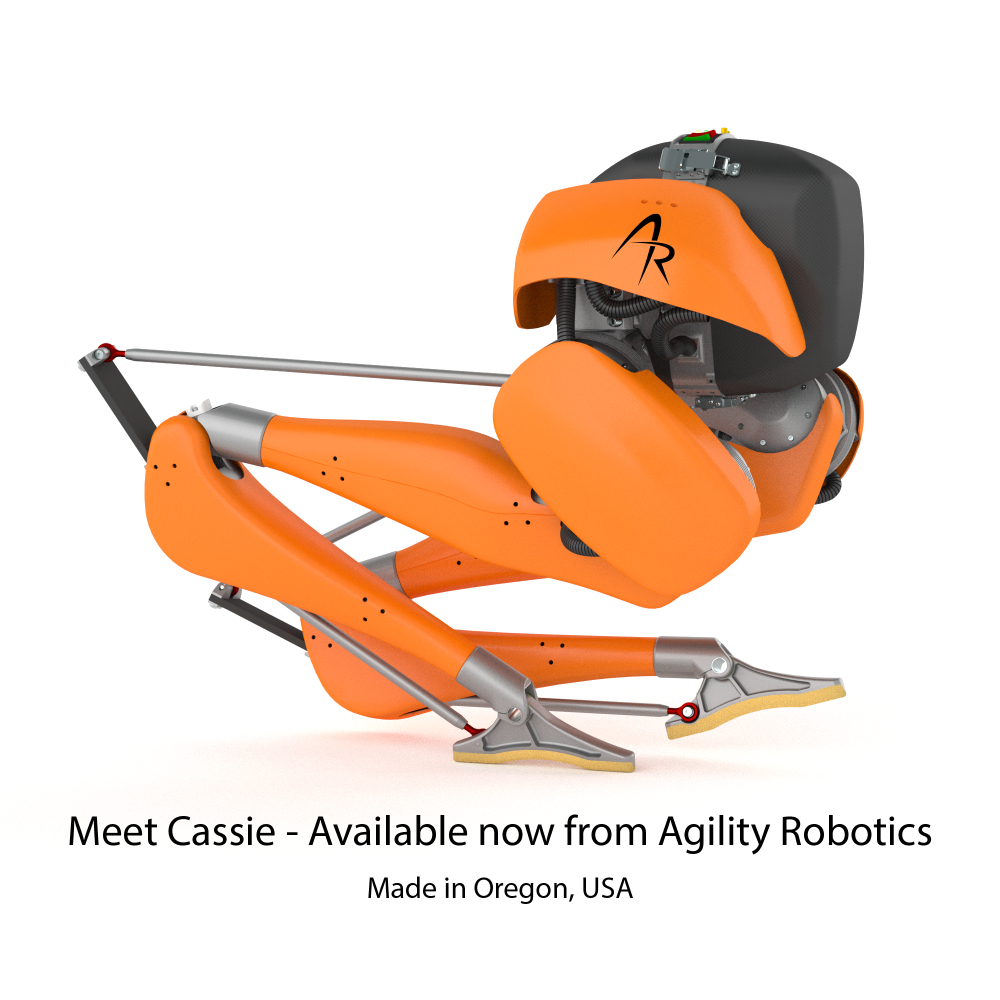
Photo: Agility Robotics
What makes this robot different? To start, they added more motors giving it 3 degrees of freedom in the hip joints, allowing human-like movement. It can sit down, squat, and crouch. Powered ankles provide support for Cassie to stand in place and balance or walk on uneven ground. Although bipedal, the legs weren’t specifically designed to look like an animal (although it does look quite ostrich-like), the team simply wanted the robot to be robust, agile, and efficient. The particular issue of motors working against one another prompted some extensive theoretical research, to create the mathematical frameworks needed to solve the problem. In the video below, one of the co-founders pushes his body weight onto Cassie yet it still manages to keep its balance effortlessly:
https://www.youtube.com/watch?v=tWVci9qS7Ds
Many of the components used in Cassie were custom made, including its lithium-ion battery pack. The robot can take a pretty good fall without breaking, and, its half the weight and much more capable than earlier robots developed at OSU.
“Our previous robot, ATRIAS, had motors that would work against either other, which was inefficient,” Hurst said. “With Cassie, we’ve fixed this problem and added steering, feet, and a sealed system, so it will work outdoors in the rain and snow as we continue with our controller testing.”
Agility Robotics already has several of its first customers and will license some technologies first developed at OSU. They plan to build on this scientific foundation in their product research and development. One leading application for this mobility technology is package delivery, as we mentioned earlier, but it could also be used in military applications like scouting into unknown spaces and search and rescue by enabling live, real-time sensing with human-like mobility.
tags: c-Research-Innovation, robot, robotics