
Robohub.org
SoftBank invests $5 billion into Didi Chuxing and $4 billion more in Nvidia
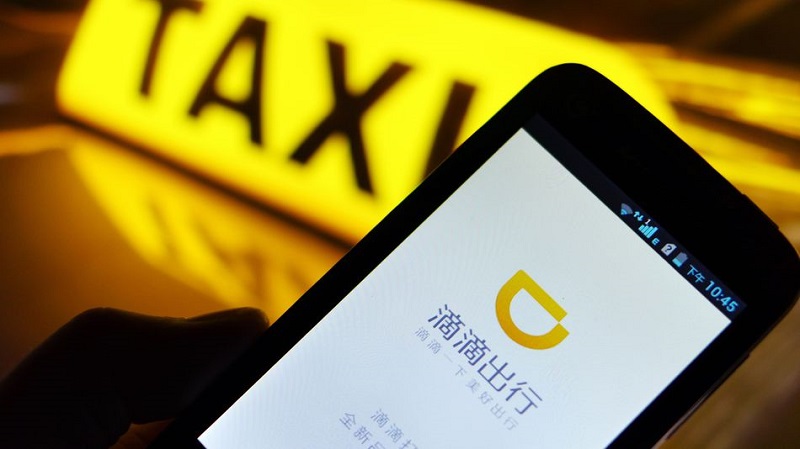
SoftBank, the giant telecom company, is venturing out into the world of robotics and transportation services. DealStreet Asia said that SoftBank is trying to transform itself into the ‘Berkshire Hathaway of the tech industry’ with the recent launch of a $100 billion technology fund.
UPDATED 5/24/17: SoftBank’s acquisition of 4.9% of the outstanding shares of Nvidia Corp.
First SoftBank bought Aldebaran, the maker of the Nao and Romeo robots, and redirected them to produce the Pepper robot which has been sold in the thousands to businesses as a guide, information source and order taker, then bigger partnerships with Foxconn and Alibaba to manufacture and market Pepper and other consumer products, and most recently to establishing the $100 billion technology fund.
Recognizing that the telecom services market has matured, SoftBank is putting their money where they can to participate in the new worlds of robotics and transportation as a service. $5 billion in Didi Chuxing, China’s largest ride-sharing company, is a perfect example.
Didi Chuxing
Didi, which already serves more than 400 million users across China, provides services including taxi hailing, private car-hailing, Hitch (social ride-sharing), DiDi Chauffeur, DiDi Bus, DiDi Test Drive, DiDi Car Rental and DiDi Enterprise Solutions to users in China via a smartphone application.
Tencent, Baidu and Alibaba are big investors — even Apple invested $1 billion.
The transformation of the auto industry into one focused on providing transportation services is a moving target with much news, talent movement, investment and widely-varying forecasts. But all signs show that it is booming and growing.
For more information on this subject, read the views of Chris Urmson, previous CTO of Google’s self-driving car group, in my article entitled: Transportation as a Service: a look ahead.
SoftBank Group Corp. acquired a $4 billion stake in Nvidia Corp. making it the fourth-largest shareholder of the graphics chipmaker.
Nvidia
Nvidia, a gaming chipmaker, has been receiving a lot of media attention for their GPU deep learning AI which they call ‘the next era of computing’ — with the GPU acting as the brain of computers, robots and self-driving cars that can perceive and understand the world around their sensors.
Nvidia recently introduced the NVIDIA Isaac™ robot simulator, which utilizes sophisticated video-game and graphics technologies to train intelligent machines in simulated real-world conditions before they get deployed. The company also introduced a set of robot reference-design platforms that make it faster to build such machines using the NVIDIA Jetson™ platform.
“Robots based on artificial intelligence hold enormous promise for improving our lives, but building and training them has posed significant challenges. NVIDIA is now revolutionizing the robotics industry by applying our deep expertise in simulating the real world so that robots can be trained more precisely, more safely and more rapidly.”
tags: Aldebaran, automotive, business, Frank Tobe, SoftBank, The Robot Report

AUAI is supported by:









