
Robohub.org
XoSoft: Intelligent trousers designed to assist people with limited mobility
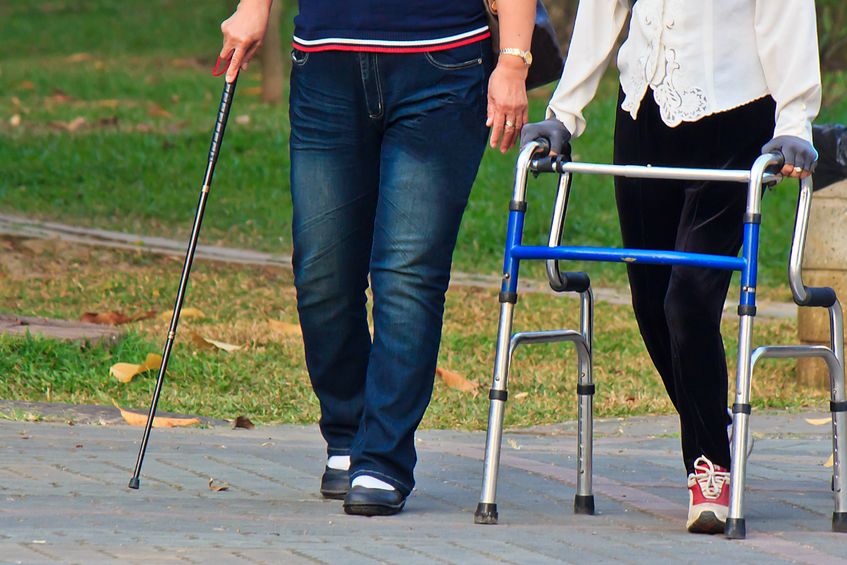
Advancement in healthcare and medicine and other comforts of modernity make us live longer than our ancestors: the life expectancy of the average European nearly doubled during the last century. As life expectancy increases, however, so does the number of older people with mild to moderate disability. A number of congenital or chronic conditions, as well as, the result of an injury can also lead, already at a younger age, to varying degrees of mobility impairment. There are 3.2 million wheelchair users in Europe and another 40 million who cannot walk without an aid. People with limitation in independent movement of their legs can rely on a variety of assistive devices. Yet the currently available assistive aids are usually bulky, fairly inflexible and can therefore only partially support the process of movement. Neither do they encourage or support the activation of legs, which is essential to prevent further atrophy.
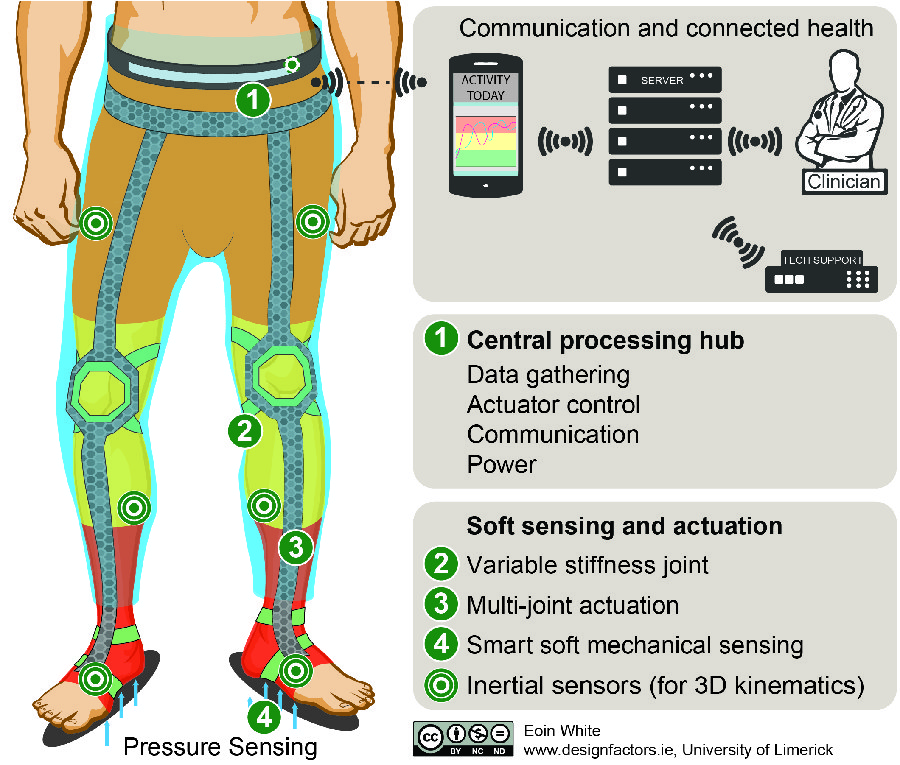
An international, multidisciplinary team of researchers are looking to develop, within the framework of the European Union’s Horizon 2020 Research and Innovation Programme, a solution: a wearable, intelligent clothing system, named XoSoft. This soft, modular, lower limb exoskeleton for the elderly and disabled will help increase mobility and thus greatly improve health and quality of life. Advanced textiles and smart materials will be employed to create sensing, variable stiffness joints. Built-in sensors will communicate the user’s motion and intention to the controlling unit for analysis to determine and provide, by way of actuators, the appropriate level of assistance: Depending on the user’s need at a given moment, the device will provide support, release or freedom of movement.
Project partners
The nine organisations from seven European countries involved in this public-private partnership kicked off the revolutionary R&D project in February 2016 with the aim to develop the first fully functional prototype by 2019. Besides five research groups from the disciplines of robotics, bioengineering, ambient intelligence and design, the team also includes four companies and clinical partners with expertise in rehabilitation technologies, geriatrics and prosthetic applications. The EU and Switzerland have committed 5.4 m euros in funding to the project’s budget.
Here is the list of our Project Partners:
- Fondazione Instituto Italiano di Tecnologia, IT (coordinator)
- accelopment AG, CH
- Consejo Superior de Investigaciones Científicas, ES
- Geriatrie-Zentrum Erlangen, DE
- Össur hf, IS
- Roessingh Research and Development, NL
- Saxion University of Applied Science, NL
- University of Limerick, IE
- Zurich University of Applied Sciences, CH
Keep watch to read the latest updates to the XoSoft project.
tags: c-Research-Innovation


AUAI is supported by:









