Robohub.org
podcast
 

Space business with Stephen Gorevan


by
19 October 2012


share this:

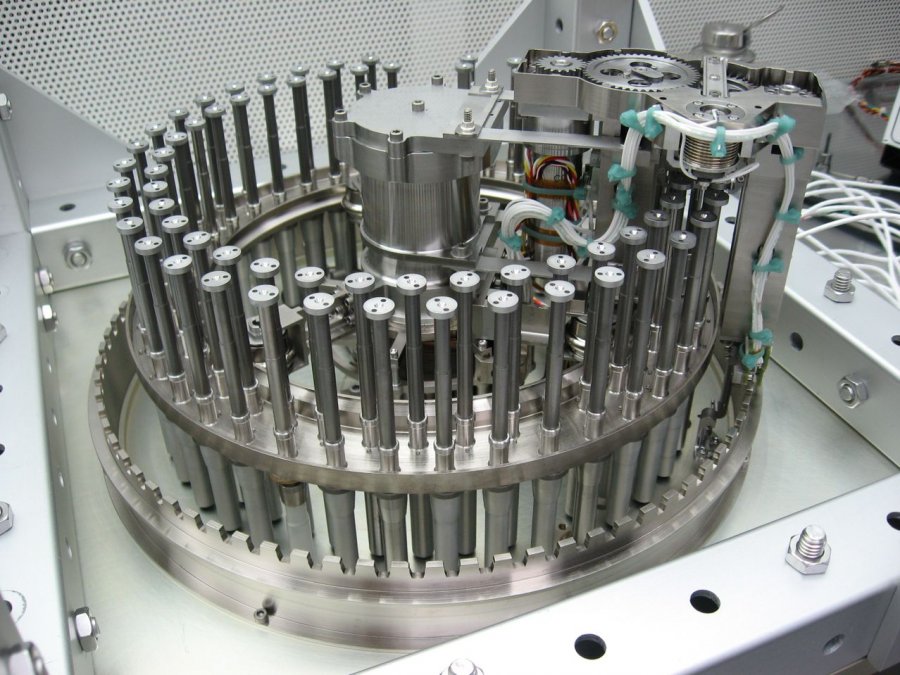
In today’s episode we speak with Stephen Gorevan from Honeybee Robotics about how he and Chris Chapman started the company and how his childhood dream of working for NASA got them into space robotics. The interview, which was recorded before the landing of Curiosity on Mars, gives us all the details about the equipment they built for the Mars Science Laboratory, including the Sample Manipulation System (SMS) and the Dust Removal Tool (DRT) which will enable the mission to explore and analyze the Martian environment. We also hear about their latest developments in small scale satellites called Cubesats.

Stephen Gorevan

Stephen Gorevan co-founded Honeybee Robotics in 1983 and currently serves as the company’s Chairman. He is principally responsible for guiding the company’s direction toward the application of advanced robotic and automation techniques to new applications in the aerospace sector. His responsibilities include new technology development, company and engineering management, design and systems engineering. Gorevan has over 25 years of experience in leading advanced robotics and automation design, development, and implementation efforts for NASA, defense and industry. He currently serves as a Co-Investigator on the science teams for the Mars Exploration Rovers and the Mars Science Laboratory SAM instrument and is a member of the Venus Science Definition Team.
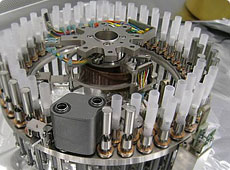
SMS - Precision Sample Positioner

Sample Manipulation System

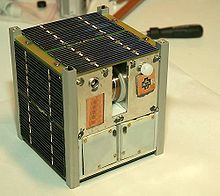
Ncube-2, a Norwegian Cubesat
Ncube-2, a Norwegian Cubesat

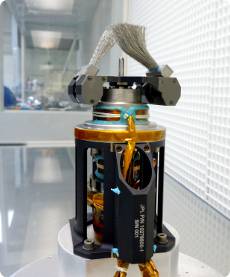
The Dust Removal Tool (DRT)

The Dust Removal Tool (DRT)

Links:


tags: , , , ,


Podcast team The ROBOTS Podcast brings you the latest news and views in robotics through its bi-weekly interviews with leaders in the field.

            AUAI is supported by:


Subscribe to Robohub newsletter on substack


Related posts :

Developing active and flexible microrobots

  13 May 2026
This class of robots opens up possibilities for biomedical applications.

How to teach the same skill to different robots

  11 May 2026
A new framework to teach a skill to robots with different mechanical designs, allowing them to carry out the same task without rewriting code for each.

Robot Talk Episode 155 – Making aerial robots smarter, with Melissa Greeff

  08 May 2026
In the latest episode of the Robot Talk podcast, Claire chatted to Melissa Greeff from Queen's University about autonomous navigation and learning for drones.

New understanding of insect flight points way to stable flapping-wing robots

  07 May 2026
The way bugs and birds flap their wings may look effortless, but the dynamics that keep them aloft are dizzyingly complex and difficult to quantify.

Robotically assembled building blocks could make construction more efficient and sustainable

  05 May 2026
Research suggests constructing a simple building from interlocking subunits should be mechanically feasible and have a much smaller carbon footprint.

Robot Talk Episode 154 – Visual navigation in insects and robots, with Andrew Philippides

  01 May 2026
In the latest episode of the Robot Talk podcast, Claire chatted to Andrew Philippides from the University of Sussex about what we can learn from ants and bees to improve robot navigation.

Ultralightweight sonar plus AI lets tiny drones navigate like bats

  29 Apr 2026
Researchers develop ultrasound-based perception system inspired by bat echolocation.

Gradient-based planning for world models at longer horizons

  28 Apr 2026
What were the problems that motivated this project and what was the approach to address them?


AUAI is supported by:


Subscribe to Robohub newsletter on substack


©2026.02 - Association for the Understanding of Artificial Intelligence