
Robohub.org
China’s growing robot industry turns to acquisitions
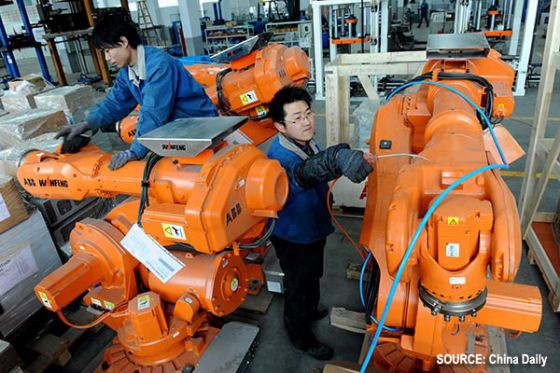
Paslin, a Michigan integrator of welding robots, automation systems, and tooling, was acquired by Wanfeng Technology Group for an undisclosed amount (but reported as $302 million in China Daily).
PASLIN
 Established in 1937, Paslin is an integrator of robot welding and assembly systems and is a full-service design and build organization serving the automotive industry. Paslin also provides special welding and resistance spot welding equipment, and provides engineered automation system solutions. Paslin employs 700 and derives most of its sales from customers in the US and Canada.
WANFENG

Founded in 1994, the Wanfeng group of companies, located 125 miles southeast of Shanghai, is mainly known for their auto wheels and aftermarket wheels and auto parts. But it also has businesses in such fields as robot integration of assembly, welding and painting systems, automation equipment, magnesium alloy parts, aviation equipment and financial investments, with annual sales of $3 billion. Wu Jinhua, Wanfeng’s chairman and CEO, said:
Paslin has accumulated advanced technologies and client groups in the field of automated welding in North America, and this acquisition could not only help Paslin realize its globalization, but also enhance Wanfeng’s competitiveness in industrial robot system integration technology. This acquisition is a win-win situation.
According to Forbes, besides Zhejiang Wanfeng Auto Wheel, whose customers include Yamaha, the Wu clan controls Shenzhen-listed Zhejiang RIFA Precision Machinery, a supplier of grinding, boring and other machines.
CHINA'S GROWING ROBOT ARMY
In a recent story in the Financial Times, Asia-focused asset management firm Mirae Asset Management forecasts that China's robot army will expand at a compound annual growth rate (CAGR) of 35% until 2020. Rahul Chadha, chief investment officer of Mirae, says:
Using the rule thumb that one industrial robot replaces four to five workers, this suggests that robots have rendered more than 1m people jobless.” Mr Chadha, who calculates that robots will replace around 3.5m Chinese workers over the next five years, says: “The message that comes from the leadership is on improving productivity via automation. They are paranoid about doing things quickly. They believe they have got to because their competitors will do the same.
THE ACQUISITION MARKETPLACE
Siasun Robot & Automation, China's most prominent robot manufacturer, announced that they are planning to acquire competitive and domestic international component manufacturers to expand their market presence.
We have been in negotiations with potential companies for over a year and we hope to complete these acquisitions by June – Vice Chairman and President Qu Daokui told ChinaDaily.com.
At present, more than two-thirds of the robots purchased in China are produced by international vendors but that ratio is rapidly changing. The most recent Chinese National 5-year plan calls for increased use of robots and local governments are supporting the effort with various real estate and tax incentives. Many “deals” have been arranged whereby Chinese venture funds are investing in robotic ventures from Russia, Israel, Silicon Valley and through acquisitions such as the Ninebot acquisition of Segway last year, the current Paslin acquisition, and Siasun's ambitious plans.
tags: c-Business-Finance, cx-Industrial-Automation

AUAI is supported by:









