
Robohub.org
Robots offer the elderly a helping hand
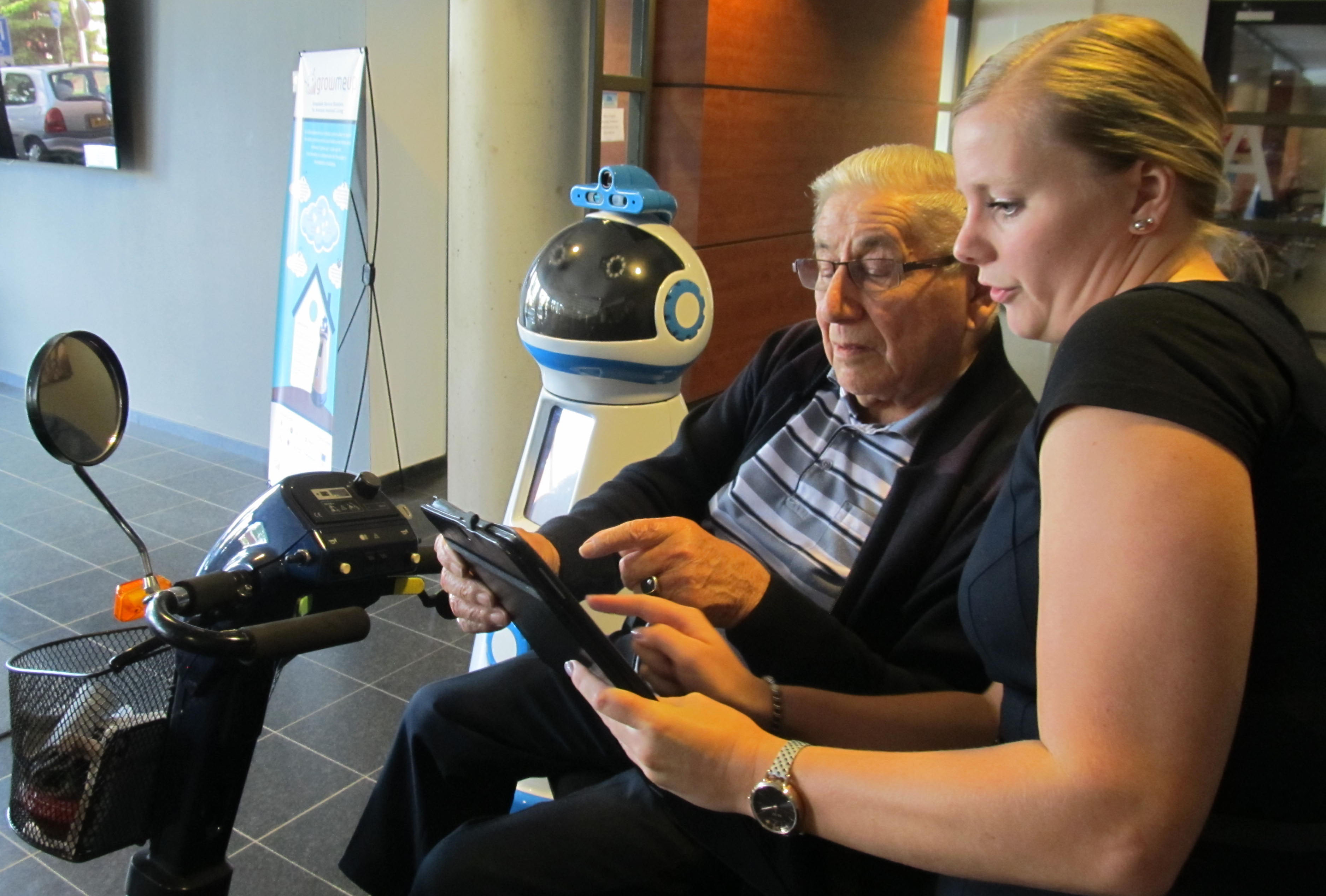
Humanoid robots under development can be programmed to detect changes in an elderly person’s preferences and habits. Image credit: GrowMeUp
by Helen Massy-Beresford
Low birth rates and higher life expectancies mean that those over 65 years old now will account for 28.7 % of Europe’s population by 2080, according to Eurostat, the EU’s statistics arm.
It means the age-dependency ratio – the proportion of the elderly compared with the number of workers – will almost double from 28.8 % in 2015 to 51 % in 2080, straining healthcare systems and national budgets.
Yet there’s hope marching over the horizon, in the form of robots.
The creators of one humanoid robot under development for the elderly say it can understand people’s actions and learn new behaviours in response, even though it is devoid of arms.
Robots can be programmed to understand an elderly person’s preferences and habits to detect changes in behaviour: for example if a yoga devotee misses a class, it will ask why, while if an elderly person falls it will automatically alert caregivers or emergency services.
Yet there’s still a way to go before these devices will be able to bring out a tray of tea and biscuits when visitors drop by, according to its creator.
At the moment there are things the robot can perform perfectly in the lab but that still present challenges, says Dr Luís Santos from the University of Coimbra in Portugal, who has been developing the technology as part of an EU-funded research project known as GrowMeUp.
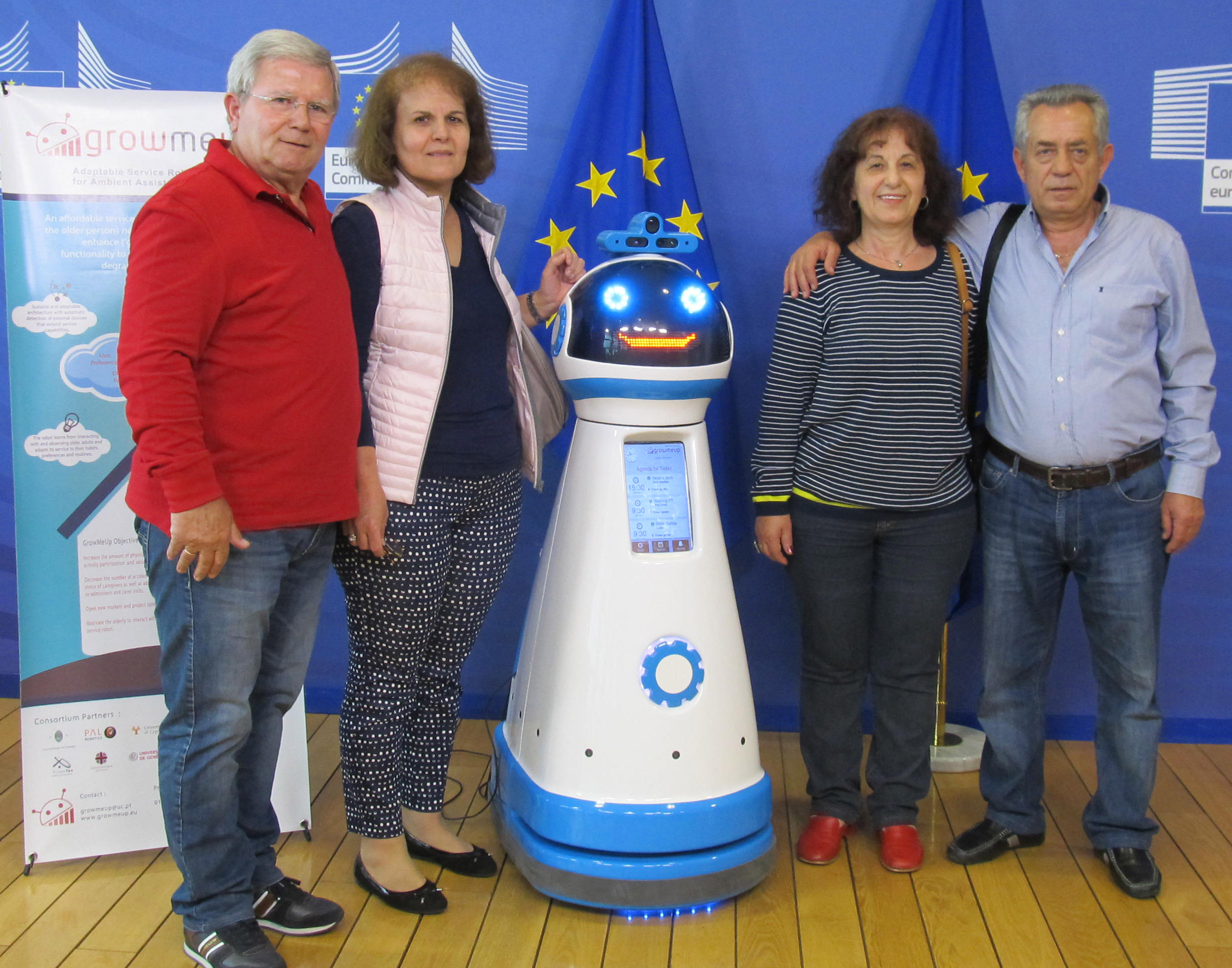
The proportion of elderly people is expected to almost double by 2080, so researchers are looking to robots to see if they can help care for the aging population. Image credit: GrowMeUp
‘There is a mismatch between what elderly people want and what science and technology can provide – some of them are expecting robots to do all types of household activities, engage them in everyday gossip or physically interact with them as another human would do,’ says Dr Santos.
The team is working on making the robot’s dialogue as natural and as intuitive as possible and improving its ability to safely navigate an older person’s home, using a low-cost laser and a camera, and a second prototype will be tested with elderly people in the coming months. Yet, Dr Santos foresees that these devices are still four to six years away from commercialisation, at least.
Revolution
He sees robotics as just a part of a wider revolution underway in how societies care for the elderly, with connectivity and augmented reality also playing a role.
‘In the future, elderly care will also be very focused on information and communications technologies – for example virtual access to doctors or care institutions and 24/7 monitoring in a non-invasive way are likely to become standard,’ he said.
Yet researchers believe that keeping the technology unobtrusive is key – no wearable devices or cumbersome cameras cluttering up people’s homes.
Dr Maria Dagioglou from the National Centre of Scientific Research ‘Demokritos’ in Greece, said: ‘We wanted to avoid a Big Brother scenario, so data privacy is important but also dignity.’
She is looking at ways to integrate robotics technology into a smart home equipped with connected devices, automation and sensors, as part of the EU-funded RADIO project.
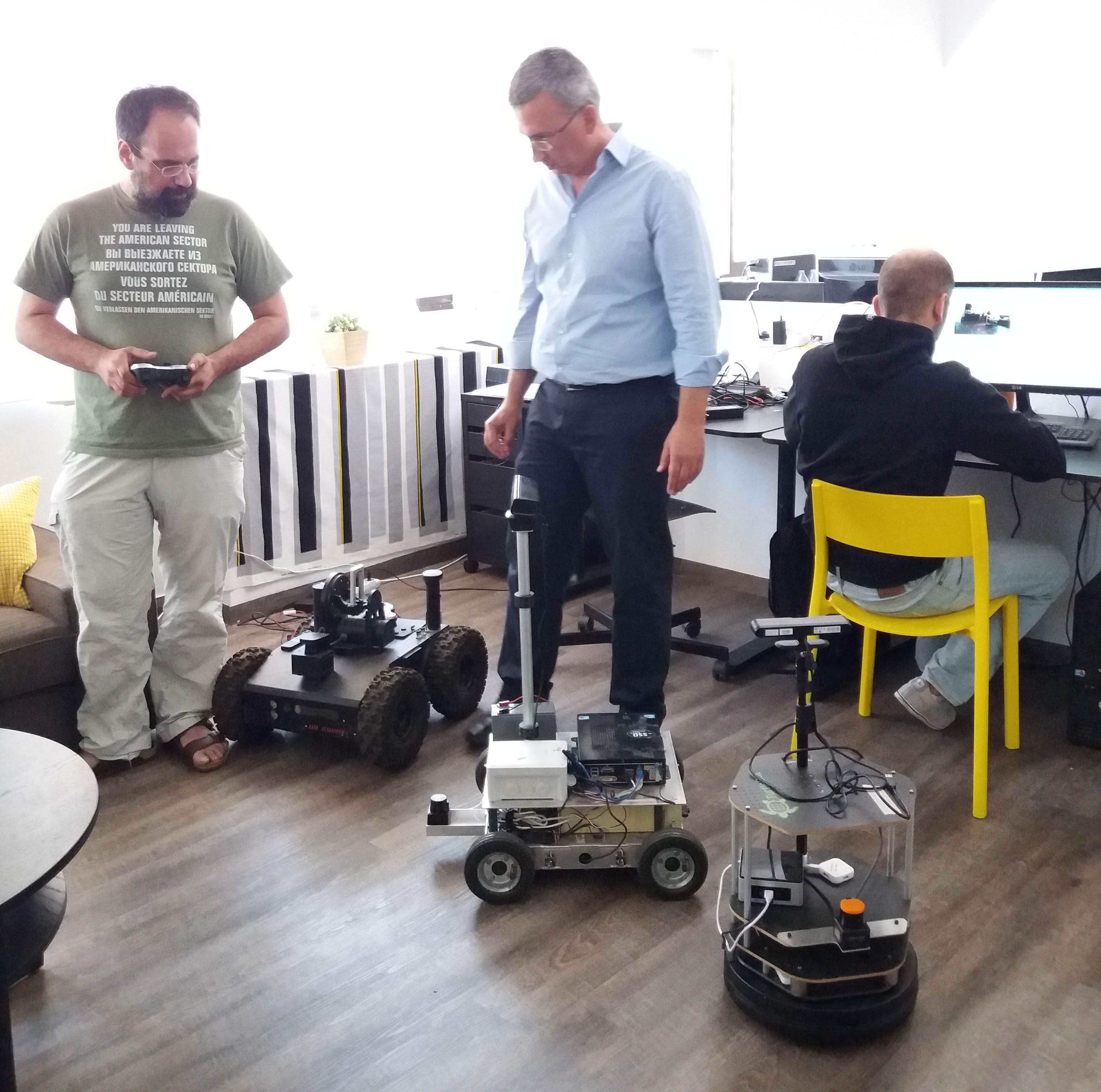
Researchers are figuring out ways of putting robots in homes for virtual access to healthcare and constant monitoring, yet that are also non-invasive. Image credit: RADIO
Dr Stasinos Konstantopoulos, the scientific manager of the RADIO project, added: ‘All monitoring happens as the user interacts with the system to control the house, for example, to regulate the temperature, and to ask the robot to run errands, like finding misplaced items.’
Using a tablet or smartphone to interact, the equipment, which should only take a day to install, can monitor elements of an elderly person’s day-to-day life, efficiently processing and managing data to allow medical professionals to keep track of and assess their level of independence via smartphone notifications.
‘It’s a constant safety net in case something starts to be worrying,’ said Dr Dagioglou.
The goal of innovations like this is to allow people to live independently for longer.
A crucial element of this is finding ways for older people to keep up their activity levels, and this is an area where robots could really come into their own.
Dr Luigi Palopoli at the University of Trento in Italy said ‘our robot pushes them to do their exercise, to go out and about; it extracts information on their interests and on their fears and makes them part of a network.’
Barriers
‘We want to tear down the emotional barriers that make them stay at home and degrade the quality of their life,’ he said.
As part of the EU-funded Acanto project, he is developing a robot called FriWalk, following on from the progress made during a previous EU-funded project, the DALi project.
The team has worked hard to make the FriWalk robot look energetic and appealing and to ensure it offers useful services like carrying small items or giving directions.
With prototypes made, in the next few months, the researchers will start clinical trials in Spain as well as public demonstrations of the FriWalk in museums and other public spaces.
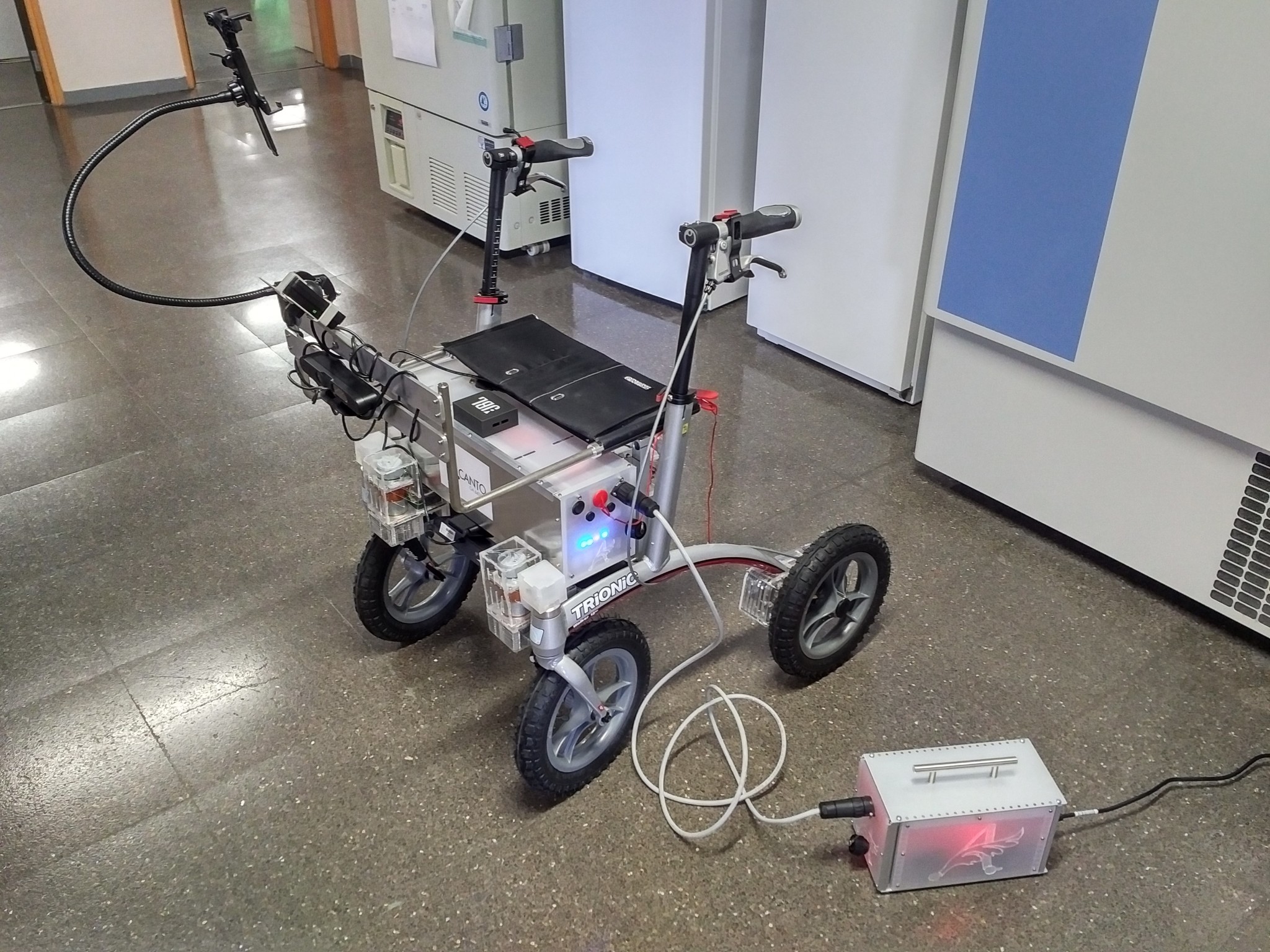
Researchers will start clinical trials in Spain of a robotic prototype designed to help elderly people to exercise. Image credit: Acanto
Further ahead, Dr Palopoli hopes for interest from established manufacturers and start-ups to bring the FriWalk technology to the market.
If you liked this article, you may also want to read:
- Choreographing automated cars could save time, money and lives
- 3D-printed houses and cars on the horizon as manufacturing goes large
- Keeping a robotic eye on pollution
- Grow a house with plant-robot hybrids
See all the latest robotics news on Robohub, or sign up for our weekly newsletter.
tags: c-Research-Innovation, Horizon magazine, robots

AUAI is supported by:









