
Robohub.org
Ford Motor to invest $1 billion in Pittsburgh startup Argo AI
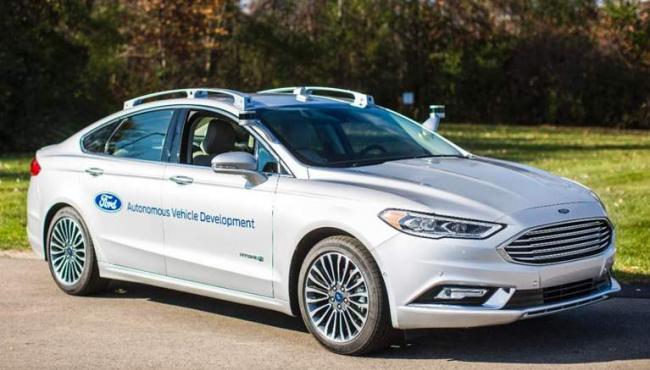
Photo: Ford Motor’s next-generation Fusion Hybrid autonomous development vehicle. (Courtesy of Ford Motor)
Argo AI, a Pittsburgh startup, has sold a majority share of their company to Ford Motor Co. which has agreed to invest $1 billion over a five-year schedule but will immediately become the majority shareholder. Both companies declined to disclose further details.
Argo AI plans to fully support Ford but eventually license its software and sensor suite to other companies.
“Our view [is that], in the future, there will be a number of players that will have systems,” Ford CEO Mark Fields told Recode in an interview. “There won’t be just one winner. But at the same time we can offer that to other companies where it doesn’t compromise our competitive advantages. We think that’s a great opportunity to get even more scale and create some value for the companies.”
Bryan Salesky, previously with Google’s self-driving team and Peter Rander, previously with Uber’s, will head up the new company. Argo AI plans to develop a software platform backbone for Ford’s fully autonomous vehicle and plan on making that platform a working reality by 2021. They are working with the City of Pittsburgh to find and establish a work facility and planning to find office space in the Pittsburgh area and hiring up to 200 engineers and CS professionals.
“We want to take a straight-line path to market as much as we possibly can,” Salesky said.
Until this transaction, Ford’s investments in future transportation technology have been relatively modest, eg, $75 million to buy a minority stake in Velodyne, a manufacturer of laser-based LiDAR sensing systems, and $6.6 million in Civil Maps, a Berkeley, CA startup working on AI-powered mapping for self-driving cars.
“The next decade will be defined by the automation of the automobile, and autonomous vehicles will have as significant an impact on society as Ford’s moving assembly line did 100 years ago,” Ford President and CEO Mark Fields said in a statement. “As Ford expands to be an auto and a mobility company, we believe that investing in Argo AI will create significant value for our shareholders by strengthening Ford’s leadership in bringing self-driving vehicles to market in the near term and by creating technology that could be licensed to others in the future.”
tags: automotive, Frank Tobe, The Robot Report

AUAI is supported by:









