Robohub.org
Rethinking iRobot, Samsung and Dyson robotic vacuum cleaners
 At a break in a conference in San Diego, I was sitting enjoying my tea, when up walked Rodney Brooks (of Rethink Robotics and Baxter fame) and said (with a mischievious smile):
I have a bone to pick with you! Robotic vacuum cleaners didn’t just become mainstream as you said in your article. We have sold 12 million by now and are the biggest seller in Samsung’s home (Korea).
He went on to say that Dyson is a small player in the global vacuum marketplace and that Samsung has gone through many iterations of improvement yet iRobot’s Roomba’s still outsell them in their core market.
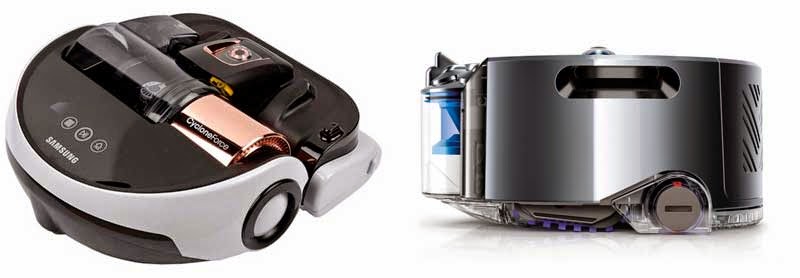
Robo Vacuums: Samsung (left) and Dyson (right)
Brooks was referring to my two articles in The Robot Report where I commented about Samsung’s and Dyson’s new robotic vacuums. He wasn’t really angry; just having fun. But I began to think about what he was referring to, considering whether I had said something incorrect or possibly hurtful. The second of my two articles had the headline: Latest robotic vacuum product launches change industry from niche to mainstream.
In those articles I said:
Should iRobot be worried? Definitely! Dyson has considerable experience in the higher-end vacuuming market – selling more than 10 million devices a year! Dyson generated nearly $10 billion in revenue in 2013 of which at least 40% is vacuum-related versus iRobot’s $487 million. Consequently, if the new Dyson 360 Eye robotic vacuum is as good as other Dyson vacuum cleaners, there is much reason for iRobot to worry.
iRobot, over the past 10 years, has sold 10 million Roombas, mostly through online distribution methods. With the global consumer distribution channels that both Dyson and Samsung bring, it’s conceivable that either (or both) could sell 10 million of their products in a single year!
In the two articles, I was attempting to describe the transition that often happens with unique consumer products as they switch from niche markets of early adopters to the massively larger mainstream household products market. And even though iRobot has sold 10 million Roombas over a 10-year period, that’s just a fraction of the 50+ million global vacuums sold annually for $11 billion (source: TechNavio).
Both Dyson and Samsung have upgraded the vacuuming function of their robotic cleaners to be equivalent to non-robotic cleaners. Consequently, they have endorsed what iRobot invented many years ago: a convenient robotic method of cleaning carpets and floors. But their endorsement comes at the expense of competition that is sure to happen in the years to come.
tags: business, Dyson, household, iRobot, Rodney Brooks, Samsung

AUAI is supported by: