Robohub.org
Split-second decisions: Navigating the fine line between man and machine
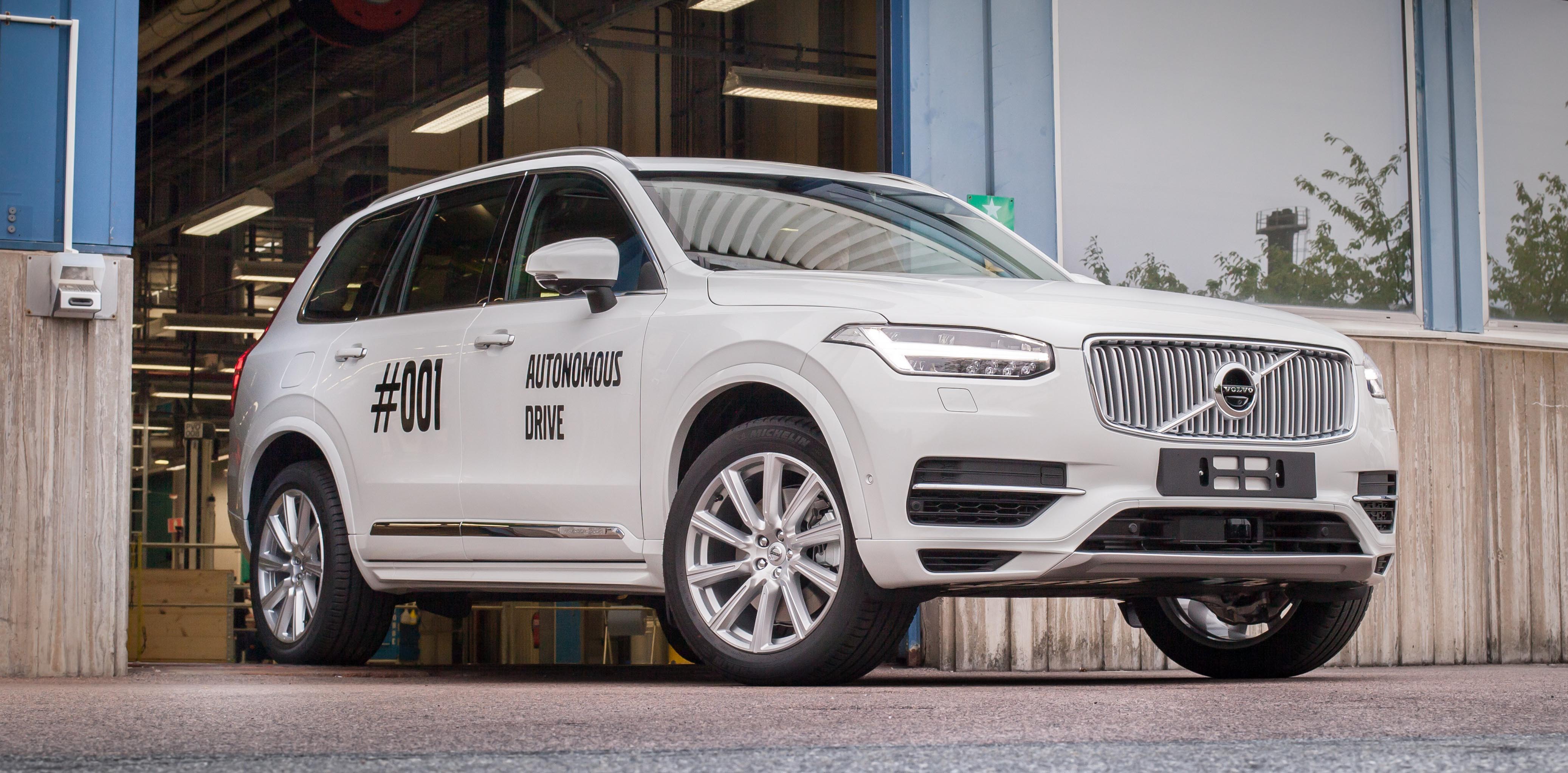
Level 3 automation, where the car handles all aspects of driving with the driver on standby, is being tested in Sweden. Image courtesy of Volvo cars
Today’s self-driving car isn’t exactly autonomous – the driver has to be able to take over in a pinch, and therein lies the roadblock researchers are trying to overcome. Automated cars are hurtling towards us at breakneck speed, with all-electric Teslas already running limited autopilot systems on roads worldwide and Google trialling its own autonomous pod cars.
However, before we can reply to emails while being driven to work, we have to have a foolproof way to determine when drivers can safely take control and when it should be left to the car.
‘Even in a limited number of tests, we have found that humans are not always performing as required,’ explained Dr Riender Happee, from Delft University of Technology in the Netherlands, who is coordinating the EU-funded HFAuto project to examine the problem and potential solutions.
‘We are close to concluding that the technology always has to be ready to resolve the situation if the driver doesn’t take back control.’
But in these car-to-human transitions, how can a computer decide whether it should hand back control?
‘Eye tracking can indicate driver state and attention,’ said Dr Happee. ‘We’re still to prove the practical usability, but if the car detects the driver is not in an adequate state, the car can stop in the safety lane instead of giving back control.’
Next level
It’s all a question of the level of automation. According to the scale of US-based standards organisation SAE International, Level 1 automation already exists in the form of automated braking and self-parking.
Level 4 & 5 automation, where you punch in the destination and sit back for a nap, is still on the horizon.
But we’ll soon reach Level 3 automation, where drivers can hand over control in situations like motorway driving and let their attention wander, as long as they can safely intervene when the car asks them to.
HFAuto’s 13 PhD students have been researching this human-machine transition challenge since 2013.
Backed with Marie Skłodowska-Curie action funding, the students have travelled Europe for secondments, to examine carmakers’ latest prototypes, and to carry out simulator and on-road tests of transition takeovers.
Alongside further trials of their transition interface, HFAuto partner Volvo has already started testing 100 highly automated Level 3 cars on Swedish public roads.
Another European research group is approaching the problem with a self-driving system that uses external sensors together with cameras inside the cab to monitor the driver’s attentiveness and actions.
Blink
‘Looking at what’s happening in the scene outside of the cars is nothing without the perspective of what’s happening inside the car,’ explained Dr Oihana Otaegui, head of the Vicomtech-IK4 applied research centre in San Sebastián, Spain.
She coordinates the work as part of the EU-funded VI-DAS project. The idea is to avoid high-risk transitions by monitoring factors like a driver’s gaze, blinking frequency and head pose — and combining this with real-time on-road factors to calculate how much time a driver needs to take the wheel.
Its self-driving system uses external cameras as affordable sensors, collecting data for the underlying artificial intelligence system, which tries to understand road situations like a human would.
VI-DAS is also studying real accidents to discern challenging situations where humans fail and using this to help train the system to detect and avoid such situations.
The group aims to have its first interface prototype working by September, with iterated prototypes appearing at the end of 2018 and 2019.
Dr Otaegui says the system could have potential security sector uses given its focus on creating artificial intelligence perception in any given environment, and hopes it could lead to fully automated driving.
‘It could even go down the path of Levels 4 and 5, depending on how well we can teach our system to react — and it will indeed be improving all the time we are working on this automation.’
The question of transitions is so important because it has an impact on liability – who is responsible in the case of an accident.
It’s clear that Level 2 drivers can be held liable if they cause a fender bender, while carmakers will take the rap once Level 4 is deployed. However, with Level 3 transitions, liability remains a burning question.
HFAuto’s Dr Happee believes the solution lies in specialist insurance options that will emerge.
‘Insurance solutions are expected (to emerge) where a car can be bought with risk insurance covering your own errors, and those which can be blamed on carmakers,’ he said.
Yet it goes further than that. Should a car choose to hit pedestrians in the road, or swerve into the path of an oncoming lorry, killing its occupants?
‘One thing coming out of our discussions is that no one would buy a car which will sacrifice its owner for the lives of others,’ said Dr Happee. ‘So it comes down to making these as safe as possible.’
The five levels of automation:
- Driver Assistance: the car can either steer or regulate speed on its own.
- Partial Automation: the vehicle can handle both steering and speed selection on its own in specific controlled situations, such as on a motorway.
- Conditional Automation: the vehicle can be instructed to handle all aspects of driving, but the driver needs to be on standby to intervene if needed.
- High Automation: the vehicle can be instructed to handle all aspects of driving, even if the driver is not available to intervene.
- Level 5 – Full Automation: the vehicle handles all aspects of driving, all the time.
tags: Algorithm Controls, Automotive, cx-Industrial-Automation, human-robot interaction, interview, Robot Car, Robotics technology, Sensing, software