
Robohub.org
 

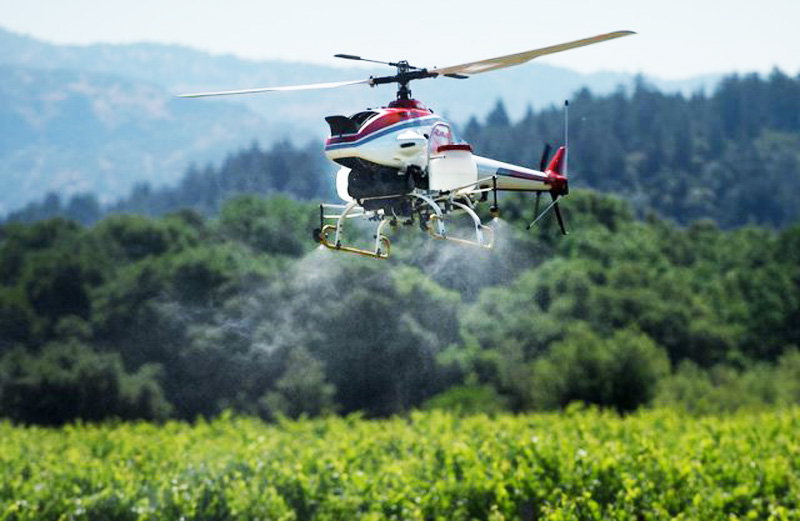
Yamaha RMAX crop sprayer gets full FAA approval

by
21 December 2015


share this:
Yamaha_crop_Sprayer_Drone_RMAX

The FAA granted Yamaha Motor Corporation an Agricultural Aircraft Operations certificate for their RMAX crop spraying remotely piloted helicopters.

This certification, plus the waiver issued earlier in the year allowing it to commercially fly over agricultural properties, complete the compliance aspect and enable Yamaha to begin agricultural spray service operations at the start of the 2016 growing season.

The RMAX is an unmanned, remotely piloted helicopter designed specifically for agricultural spraying and weighs just over 200 pounds with a full payload, and is designed for treating specialty and high-value crops. RMAX is an economical alternative to spraying with tractor-pulled ground or backpack sprayers.

The RMAX was originally introduced in Japan in 1997 as the culmination of several earlier unmanned helicopter models designed and engineered by Yamaha Motor Co., Ltd. since 1980. Globally, there are nearly 2,600 RMAX helicopters currently in use, and over two million flight-hours have been logged to date, with more than 2.4 million acres being sprayed each year.


tags: , ,


Frank Tobe is the owner and publisher of The Robot Report, and is also a panel member for Robohub's Robotics by Invitation series.

            AUAI is supported by:


Subscribe to Robohub newsletter on substack


Related posts :

Table tennis robot defeats some of world’s best players – why this has major implications for robotics

  18 May 2026
Ace, from Sony AI, is the first robot to beat elite human players in competitive physical sport.

Robot Talk Episode 156 – Rugged robots for dangerous missions, with Gavin Kenneally

  15 May 2026
In the latest episode of the Robot Talk podcast, Claire chatted to Gavin Kenneally from Ghost Robotics about robot dogs for defence, security, and public safety.

Developing active and flexible microrobots

  13 May 2026
This class of robots opens up possibilities for biomedical applications.

How to teach the same skill to different robots

  11 May 2026
A new framework to teach a skill to robots with different mechanical designs, allowing them to carry out the same task without rewriting code for each.

Robot Talk Episode 155 – Making aerial robots smarter, with Melissa Greeff

  08 May 2026
In the latest episode of the Robot Talk podcast, Claire chatted to Melissa Greeff from Queen's University about autonomous navigation and learning for drones.

New understanding of insect flight points way to stable flapping-wing robots

  07 May 2026
The way bugs and birds flap their wings may look effortless, but the dynamics that keep them aloft are dizzyingly complex and difficult to quantify.

Robotically assembled building blocks could make construction more efficient and sustainable

  05 May 2026
Research suggests constructing a simple building from interlocking subunits should be mechanically feasible and have a much smaller carbon footprint.

Robot Talk Episode 154 – Visual navigation in insects and robots, with Andrew Philippides

  01 May 2026
In the latest episode of the Robot Talk podcast, Claire chatted to Andrew Philippides from the University of Sussex about what we can learn from ants and bees to improve robot navigation.


AUAI is supported by:


Subscribe to Robohub newsletter on substack


©2026.02 - Association for the Understanding of Artificial Intelligence









