
Robohub.org
As DJI dominates camera and commercial drone sales, drone funding falls
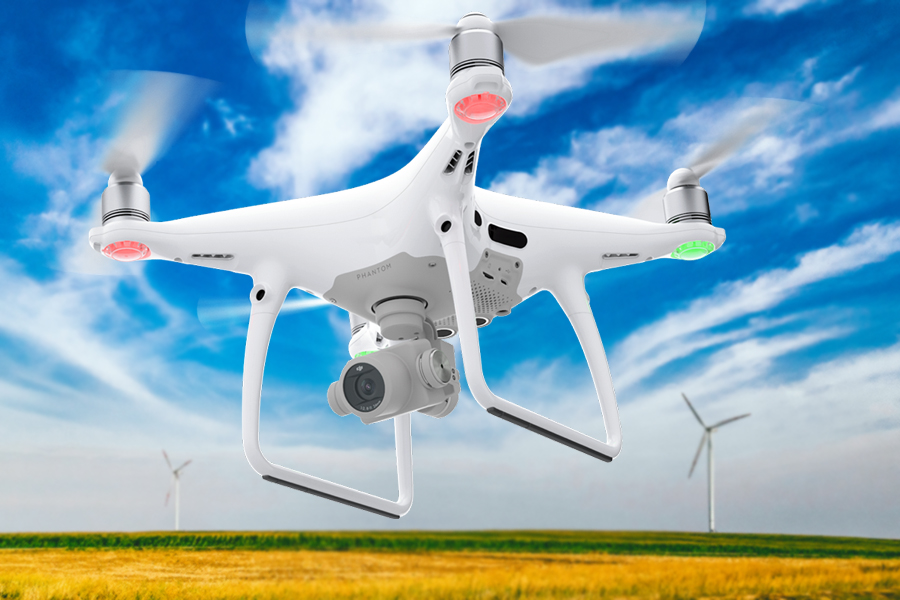
DJI Phantom 4 Pro
According to AgFunder’s 2016 AgTech Investing Report (supported by The Robot Report’s own research), 2016 drone funding fell 64% from 2015 levels. Also, the type of companies getting funded were sensor, payload and analytics-based add-ons or service-providing companies rather than drone makers.
In 2015, according to AgFunder, the largest drone deal was DJI’s $75 million followed by 3D Robotics’ $64 million. In 2016, the largest deal was 3D Robotics’ $27 million and the majority of drone tech deals closed during the year were seed stage (15 out of 25), whereas there was an even split between late and seed stage deals in 2015.
The Robot Report’s year-end article: 2016 best year ever for funding robotics startup companies included 27 UAS deals. The largest was for $43.8 million to a meds drone delivery service, Zipline International. The 2nd largest was $30 million to Airware, to fund their acquisition of Redbird (a French drone-powered analytics provider) and development of a set of technology systems to plan, fly, and analyze aerial data – particularly valuable for insurance adjusters and contractors. Then came 3D Robotics’ $27 million which helped them wind down and reconfigure themselves from a drone maker to a drone services provider.
The mix of companies receiving funding in 2016 was different than in 2015 where the big money went to drone makers: DJI ($75M) 3D Robotics ($64M), Yuneec Electric Aviation ($60M), Ehang ($44M), and CyPhy Works ($25.4M).
2017 fundings continue the 2016 pattern: Drone Delivery raised $8.1M to further their depot to depot delivery system, Flytrex raised $3M to manufacture drone components, Flirty, a medicine and food delivery drone startup got $16M, Measure got $15M for their drones-as-a-service company for insurers, AirMap got $26M for a real-time air traffic management system, Dedrone got $15M for a drone tracking system, Airware raised an additional but undisclosed sum and Arbe Robotics got $2.5M for a real-time drone mapping system. No drone makers in the lot!
Shenzhen DJI Innovations
DJI is by far the leading quadcopter maker in the world. At a recent drone trade show, most of the booths that displayed multi-rotor drones doing specialized tasks used DJI drones to demonstrate their products. As drones are becomming less of a flying camera and hobby and more to provide commercial and industrial services, DJI is still leading the pack.
According to Bloomberg Businessweek, DJI is valued at $10 billion and makes 60-65% of all non-military drones. DJI designs, prototypes and manufacturers all their products in their own factories in Shenzhen and all their sub-contractors are in Shenzhen as well. Thus they control the supply chain and can produce new drones every 6 months thereby whipping the competition. Very Apple-like (after which they pattern themselves).
Nevertheless, even DJI has seen the change from drone-making to providing meaningful services with drones. It’s tough to maintain momentum with just hardware no matter how good it is.
DJI, while continuing to develop new products and upgraded versions of their drones, has suffered the same limitations as other makers and service providers: limited battery life, regulations regarding line of sight and autonomy, connectivity issues, image processing and analysis, limited payload capacity and the commoditization of drones themselves. But, as Paul Turner, CEO of AgDNA wrote recently on Medium:
“Once drones are able to take off autonomously, scan a field [or object], upload data, recharge and continue operation without human intervention — this will be a game changer.”
We’re almost there.
tags: analysis, business, UAVs & drones

AUAI is supported by:









