
Robohub.org
Chinese shopping for global robotics ventures
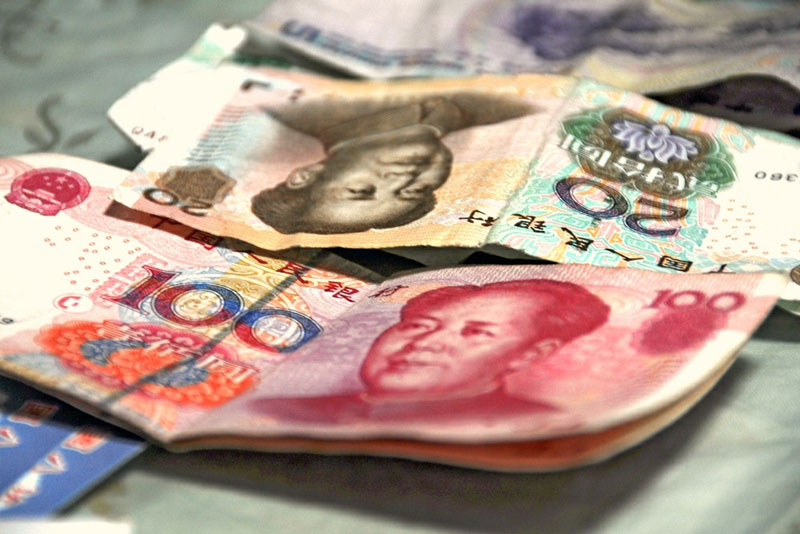
Photo: Faungg via wikimedia commons.
April has seen Chinese VCs acquiring robotic ventures, buying out competitors, seeking funding to scale up production, and shoring up industry gaps.
Look at these four transactions:
- Beijing-based Ninebot, a Segway competitor, acquired Segway;
- Chinese venture fund Cybernaut plans to invest $200 million into Russia’s Skolkovo Center to incubate Russian inventions manufactured and marketed in China;
- China South Rail paid $190 million to acquire SMD, a UK deep-sea robot manufacturer;
- and Chinese drone maker DJI is forecasting global 2015 sales of $1 billion and a market value of $10 billion as it seeks funds to scale up it’s operations.
Ninebot acquires Segway
 Ninebot, a Beijing-based 2012 startup, markets their device as a personal transportation robot. Segway has sued and accused Ninebot of patent infringement but all that is now water under the bridge because Ninebot acquired (for an undisclosed amount) all the intellectual property as well as the company and facilities of Segway. Although the two companies will retain their brand identities and separate locations, the transaction was an acquisition nonetheless and all Segway’s IP are now owned by Ninebot.
Bedford, NH-based Segway’s press release calls the transaction a “Strategic Combination”; Ninebot’s website calls it an acquisition. Included in Ninebot’s announcement of the acquisition was notice that Ninebot had raised $80 million from Xiaomi, Shunwei and Sequoia VCs.
Segway was launched in 2001 by Dean Kamen’s group. It struggeled to live up to all the ballyhoo from its launch when it was called the “future of transportation.” In 2009 Segway was purchased by British entrepreneur Jimi Heselden who was killed in 2010 while riding a Segway off a cliff. It was then bought by Saint Louis, MO-based Summit Strategic Investments in 2013 and it was that firm that did the deal with Ninebot. Certainly the real prize is Segway’s 400+ patents related to personal transportation devices being transferred over to Ninebot.
According to TechCrunch, “Ninebot plans to use the purchase to expand its product line. Founder and CEO Gao Lufeng said ‘After establishing the alliance, the company will apply a series of technologies into its future products, covering electric driving, mobile internet, and man-machine interaction. This combination creates great opportunities for the development of the short-distance transportation industry.'”
Commenting on the transaction, Robots Dreams blogger Lem Fugitt said, “While Segway management is positioning the take-over as positively as they can, in the long term it appears to be a major loss for U.S. technology, intellectual property, and manufacturing. The most telling comment from Segway’s president Rod Keller, as reported in the New Hampshire Union Leader newspaper, was, ‘If you can’t beat ‘em, join ‘em.’”
Cybernaut to invest $200 million into Skolkovo robotics startups
 The Skolkovo Foundation outside Moscow, a large campus being constructed to focus on transferring Russian science into tangible products and to incubate Russian startups to make that happen, has signed a strategic partnership with Cybernaut Investment Group for Cybernaut to invest $200 million with Skolkovo in IT, space, telecommunication and robotic products that can be manufactured and marketed in China.
Hangzhou-based investment firm Cybernaut Investment Group will also create a new Chinese robotics center in Hangzhou to supplement Skolkovo’s efforts. Cybernaut is one of China’s largest VCs.
An in-depth review of the Skolkovo Cybernaut deal can be found at here.
China South Rail acquires SMD for $190 million
SMD, a UK based provider of underwater ROVs and ROV systems, tractors and trenchers for laying cable, sub-sea mining and oil and gas operations, was sold to Zhuzhou CSR Times Electric, a subsidiary of China South Rail (CSR), a state-owned conglomerate, for $190 million.

According to the Want China Times, the acquisition is expected to help China obtain core deep-sea robotic technology and equipment, andl will also help CSR absorb the mature industry platform and global sales network of SMD, supporting it to enter the global deep-sea market. This will complement CSR’s existing businesses in offshore wind energy, shipyard, marine engineering and drilling and help the Chinese company build an industrial chain for marine equipment.
A recent article in The Economist analyzed and charted the number of Chinese mergers and acquisition transactions in the EU.
Chinese deals in Europe as a whole rose from $2 billion in 2010 to $18 billion in 2014. Europe is attractive because it has lots of businesses going cheap — privatizations, cash-strapped firms and a weak euro. Chinese firms are following an edict to acquire advanced technology and high-quality brands from abroad that the government laid down in its five-year plan of 2011. Until recently most outbound dealmaking was by state firms buying up raw materials. Now high value-added businesses are the main target, and private capital is flowing.
SZ DJI Innovations seeks scale-up funding
 SZ DJI Innovations expects their revenue to exceed $1 billion this year. That information is part of the material being shown to raise funds for the company. The Wall Street Journal reported that DJI has set a valuation as high as $10 billion and that several Silicon Valley VC firms have offered to invest. The Shenzhen company has sold hundreds of thousands of their drones to hobbyists, journalists, photographers, real estate agents and other business people worldwide. According to the WSJ, DJI has taken minimal outside capital and instead has used cash flow to fund its rapid expansion which recently was reported to include three factories and 2,800 employees.
One quote by Chris Dixon of VC Andreessen Horowitz is particularly interesting:
Companies like DJI right now have good momentum, but they’re hardware makers… Next year or the year after that, you’re going to see hundreds of DJI clones. I don’t think long term that’s a good bet. Software is going to eat drones.
I disagree. I see a parallel to the robotics industry of today where a few big firms make the basic industrial robot arms but thousands of independent global consultants, distributors, integrators and engineers add value through software and add-on devices just as mapping, data mining, sensor manufacturers and aerial service providers are beginning to do today for the drone industry.
If you liked this article, you may also be interested in:
- Video describes accelerating robot deployment in China
- Sino-Russian robotics boosted as Skolkovo signs $200M deal with Chinese investment fund
- Cars in the UK, China, LA, CES and here : Robocar news update
- Foxconn begins selling noodle-making robot
- 40% annual growth forecast for Chinese robotics
See all the latest robotics news on Robohub, or sign up for our weekly newsletter.
tags: c-Business-Finance, China, DJI, Skolkovo

AUAI is supported by:









