Robohub.org
ep.

334

podcast
 

Intel RealSense Enabling Computer Vision and Machine Learning At The Edge with Joel Hagberg

by
10 June 2021


share this:


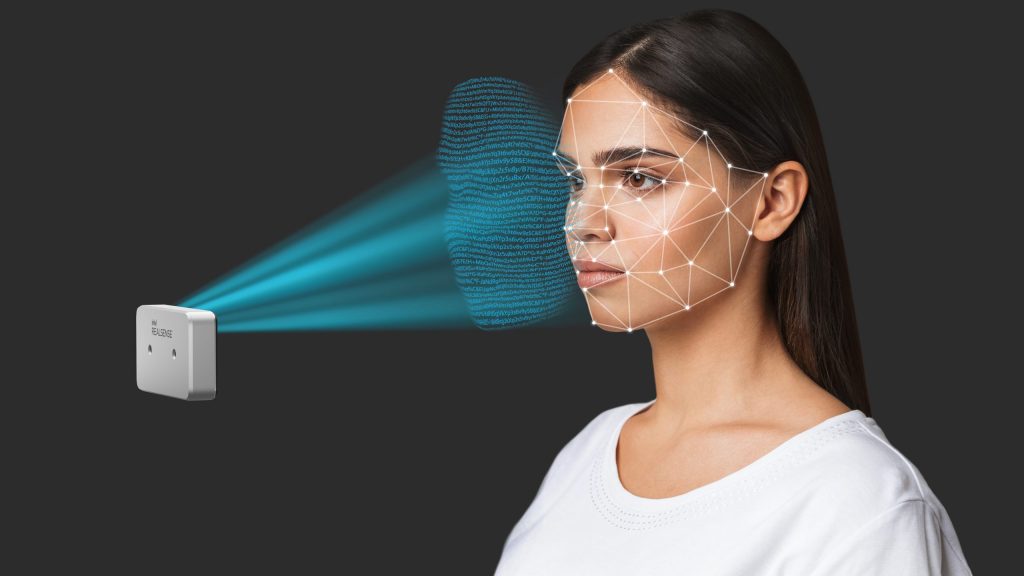
Intel RealSense Facial Scanning

Intel RealSense ID was designed with privacy as a top priority. Purpose-built for user protection, Intel RealSense ID processes all facial images locally and encrypts all user data. (Credit: Intel Corporation)

Intel RealSense is known in the robotics community for its plug-and-play stereo cameras. These cameras make gathering 3D depth data a seamless process, with easy integrations into ROS to simplify the software development for your robots. From the RealSense team, Joel Hagberg talks about how they built this product, which allows roboticists to perform computer vision and machine learning at the edge.

Joel Hagberg

Joel Hagberg leads the Intel® RealSense™ Marketing. Product Management and Customer Support teams. He joined Intel in 2018 after a few years as an Executive Advisor working with startups in the IoT, AI, Flash Array, and SaaS markets. Before his Executive Advisor role, Joel spent two years as Vice President of Product Line Management at Seagate Technology with responsibility for their $13B product portfolio. He joined Seagate from Toshiba, where Joel spent 4 years as Vice President of Marketing and Product Management for Toshiba’s HDD and SSD product lines. Joel joined Toshiba with Fujitsu’s Storage Business acquisition, where Joel spent 12 years as Vice President of Marketing, Product Management, and Business Development. Joel’s Business Development efforts at Fujitsu focused on building emerging market business units in Security, Biometric Sensors, H.264 HD Video Encoders, 10GbE chips, and Digital Signage. Joel earned his bachelor’s degree in Electrical Engineering and Math from the University of Maryland. Joel also graduated from Fujitsu’s Global Knowledge Institute Executive MBA leadership program.

Links


tags: , , ,


Abate De Mey Podcast Leader and Robotics Founder

            AUAI is supported by:


Subscribe to Robohub newsletter on substack


Related posts :

Developing active and flexible microrobots

  13 May 2026
This class of robots opens up possibilities for biomedical applications.

How to teach the same skill to different robots

  11 May 2026
A new framework to teach a skill to robots with different mechanical designs, allowing them to carry out the same task without rewriting code for each.

Robot Talk Episode 155 – Making aerial robots smarter, with Melissa Greeff

  08 May 2026
In the latest episode of the Robot Talk podcast, Claire chatted to Melissa Greeff from Queen's University about autonomous navigation and learning for drones.

New understanding of insect flight points way to stable flapping-wing robots

  07 May 2026
The way bugs and birds flap their wings may look effortless, but the dynamics that keep them aloft are dizzyingly complex and difficult to quantify.

Robotically assembled building blocks could make construction more efficient and sustainable

  05 May 2026
Research suggests constructing a simple building from interlocking subunits should be mechanically feasible and have a much smaller carbon footprint.

Robot Talk Episode 154 – Visual navigation in insects and robots, with Andrew Philippides

  01 May 2026
In the latest episode of the Robot Talk podcast, Claire chatted to Andrew Philippides from the University of Sussex about what we can learn from ants and bees to improve robot navigation.

Ultralightweight sonar plus AI lets tiny drones navigate like bats

  29 Apr 2026
Researchers develop ultrasound-based perception system inspired by bat echolocation.

Gradient-based planning for world models at longer horizons

  28 Apr 2026
What were the problems that motivated this project and what was the approach to address them?


AUAI is supported by:


Subscribe to Robohub newsletter on substack


©2026.02 - Association for the Understanding of Artificial Intelligence