
Robohub.org
 

Amazon Prime Air gets an updated FAA exemption

by
13 April 2015


share this:
Amazon_PrimeAir

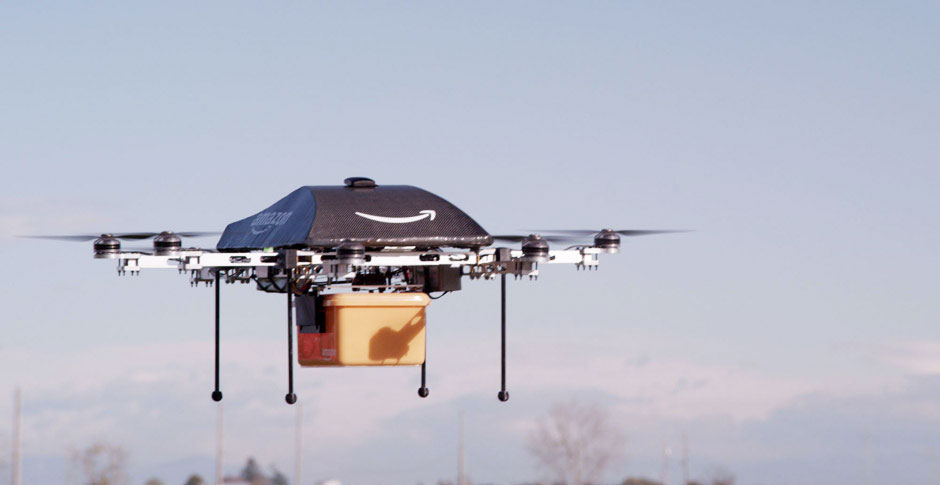
In a 9-page legal letter, with 28 itemized conditions and limitations, the FAA issued an exemption to Amazon to enable Prime Air to test in US airspace.

The FAA letter, dated April 8th, was filled with pages of legalese, but still limits testing to VLOS (visual line of sight) instead of autonomous flight, and flight controlled by a human operator. Amazon’s drones can not fly faster than 100 miles per hour, fly higher than 400 feet above ground level, and can not weigh more than 55 pounds, according to the letter.

[In February, the FAA provided a very limiting exemption stating that operators would need to see the drone with “unaided vision,” and the drones couldn’t fly over people. As a result of this frustrating situation, Amazon leaked a story of their testing in more accomodating airspace in Canada.]

Interestingly, three insurance giants – AIG, State Farm and USAA – also received FAA exemptions to use drones to observe, catalogue and manage damage caused by natural disasters.

“The potential use of UAS provides us one more innovative tool to help State Farm customers recover from the unexpected as quickly and efficiently as possible,” said Wensley Herbert, a Vice President of Claims at State Farm, in a statement announcing the new regulatory permission.


If you liked this article, you may also be interested in:

See all the latest robotics news on Robohub, or sign up for our weekly newsletter.


tags: , , , , , ,


Frank Tobe is the owner and publisher of The Robot Report, and is also a panel member for Robohub's Robotics by Invitation series.


Subscribe to Robohub newsletter on substack


Related posts :

Back to school: robots learn from factory workers

  02 Apr 2026
A Czech startup is making factory automation easier by letting workers teach robots new tasks through simple demonstrations instead of complex coding.

Resource-sharing boosts robotic resilience

  31 Mar 2026
When a modular robot shares power, sensing, and communication resources among its individual units, it is significantly more resistant to failure than traditional robotic systems.

Robot Talk Episode 150 – House building robots, with Vikas Enti

  27 Mar 2026
In the latest episode of the Robot Talk podcast, Claire chatted to Vikas Enti from Reframe Systems about using robotics and automation to build climate-resilient, high-performance homes.

A history of RoboCup with Manuela Veloso

and   24 Mar 2026
Find out how RoboCup got started and how the competition has evolved, from one of the co-founders.

Robot Talk Episode 149 – Robot safety and security, with Krystal Mattich

  20 Mar 2026
In the latest episode of the Robot Talk podcast, Claire chatted to Krystal Mattich from Brain Corp about trustworthy autonomous robots in public spaces.

A multi-armed robot for assisting with agricultural tasks

  18 Mar 2026
How can a robot safely manipulate branches to reveal hidden flowers while remaining aware of interaction forces and minimizing damage?

Graphene-based sensor to improve robot touch

  16 Mar 2026
Multiscale-structured miniaturized 3D force sensors for improved robot touch.

Robot Talk Episode 148 – Ethical robot behaviour, with Alan Winfield

  13 Mar 2026
In the latest episode of the Robot Talk podcast, Claire chatted to Alan Winfield from the University of the West of England about developing new standards for ethics and transparency in robotics.


Robohub is supported by:


Subscribe to Robohub newsletter on substack


©2026.02 - Association for the Understanding of Artificial Intelligence









