Robohub.org
ep.

250

podcast
 

Learning Prosthesis Control Parameters with Helen Huang

by
24 December 2017


share this:


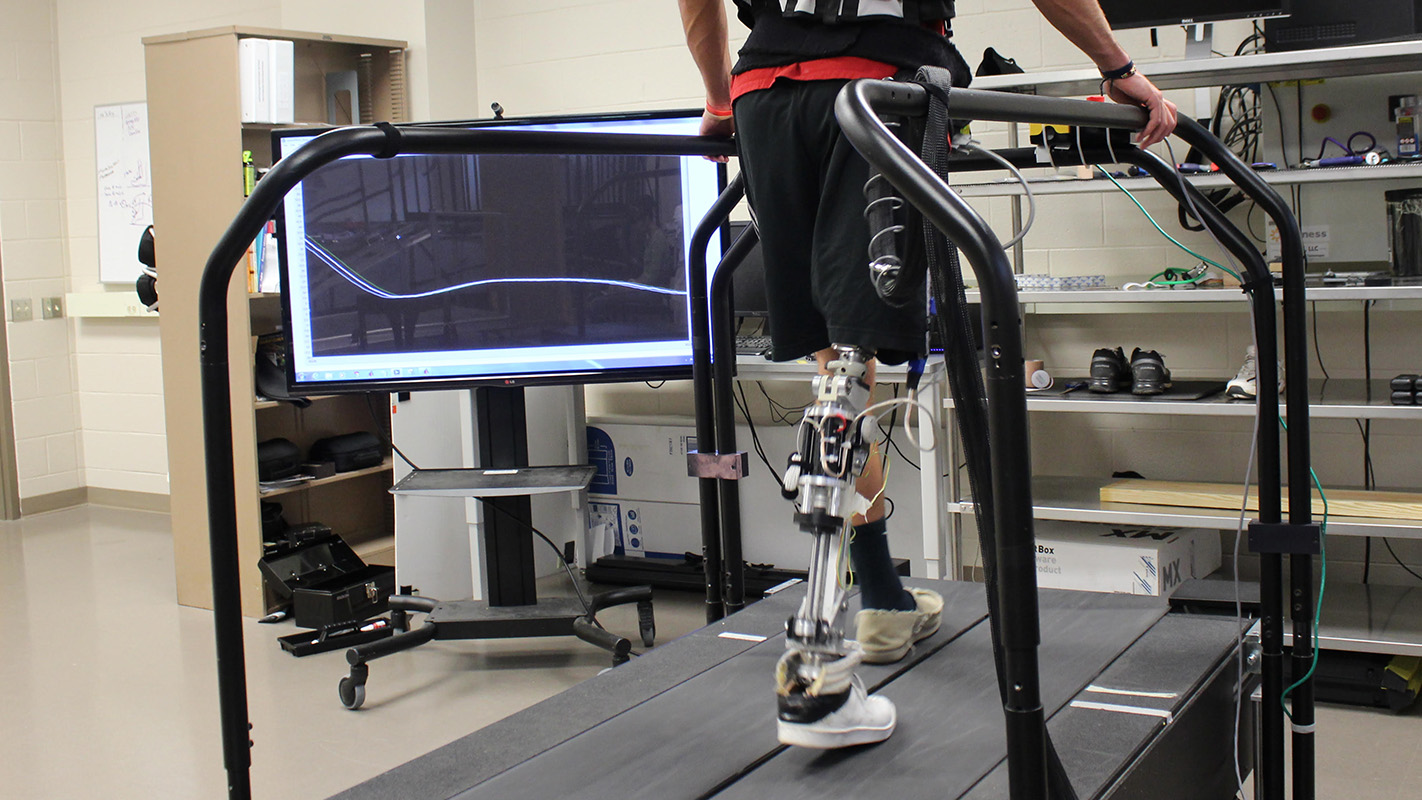
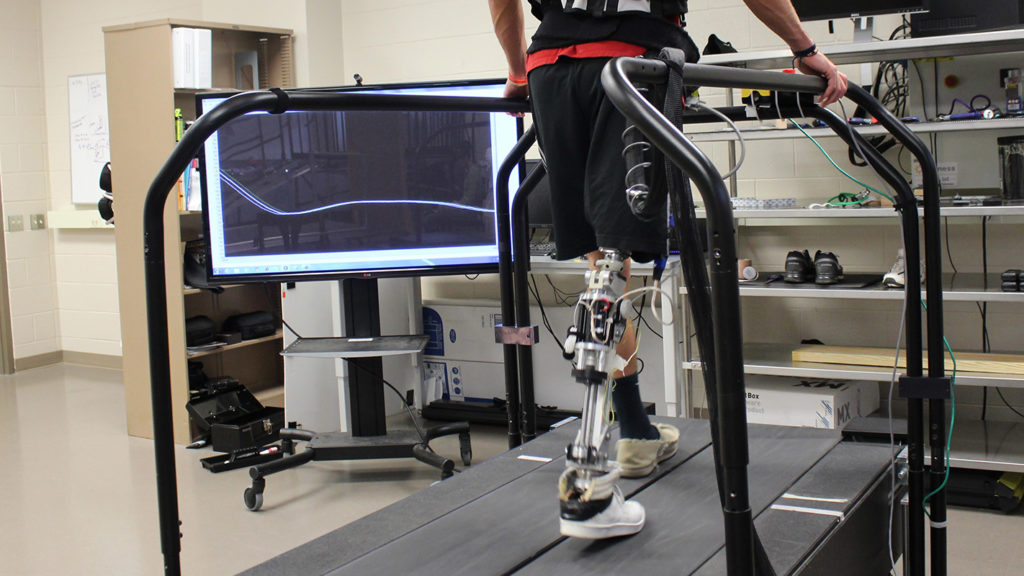
In this interview, Audrow Nash interviews Helen Huang, Joint Professor at the University of North Carolina at Chapel Hill and North Carolina State, about a method of tuning powered lower limb prostheses. Huang explains how powered prostheses are adjusted for each patient and how she is using supervised and reinforcement learning to tune prosthesis. Huang also discusses why she is not using the energetic cost of transport as a metric and the challenge of people adapting to a device while it learns from them.

Helen Huang

Helen Huang is a Professor in the Joint Department of Biomedical Engineering at the University of North Carolina at Chapel Hill (UNC) and North Carolina State University (NCSU) and the Director of the NCSU/UNC Closed-Loop Engineering for Advanced Rehabilitation (CLEAR) Core. Huang is interested in neural-machine interfaces for prostheses and exoskeletons, wearer-robot interaction, adaptive and optimal control of wearable robots, and human movement control. She has developed an EMG-based neural interface for robotic prosthetic legs. She was a recipient of the Delsys Prize for Innovation in Electromyography, the Mary E. Switzer Fellowship with the National Institute on Disability, Independent Living, and Rehabilitation Research (NIDILRR), and a NSF CAREER Award and was named NC State faculty scholar in 2015.


Links


tags: , , , , ,


Audrow Nash is a Software Engineer at Open Robotics and the host of the Sense Think Act Podcast


Related posts :


The science of human touch – and why it’s so hard to replicate in robots

  24 Dec 2025
Trying to give robots a sense of touch forces us to confront just how astonishingly sophisticated human touch really is.

Bio-hybrid robots turn food waste into functional machines

  22 Dec 2025
EPFL scientists have integrated discarded crustacean shells into robotic devices, leveraging the strength and flexibility of natural materials for robotic applications.

Robot Talk Episode 138 – Robots in the environment, with Stefano Mintchev

  19 Dec 2025
In the latest episode of the Robot Talk podcast, Claire chatted to Stefano Mintchev from ETH Zürich about robots to explore and monitor the natural environment.

Artificial tendons give muscle-powered robots a boost

  18 Dec 2025
The new design from MIT engineers could pump up many biohybrid builds.

Robot Talk Episode 137 – Getting two-legged robots moving, with Oluwami Dosunmu-Ogunbi

  12 Dec 2025
In the latest episode of the Robot Talk podcast, Claire chatted to Oluwami Dosunmu-Ogunbi from Ohio Northern University about bipedal robots that can walk and even climb stairs.

Radboud chemists are working with companies and robots on the transition from oil-based to bio-based materials

  10 Dec 2025
The search for new materials can be accelerated by using robots and AI models.


Robohub is supported by:


Would you like to learn how to tell impactful stories about your robot or AI system?


scicomm
training the next generation of science communicators in robotics & AI


©2025.05 - Association for the Understanding of Artificial Intelligence