Robohub.org
ep.

333

podcast
 

Snake-like Robot as a Worker Companion with Matt Bilsky
FLX Solutions         

by
27 May 2021


share this:


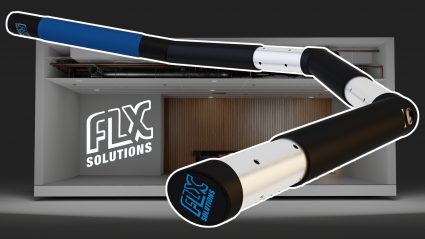
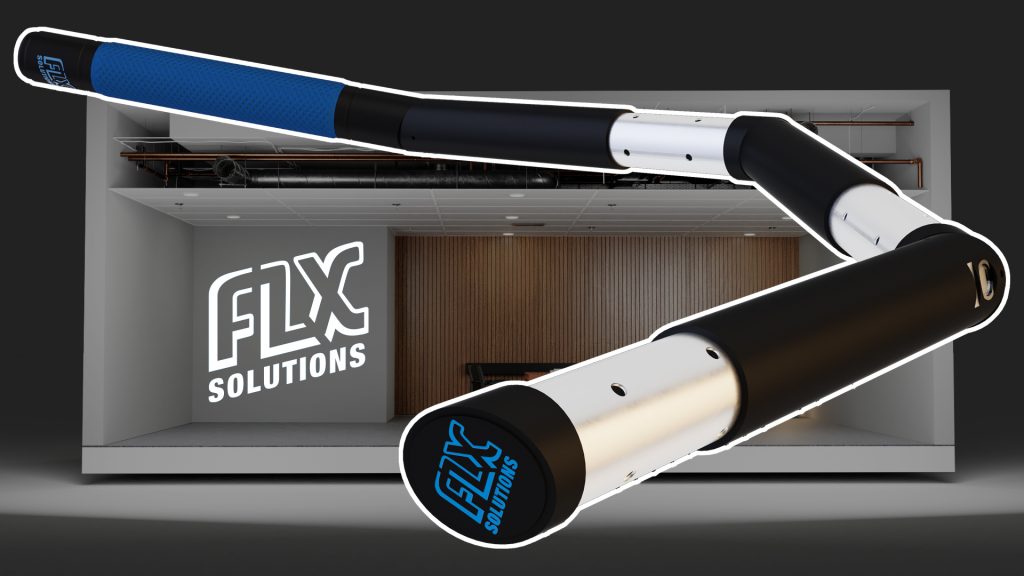
Matt Bilsky, founder and CEO of FLX Solutions, discusses the snake-like robot he invented called the FLX BOT. The FLX BOT consists of modular links, each with a joint that can extend and rotate to get into tight spaces. Each link includes sensors including inertial measurement units and a camera. The robot is used to navigate and work in challenging environments, such as above ceilings and within walls. Matt discusses the key innovations of his product as well as his academic and entrepreneurial journey that led him to the FLX BOT.

Matt Bilksy

Matt Bilsky, PhD, PE is the inventor of the FLX BOT, a licensed Professional Engineer, a Mechanical Engineering professor at Lehigh University, and a former repair/maintenance contractor. In 2017, he was awarded with the Lehigh University Entrepreneurship Educator of the Year. Matt has a Mechanical Engineering Ph.D. from Lehigh University focused on smart product design, Technical Entrepreneurship, and mechatronics. He holds two additional Lehigh degrees: a BS in Mechanical Engineering with an Electrical Engineering minor and a Master of Engineering degree also in Mechanical Engineering. Since he was a child Matt has been an innovator. In his basement shop he designed and built numerous electronic gadgets. In 2003 he started his first company, Mattcomp Services LLC, offering computer repair, networking, home theater, and handyman services. He also created a web hosting company in 2005, Mattcomp Hosting, including all necessary back-end components on dedicated servers.

Links


tags: , , , , , , ,


Kate Zhou

            AUAI is supported by:


Subscribe to Robohub newsletter on substack


Related posts :

Developing active and flexible microrobots

  13 May 2026
This class of robots opens up possibilities for biomedical applications.

How to teach the same skill to different robots

  11 May 2026
A new framework to teach a skill to robots with different mechanical designs, allowing them to carry out the same task without rewriting code for each.

Robot Talk Episode 155 – Making aerial robots smarter, with Melissa Greeff

  08 May 2026
In the latest episode of the Robot Talk podcast, Claire chatted to Melissa Greeff from Queen's University about autonomous navigation and learning for drones.

New understanding of insect flight points way to stable flapping-wing robots

  07 May 2026
The way bugs and birds flap their wings may look effortless, but the dynamics that keep them aloft are dizzyingly complex and difficult to quantify.

Robotically assembled building blocks could make construction more efficient and sustainable

  05 May 2026
Research suggests constructing a simple building from interlocking subunits should be mechanically feasible and have a much smaller carbon footprint.

Robot Talk Episode 154 – Visual navigation in insects and robots, with Andrew Philippides

  01 May 2026
In the latest episode of the Robot Talk podcast, Claire chatted to Andrew Philippides from the University of Sussex about what we can learn from ants and bees to improve robot navigation.

Ultralightweight sonar plus AI lets tiny drones navigate like bats

  29 Apr 2026
Researchers develop ultrasound-based perception system inspired by bat echolocation.

Gradient-based planning for world models at longer horizons

  28 Apr 2026
What were the problems that motivated this project and what was the approach to address them?


AUAI is supported by:


Subscribe to Robohub newsletter on substack


©2026.02 - Association for the Understanding of Artificial Intelligence