Robohub.org
256
Socially Assistive Robots with Maja Matarić
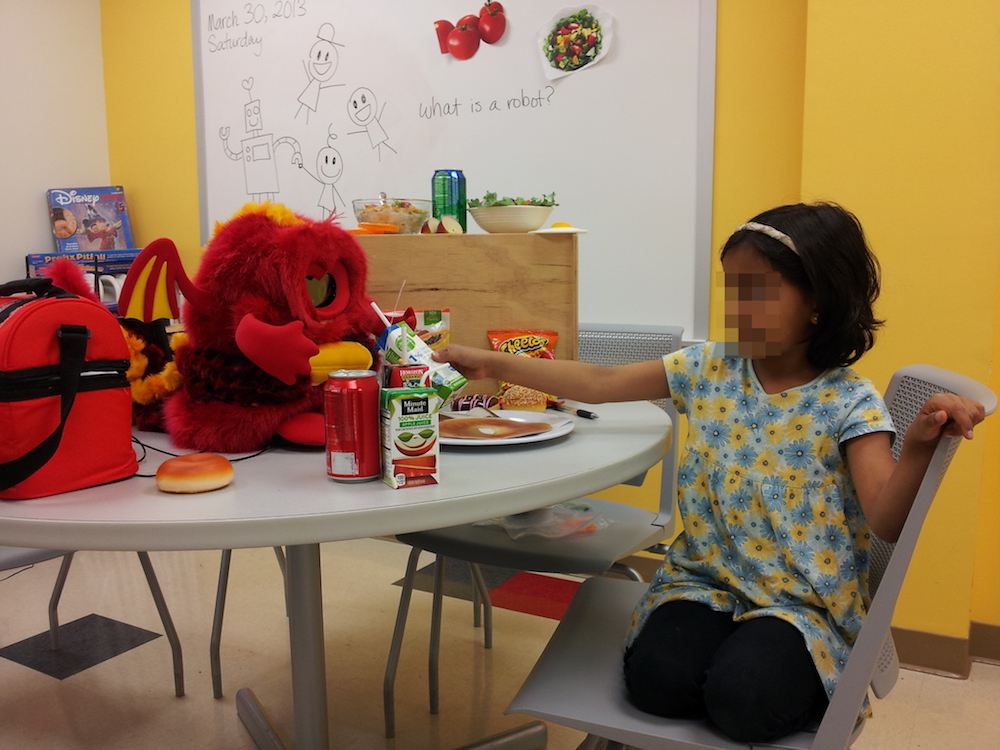
In this episode, Audrow Nash speaks with Maja Matarić, a professor at the University of Southern California and the Chief Science Officer of Embodied, about socially assistive robotics. Socially assistive robotics aims to endow robots with the ability to help people through individual non-contact assistance in convalescence, rehabilitation, training, and education. For example, a robot could help a child on the autism spectrum to connect to more neurotypical children and could help to motivate a stroke victim to follow their exercise routine for rehabilitation (see the videos below). In this interview, Matarić discusses the care gap in health care, how her work leverages research in psychology to make robots engaging, and opportunities in socially assistive robotics for entrepreneurship.
A short video about how personalized robots might act as a “social bridge” between a child on the autism spectrum and a more neurotypical child.
A short video about how a robot could assist stroke victims in their recovery.
Maja Matarić
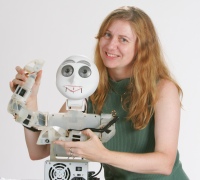 Maja Matarić is professor and Chan Soon-Shiong chair in Computer Science Department, Neuroscience Program, and the Department of Pediatrics at the University of Southern California, founding director of the USC Robotics and Autonomous Systems Center (RASC), co-director of the USC Robotics Research Lab and Vice Dean for Research in the USC Viterbi School of Engineering. She received her PhD in Computer Science and Artificial Intelligence from MIT, MS in Computer Science from MIT, and BS in Computer Science from the University of Kansas.
Links
- Interaction Lab
- Embodied
- Subscribe to Robots using iTunes
- Subscribe to Robots using RSS
- Support us on Patreon
- Download MP3 (13.7 MB)
tags: AI-cognition, bio-inspired, business, ethics, healthcare, human-robot interaction, humanoids, podcast, research, sensing, social robotics, startup